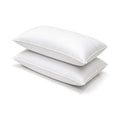

Feather cushion pads are inserts filled with duck feather and down, and hollowfibre cushion pads are inserts filled with polyester fibre that has a hollow core. Choose hollowfibre for a plump, springy cushion that's washable and safe for feather allergies. Choose feather for a soft, heavy cushion that sinks into a relaxed shape. This guide sets out the 5 differences, then answers which filling is better and which suits each room.
| Duck feather and down | Hollowfibre | |
|---|---|---|
| Feel | Soft, sinks in, takes a "chop" | Springy, bounces back |
| Weight | Heavier, drapes | Lighter |
| Shape over a day | Slumps, needs plumping | Recovers on its own |
| Feather allergy | Not suitable | Suitable, feather-free |
| Price, 40x40 cm pack of 2 | £10.99 | £9.99 |
Is fibre or feather cushion better?
Hollowfibre is better for a plump, tidy cushion that's easy to wash, and feather is better for a soft, heavy, lived-in look. Neither is better overall. The choice comes down to the look you want, whether anyone in the house is allergic to feathers, and how much plumping you're willing to do.
What are the 5 differences between feather and hollowfibre pads?
Feather and hollowfibre pads differ in 5 ways: feel, weight, shape recovery, allergy suitability and price.
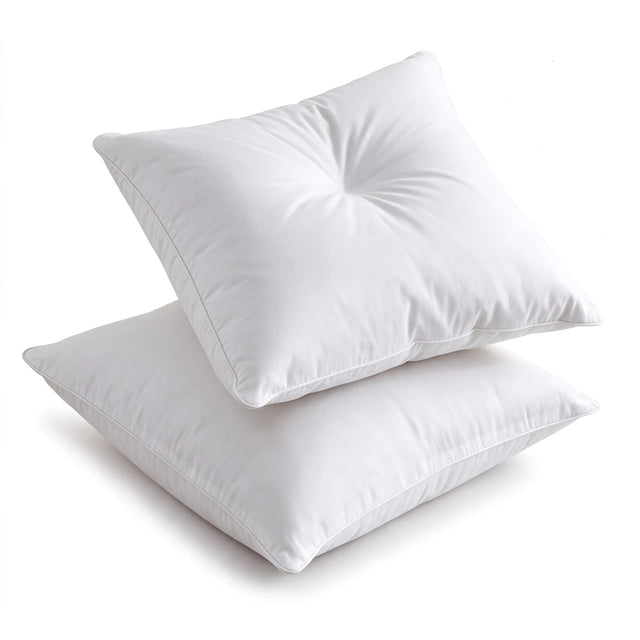
- Feel. Feather pads sink into a soft, generous shape and hold the classic chop in the top. Hollowfibre pads spring back when you press them, so they look round and full.
- Weight. Feather and down is a heavier filling, so a feather pad drapes and settles. A hollowfibre pad of the same size is lighter and stands up more.
- Shape recovery. Hollowfibre recovers on its own after you lean on it. A feather pad stays where you pushed it until you plump it again.
- Allergy. Hollowfibre contains no feathers, so it suits anyone allergic to them. Feather pads don't.
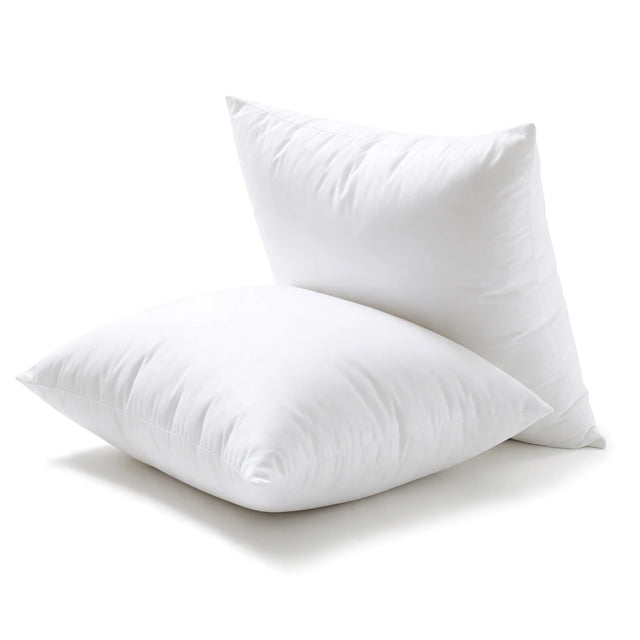
- Price. Our duck feather pads cost £10.99 for 2. Our hollowfibre inserts in the same 40x40 cm size cost £9.99 for 2.

What type of cushion pads are best?
The best cushion pads are the ones that match the look and the household. For a sofa that's used every day and should look neat, quilted hollowfibre inserts keep the crispest shape. For a soft, relaxed sofa that's plumped daily, feather and down. For a home with feather allergies, any hollowfibre pad.
Our guide to cushion inserts that keep their shape ranks quilted, plain hollowfibre and feather pads by how well they hold a neat shape.
What is the best filling for cushion inserts?
Hollowfibre is the best filling for most cushion inserts, because it's light, springy, feather-free and widely washable. Duck feather and down is the best filling for a soft, sink-in cushion. Hollowfibre is a polyester fibre spun with a hollow core, which traps air in each strand. Our guide to what hollowfibre is explains how it's made.
How do you read a feather cushion label?
A feather filling label lists each material by percentage of weight, largest first, under the British and European standard BS EN 12934. A label reading "85% duck feather, 15% duck down" means mostly feather with some down. More down makes a softer, lighter pad. More feather makes a firmer, heavier one.
Our duck feather cushion pads are a duck feather and down filling inside a 100% cotton, down-proof cover, double stitched to keep quills inside.
Do feather cushions need plumping?
Yes, feather cushions need plumping to get their shape back. Feather and down stay where they're pushed, so a feather cushion flattens where someone has sat or leaned. Squeeze it from the sides towards the middle a few times, then chop the top if you like the pinched look.
Hollowfibre needs less: it springs back on its own. A hollowfibre pad still benefits from a shake now and then, to spread the fibre back to the corners.
Do feathers poke through cushion covers?
Feathers poke through when the pad's own cover isn't woven tightly enough to hold the quills. A down-proof cover, woven tightly and double stitched at the seams, keeps them inside. Our duck feather cushion pads have a 100% cotton down-proof cover with double stitching for that reason.
The cushion cover over the pad adds a second layer. A thin or loosely woven cover lets the odd quill through faster than a thick one, so a feather pad suits a substantial cover fabric.
Do hollowfibre cushion pads go lumpy?
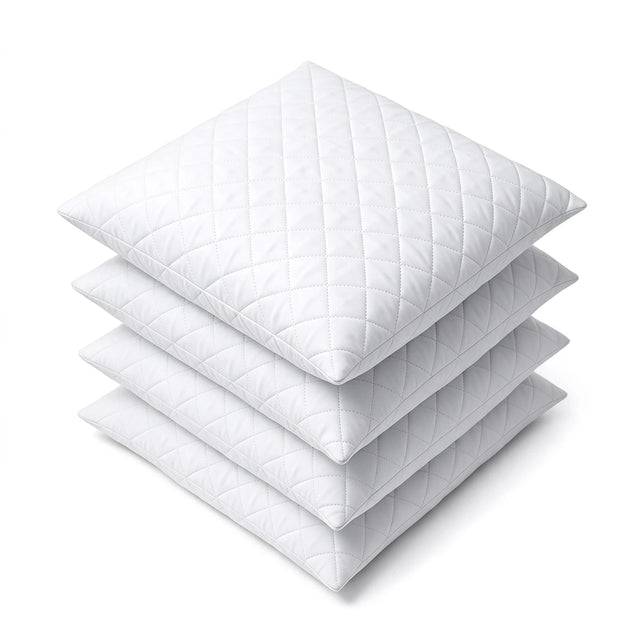
Plain hollowfibre pads can drift over time, as loose fibre moves inside the casing, which leaves thin corners and a fuller middle. A good shake spreads it back out. Quilted inserts avoid this, because the quilting stitches the hollowfibre into an even layer that can't move. That's why our quilted cushion inserts suit cushions that get daily use.
Can you wash feather and hollowfibre cushion pads?
Hollowfibre cushion pads are often machine washable, and feather pads should be washed by their care label. Our hollowfibre pads in packs of 2 or 4 take a cold machine wash and a low tumble dry, and our quilted inserts machine wash cold. Our 2 pack hollowfibre inserts are sponge clean only.
Dry any filling fully before it goes back in its cover, because damp feather or fibre clumps.
Which filling suits each room?
Choose by how the cushions get used:
| Where | Filling | Why |
|---|---|---|
| Family sofa, daily use | Quilted or plain hollowfibre | Recovers on its own, washable |
| Formal sofa, styled look | Duck feather and down | Soft shape, holds a chop |
| Bed, decorative cushions | Either | Light use |
| Home with feather allergies | Hollowfibre | Feather-free |
| Dining chairs, seat pads | Quilted hollowfibre | Holds a flat, even shape |
What sizes do feather and hollowfibre pads come in?
Our duck feather cushion pads come in 2 sizes, 30x45 cm and 40x40 cm, in packs of 2. Our hollowfibre cushion pads come in 11 sizes from 30x30 cm to 75x75 cm, in packs of 2 or 4. For either filling, buy the pad one size larger than the cover. Our cushion pad size guide gives the insert for every cover.
Written by the Adam Home team in the UK.