



Adam Home guides
Bedding guides
Straight answers on sizes, togs, pillows and making the bed, from the Adam Home team in the UK.
Latest guide
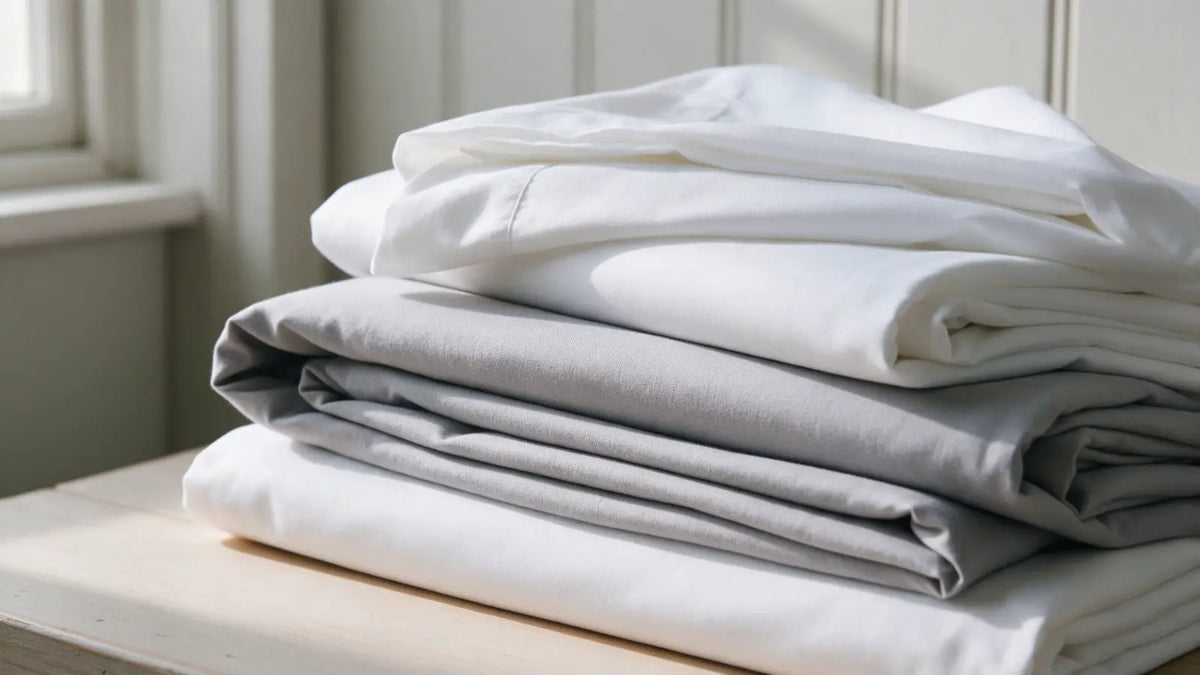
Polycotton bedding: what it is, pros and cons
Polycotton is a fabric woven from a blend of polyester and cotton, most often 65% polyester to 35% cotton or an even 50/50. It creases less, shrinks less and dries faster than pure cotton, and costs less. The trade-offs are...
Read the guideDuvet Guides
All 17 guides
Down alternative duvet: what it is and who it suits
A down alternative duvet is filled with man-made fibres, usually polyester hollowfibre or microfibre, built to trap air the way down does. At the same tog it's as warm as...

How often should you replace a duvet?
Most UK bedding brands say to replace a duvet about every five years. Synthetic duvets last 2 to 5 years, feather 5 to 8, feather and down 7 to 10...

How to store a duvet: 5 steps to prevent damp
To store a duvet, wash it and let it dry completely, put it in a breathable cotton bag or an old duvet cover, and keep it somewhere cool, dry and...
Duvet Cover Guides
All 13 guides
Microfibre vs cotton duvet covers: 6 differences
Cotton is the better duvet cover fabric for hot sleepers and sensitive skin. Microfibre is cheaper, dries faster, creases less and lasts well through frequent washing. Thread count measures woven...

3D printed duvet covers: how digital printing works
A 3D duvet cover is a printed cover whose design is shaded to look deep and photographic, while the fabric stays flat. On polyester the print is usually digital, often...

How to wash printed duvet covers without fading
Turn a printed duvet cover inside out, fasten the poppers, wash it on a cool, gentle cycle no hotter than the care label allows, leave room in the drum and...
Pillow Guides
All 20 guides
Why pillows turn yellow and how to whiten them
Pillows turn yellow because sweat, skin and hair oil, saliva, damp hair and skincare soak through the pillowcase, and the fats, proteins and salts in them yellow as they age....

Hollowfibre pillows: pros, cons and lifespan
Hollowfibre pillows are a good buy if you want a pillow that's cheap, machine washable and free of feathers. The trade-off is lifespan: the Sleep Foundation gives polyester pillows 6...

Housewife vs Oxford pillowcase: the difference
A Housewife pillowcase is a plain case with an inside flap that holds the pillow in, and an Oxford pillowcase adds a flat border round all four sides. Both take...
Mattress and Topper Guides
All 4 guides
How to wash a mattress protector and how often
Most mattress protectors are machine washable, and the usual advice is a wash every 1 to 3 months, or every 2 to 4 weeks for children, hot sleepers and allergy...

Extra deep fitted sheets: is 40 cm deep enough?
A 40 cm pocket is extra deep. Most UK mattresses are 16 to 39 cm deep, and a 40 cm sheet fits a mattress plus topper up to about 35...

Mattress topper thickness: 5 cm or 10 cm?
Pick 5 cm to soften a mattress that's in good shape, and 10 cm to change the feel of a hard or tired mattress. Then check your fitted sheet: mattress...
Kids Bedding Guides
All 4 guides
When can a toddler have a duvet?
Not before 12 months, according to the NHS and The Lullaby Trust. After that, a duvet can arrive whenever it suits the child and the bed. Use a 120x150 cm...

When can a baby or toddler have a pillow?
Not before 12 months, according to the NHS and The Lullaby Trust. After that there's no set age, so go by the bed and the child. Choose a small, flat...

What tog duvet for a toddler: 4.5, 7.5 or 9 tog?
No duvet before 12 months, according to the NHS and The Lullaby Trust. After that, pick the tog by the bedroom's temperature, not the child's age: 4.5 tog for warm...
Bedding Guides
All 6 guides
Polycotton bedding: what it is, pros and cons
Polycotton is a fabric woven from a blend of polyester and cotton, most often 65% polyester to 35% cotton or an even 50/50. It creases less, shrinks less and dries...

How often to wash bedding: sheets, covers, pillows
Wash sheets and pillowcases once a week, or every 3 to 4 days if you've been ill, sweat heavily or share the bed with a pet. Pillows need a wash...

What temperature to wash bedding: 30, 40 or 60°C?
Most bedding is fine at 40°C, and 60°C is the hygiene wash for dust mites and illness, as long as the care label allows it. A 2008 study found a...
Cushion Guides
All 6 guides
Cushion sizes in cm and inches: conversion chart
A 45x45 cm cushion is 17.7 x 17.7 inches, and shops label it 18 x 18 inches. Exact conversions for every UK cushion size from 30 to 75 cm, the...

How to restuff sofa cushions: 6 steps
To restuff sofa cushions, unzip the cover, take the inner out, loosen or remove the old filling, add new fibre to back cushions or fit a new foam core to...

Feather vs hollowfibre cushion pads: 5 differences
Hollowfibre pads are springy, light, washable and feather-free. Feather pads are softer and heavier, sink into a relaxed shape and need plumping. The 5 differences, and which to choose for...