
A cushion insert that keeps its shape is a pad whose filling springs back or stays spread evenly after use, so the cushion looks full rather than sat-on. Quilted hollowfibre inserts hold the crispest shape, plain hollowfibre pads come second, and duck feather pads come third for shape, though first for a soft, slouchy look. This guide ranks the 3 types by how they're built, explains why cushions go flat, and gives the sizing rule that keeps any cushion plump.
| Rank | Insert | How it holds shape | Washing |
|---|---|---|---|
| 1 | Quilted hollowfibre insert | Quilting holds the fill in a flat, even layer | Machine wash cold |
| 2 | Plain hollowfibre pad | Springy fibre bounces back after pressure | Cold machine wash, or sponge clean, by listing |
| 3 | Duck feather and down pad | Slumps into a soft shape and needs plumping | By care label |
The ranking follows how each insert is made, from our own product data. It's for holding a neat shape, not for comfort.
Which cushion pads do not go flat?
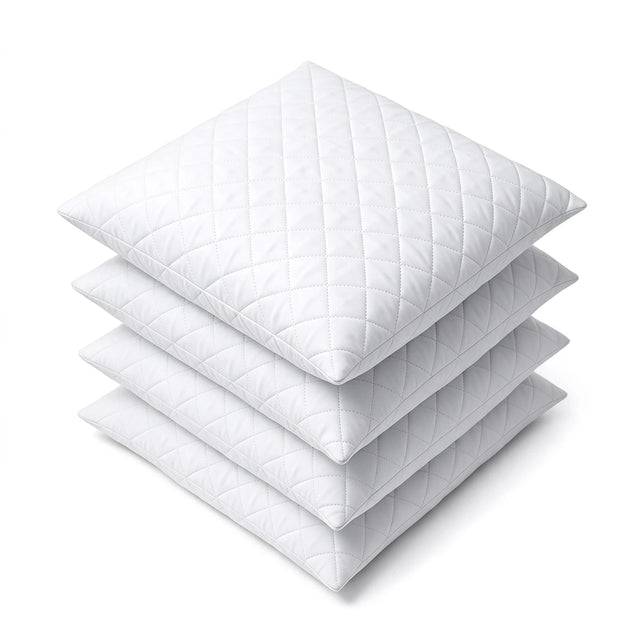
Quilted hollowfibre inserts go flat the least. A quilted polycotton cover is stitched over the hollowfibre core, which holds the filling in a flat, even layer, so the cushion keeps a tailored square shape rather than ballooning in the middle and thinning at the corners.
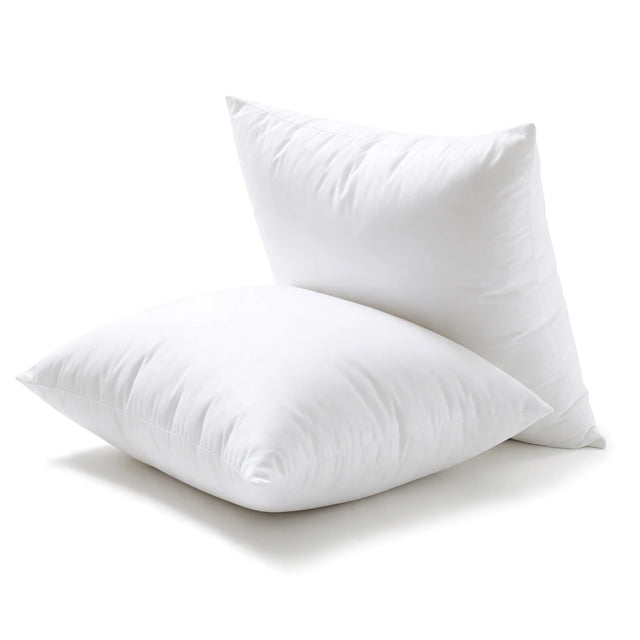
Plain hollowfibre pads don't go flat either, but they keep their shape a different way: the springy fibre pushes back after you lean on it. Over time, loose fibre can drift inside the casing. Quilting is what stops that drift.
What are the 3 types, ranked?
Here are the 3 cushion inserts we sell, ranked by how well they keep a neat shape:
- Quilted hollowfibre inserts. Our quilted cushion inserts have a quilted polycotton cover over bounce-back hollowfibre, in 4 sizes from 30x45 cm to 50x50 cm, packs of 4, from £14.99. The cover means they machine wash properly.
- Plain hollowfibre pads. Our hollowfibre cushion pads come in 11 sizes from 12x12 inches to 30x30 inches, in packs of 2 or 4, from £8.99. They're the springiest and the widest choice of sizes.
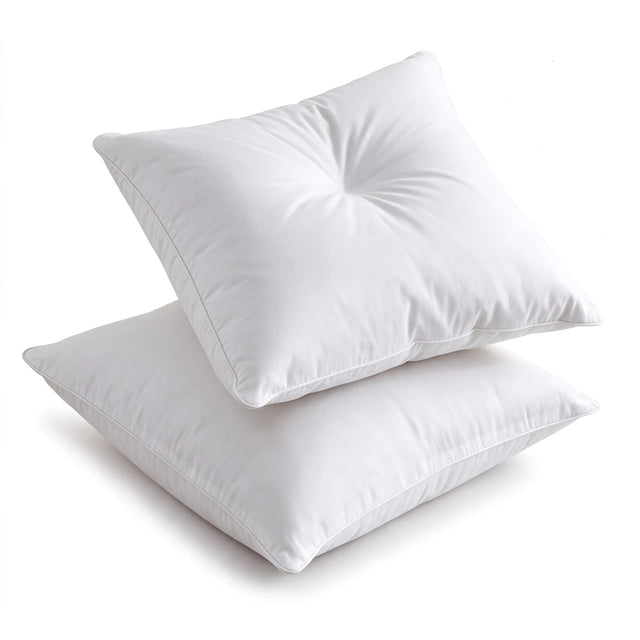
- Duck feather and down pads. Our duck feather cushion pads come in 30x45 cm and 40x40 cm, in packs of 2 at £10.99. They sink into a soft, generous shape and take the classic "chop" on top, but need plumping to recover.

Are quilted inserts firmer?
Yes, quilted inserts feel firmer and flatter than plain hollowfibre pads. The quilting holds the filling in an even layer, so the cushion is smoother and more tailored, with less of a puffed-up middle. A plain pad of the same size feels softer and rounder because its fibre can move to the centre.
That makes quilted inserts the better choice for cushions that get daily use, such as sofa back cushions and dining chair pads. For a bed piled with decorative cushions, either works.
What is the best filling for plump cushions?
Hollowfibre is the best filling for plump cushions, because it springs back after pressure and fills the cover out to the corners. Feather and down make a softer, heavier cushion that looks relaxed rather than plump. Our guide to feather vs hollowfibre cushion pads compares the two fillings in detail.
Why do cushions go flat?
Cushions go flat for 3 reasons: the insert is the same size as the cover, the filling has shifted, or the filling has compressed with use. The first is the easiest to fix. An insert the same size as its cover sits loose inside it, so the cover wrinkles and the corners look empty.
Shifting is fixed by plumping or by choosing a quilted insert. Compressed filling is fixed by a new insert.
What size insert keeps a cushion plump?
Buy the insert one size larger than the cover, about 2 to 5 cm bigger. A 45x45 cm cover takes a 50x50 cm insert for a full, plump cushion. Our hollowfibre cushion pad listing gives the rule as one size up, and the 2 pack listing as 2 to 3 cm larger than the cover.
| Cover size | Insert for a plump cushion |
|---|---|
| 40 x 40 cm | 45 x 45 cm |
| 45 x 45 cm | 50 x 50 cm |
| 50 x 50 cm | 55 x 55 cm |
| 60 x 60 cm | 65 x 65 cm |
Our cushion pad size guide lists every cover size with the insert to match. If your cover is labelled in inches, our cushion size conversion chart turns inches into cm.
Which insert suits a lumbar cushion?
A lumbar cushion takes a 30x45 cm rectangular insert, also sold as 12x18 inches. All 3 of our insert types come in that size: the quilted insert in a pack of 4 at £15.99, the hollowfibre pad in packs of 2 or 4, and the duck feather pad in a pack of 2 at £10.99.
A lumbar cushion sits in the small of the back, so shape matters more than on a square cushion. A quilted insert keeps the long edge straight, and a feather insert moulds to the back.
Does an oversized insert strain the zip?
An insert 2 to 5 cm larger than the cover fits without straining a zip, as long as you fold it in half to get it through the opening and then let it open out inside. Push the corners of the insert into the corners of the cover first. A cover with a concealed zip along the back seam, like our Christmas cushion covers, hides the closure once it's done up.
How do you plump a cushion?
Plump a hollowfibre cushion by squeezing it from the sides towards the middle a few times, then patting it flat. Plump a feather cushion the same way, then give the top a firm chop with the side of your hand if you like the pinched look. A vacuum-packed new insert needs a few minutes of hand-fluffing, or 10 minutes in a cool dryer, to reach full size.
Sofa cushions that have gone flat for good need more than plumping. Our guide on how to restuff sofa cushions covers topping up the fill and fitting new foam.
How do you wash cushion inserts?
Wash cushion inserts by their care label. Our quilted inserts machine wash cold and tumble dry low. Our hollowfibre pads in the 4 pack listing take a cold machine wash, and the 2 pack inserts are sponge clean only, so they're best kept under covers. Dry any insert fully before it goes back in its cover, because damp filling clumps.
Written by the Adam Home team in the UK.