
Hollowfibre is a polyester fibre spun with a hollow core running down the middle of each strand, used as a filling for pillows, duvets, cushion pads and soft toys. The hollow core traps air inside every fibre as well as between them, which makes the filling light, springy and warm for its weight. This guide explains how hollowfibre is made, whether it's good, whether it's the same as polyester or toxic, and how it compares with ball fibre.
| Filling | What it is | Used in |
|---|---|---|
| Hollowfibre | Polyester fibre with a hollow core | Pillows, duvets, cushion pads, bolsters |
| Ball fibre | Siliconised, spiral-crimped hollowfibre rolled into small balls | Softer pillows and cushions |
| Virgin hollowfibre | Newly made hollowfibre, not recycled or mixed with offcuts | Pillows, toy stuffing |
| Offcut filling | Hollowfibre carded together with fabric remnants | Pet beds, draught excluders, bulk refills |
What is hollowfibre used for?
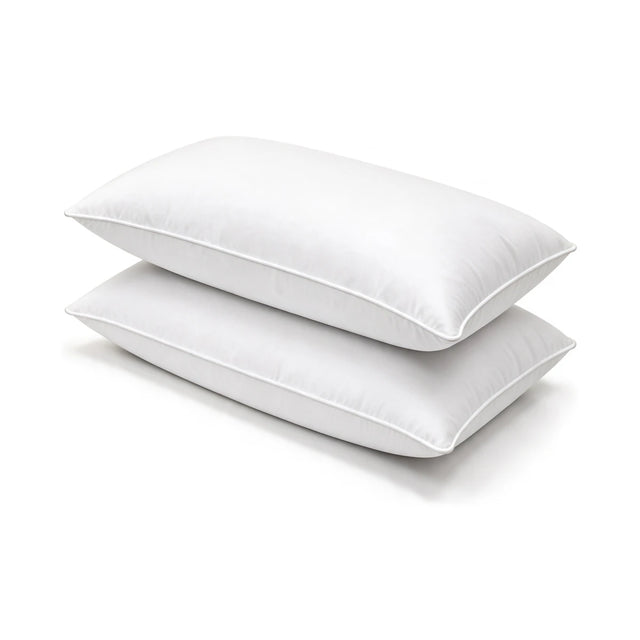
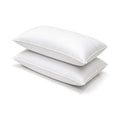
Hollowfibre is used as the filling in 6 kinds of home textile: bed pillows, duvets, cushion pads, bolsters, pregnancy pillows and soft toys. It's chosen wherever a filling needs to be light, washable and free of feathers. In our range it fills every bed pillow except the duck feather one, our microfibre and toddler duvets, cushion pads and maternity pillows.
Loose hollowfibre is also sold by weight for crafts. Our toy stuffing comes in 500 g, 1 kg and 2 kg bags, and a 500 g bag fills about two 18-inch cushions.
Is hollowfibre warm?
Yes, hollowfibre is warm for its weight, because the hollow core holds still air inside each strand as well as between strands, and still air is what insulates. How warm a hollowfibre duvet is depends on how much filling it has, which is what its tog rating measures. Our hollowfibre duvets run from 1 tog to 15 tog.
How is hollowfibre made?
Hollowfibre is made by melt spinning: molten polyester is pushed through a spinneret, a metal plate with shaped holes, and the holes are shaped so the polymer closes around an empty centre as it leaves. The strand is cooled quickly to fix the hollow, then drawn out to make it finer and stronger.
The spinneret holes are usually C-shaped, V-shaped or split into arc-shaped slits. As the molten streams leave the hole, their edges join and seal in a tube of air. Patents for the process describe cooling the strand fast just below the spinneret and drawing it as it cools, which lets the hollow take up 40% or more of the fibre's volume.
After spinning, the fibre is cut, crimped so it springs back, and often coated with silicone so the strands slide past each other. Finally it's carded: passed through a machine that opens and combs the fibre into a fluffy, even layer ready for filling.

Is hollowfibre the same as polyester?
Yes, hollowfibre is polyester. It's the same plastic, polyethylene terephthalate (PET), that's used for drinks bottles, spun into a fibre with a hollow core. "Polyester filling" on a label can mean solid fibre or hollowfibre, so hollowfibre is the more specific term.
Microfibre is also usually polyester, but it's made the other way: very fine, solid strands woven into fabric. Our guide to microfibre bedding covers the fabric side.
Is hollow fibre filling good?
Yes, hollowfibre is a good filling for anyone who wants a washable, feather-free pillow or duvet. It's light for its warmth, springs back after you lean on it, and suits people who are allergic to feathers. It's also the filling mainstream hotels use: Premier Inn said in 2019 that its pillows are made with blown hollowfibre.
Its weakness is lifespan. The Sleep Foundation gives polyester pillows 6 months to 2 years, against 1 to 3 years for feather and down. The Sleep Charity advises replacing any pillow every 2 to 3 years. Our hollowfibre bed pillows are all 48x74 cm, from £8.99.
Is hollowfibre toxic?
No, hollowfibre is PET, the same polyester used for food and drinks packaging, and it's sold for children's toys. Filling for cushions and pillows sold for furniture in the UK must also pass the ignitability tests in the Furniture and Furnishings (Fire) (Safety) Regulations 1988, which cover scatter cushions, seat pads and pillows.
Bedclothes, including duvets, are outside those regulations and fall under general product safety law instead. Our hollowfibre offcut filling is sold as complying with British fire safety regulations.
Which is better, ball fibre or hollow fibre?
Ball fibre is softer and moves more like down, and plain hollowfibre is springier and firmer. Ball fibre is hollowfibre that's been siliconised, spiral-crimped and rolled into small balls, so the balls roll past each other when you plump the pillow. Plain hollowfibre stays as a springy web of loose fibres.
| Ball fibre | Hollowfibre | |
|---|---|---|
| Feel | Soft, down-like | Springy, fuller |
| Plumping | Balls move apart and back | Shake to open the fibre |
| Best for | Soft pillows, sink-in cushions | Supportive pillows, plump cushion pads |
Choose ball fibre for a soft pillow and hollowfibre for one that holds your head up. Our guide to hotel pillows compares hollowfibre with feather and down.
What does virgin hollowfibre mean?
Virgin hollowfibre is newly made fibre, not recycled from other products or mixed with offcuts. It's clean, even and consistent, and it's the grade we use for pillows and children's toys. Our hotel quality pillows, toddler pillow and toy stuffing are all virgin hollowfibre.
Offcut filling is the budget alternative: hollowfibre carded together with soft fabric remnants, made for pet beds, draught excluders and bulk refills rather than pillows.
Is hollowfibre good for allergies?
Hollowfibre suits people who are allergic to feathers, because it contains none. For a house dust mite allergy, the filling matters less than how the pillow is covered and washed. NHS allergy leaflets recommend zipped covers that fully enclose pillows and mattresses, and say a 60°C wash kills mites.
Our hollowfibre pillows machine wash, which makes regular washing possible. Check the care label for the temperature.
How do you fluff hollowfibre?
Fluff hollowfibre by shaking it and pulling it apart by hand, or with a short, cool tumble in the dryer. Our cushion pads arrive vacuum packed and fluff to full size in minutes, and 10 minutes in a cool dryer speeds it up. Our duvets need 24 hours after unpacking to loft fully.
Written by the Adam Home team in the UK.