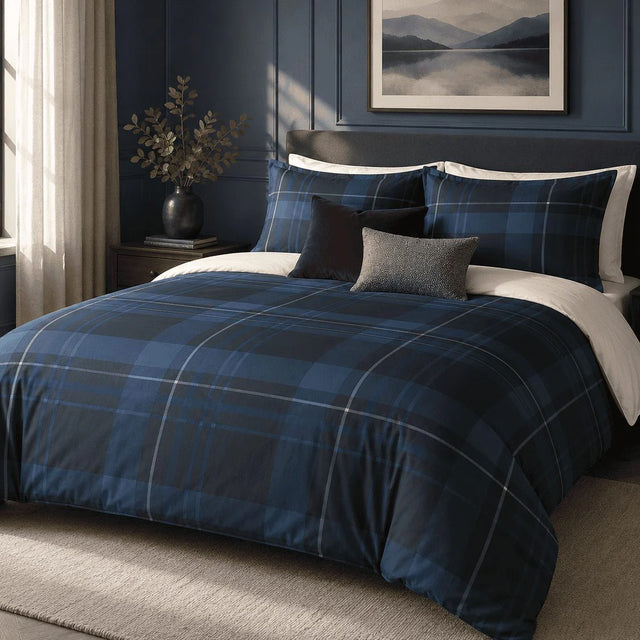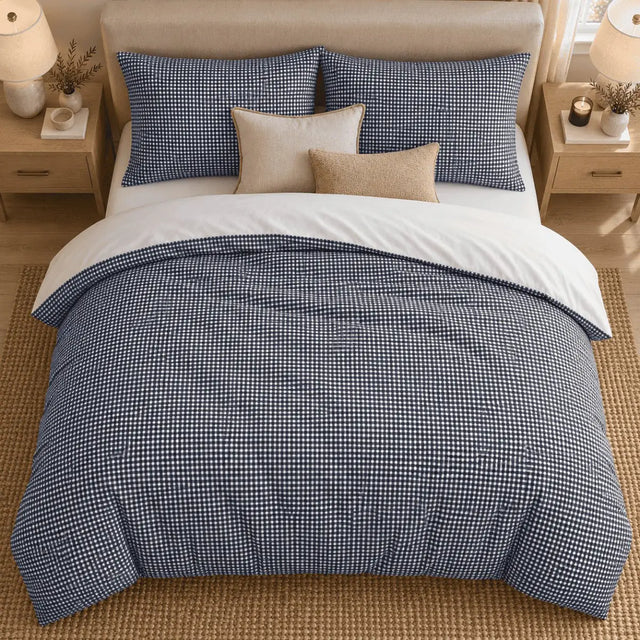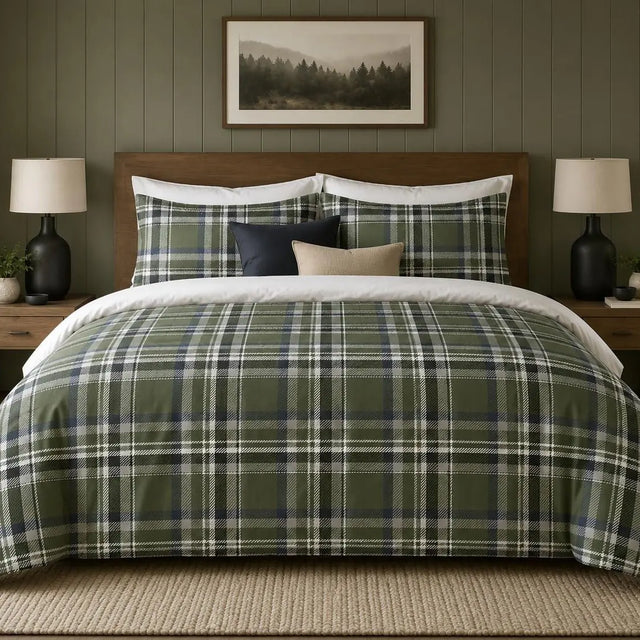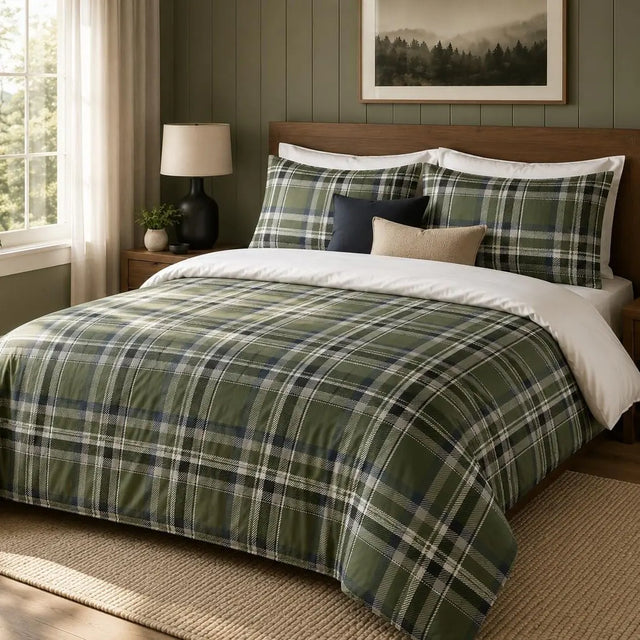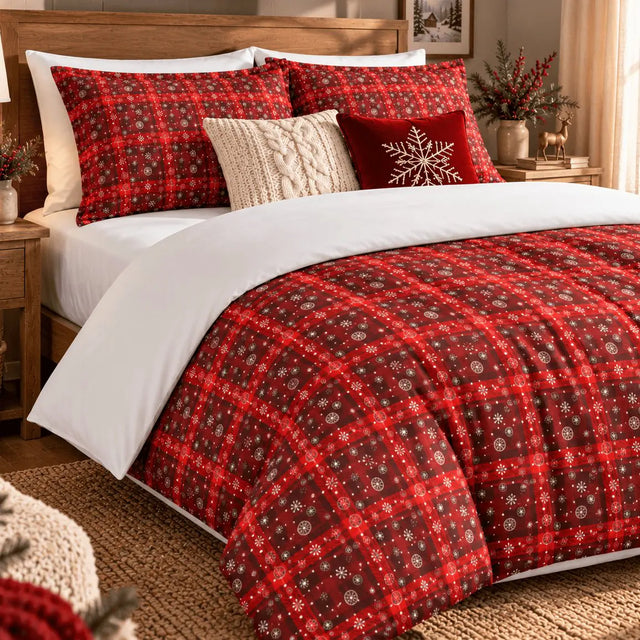
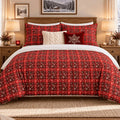
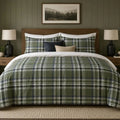

A 3D duvet cover is a printed duvet cover whose design uses shading, light and fine detail to look deep and photographic, while the fabric itself stays completely flat. Nothing is raised or stitched on. The "3D" describes how the picture looks, and the picture gets there through digital printing, which on polyester usually means dye-sublimation. This guide explains what the term means, how a design gets from a file onto fabric, how digital printing compares with screen printing, whether 3D prints fade, and whether you can tumble dry one.
What is a 3D duvet cover?
A 3D duvet cover is a duvet cover printed with a high-detail design that has the look of depth, so patterns, folds and textures appear real on a flat surface. It's a retail name for a print style, and no industry standard defines it.
You'll see the term all over UK shops. Dunelm, for example, sells a 100% polyester microfibre set "created using the latest technology to create a three dimensional effect". The listing describes an effect, not a surface. Our own duvet cover listings say "Print: 3D printed design", and one of them, Navy Plaid, describes its front as "fully printed in 3D digital print".
Is a 3D printed duvet cover raised to the touch?
No, a 3D printed duvet cover is not raised to the touch, because the depth is part of the printed image. Run your hand over it and it feels like any other cover in the same fabric.
That's different from "3D printing" in the engineering sense, where a machine builds an object in layers. If you want texture you can feel, look for words like quilted or embossed instead. A 3D print gives you a plaid that looks woven or a brushstroke that looks painted, on a smooth face.

How does digital printing work on a duvet cover?
Digital printing works by spraying dye onto fabric from an inkjet head, straight from a design file, with no screens or plates. For polyester, the usual inks are dye-sublimation or disperse inks, which bond with the fibre when heated.
Here's how sublimation transfer printing, one common method for polyester, takes a design onto fabric in 5 steps:
- Prepare the file. The designer finishes the artwork digitally, including all the shading that gives the 3D look.
- Print a mirror image. An inkjet printer prints the design in reverse onto coated, heat-resistant transfer paper.
- Press with heat. The paper goes face down on the polyester and through a heat press. The common dyes activate at about 175°C, and Wikipedia's account of the process gives 195°C to 215°C for stronger colour.
- Let the dye move into the fibre. Under heat and pressure the dye bonds with the synthetic fibres and sets inside them, rather than building up on top as a layer.
- Cut and sew. The printed fabric is cut to size and sewn into the cover with its pillowcases.
There's a direct version too. Sublimation inks can be printed straight onto the fabric, which is then heated in an oven or on a calender to set the dye, so no transfer paper is needed. We don't publish which of these our factory uses: the listings say "3D printed design", so that's the claim we make.

How is digital printing different from screen printing?
Digital printing needs no screens and can reproduce photographs and many colours, while rotary screen printing needs one engraved screen per colour and is cheaper on very long runs. That's why the photo-like 3D look belongs to digital.
| Point | Digital printing | Rotary screen printing |
|---|---|---|
| Set-up | Little or none, prints from the file | Design split into colours, one screen engraved per colour |
| Colours | Many colours in one design | Reduced to a fixed number, one per screen |
| Photographs in the print | Yes | No |
| Usually cheaper for | Runs under about 2,000 metres | Runs over about 5,000 metres |
The run lengths come from SPGPrints, a maker of both kinds of printer. For a sense of the colour limit, the UK bedding brand Furn describes turning a painted pattern into just 12 colours for screen printing.
Does 3D print bedding fade?
Yes, 3D print bedding can fade over time, like any dyed fabric, mainly from sunlight and harsh washing. A sublimation print resists fading better than a surface print, because the dye sits inside the polyester fibre.
Wikipedia's page on dye-sublimation printing says the dye is infused into the fabric at a molecular level, so the image shouldn't crack, fade or peel under normal conditions, and the fabric can be washed without damaging it. Light is the bigger enemy. Ultraviolet radiation breaks down the structure of dye molecules, and textile dyes are graded for light fastness from 1 to 8 and for wash fastness from 1 to 5.
So the practical answer is simple. Don't leave the cover drying in strong sun for hours, and wash it at the temperature on its care label. Our guide on how to wash a printed duvet cover walks through it step by step.
Is digital print bedding safe to tumble dry?
Yes, most digital print polyester bedding is safe to tumble dry on a low heat setting, as long as the care label shows the tumble-dry symbol. High heat is the problem, because polyester can shrink and even melt.
The UK laundry guide Cleanipedia says polyester can be tumble dried on a low-heat, gentle, short cycle, and that air drying is better still because polyester dries quickly. Ariel UK says polyester can be tumble dried on a cool setting without shrinking. Dunelm's 3D effect set gives the same kind of instruction: tumble dry on a low heat setting and iron on a cool one.
Read the label first. On the square tumble-dry symbol, the dots show how much heat is allowed, according to GINETEX, the body behind the international care symbols. Fewer dots mean less heat, and a crossed-out symbol means don't tumble dry at all. Our microfibre listings say "machine washable" without a drying instruction, so go by the label on your cover.
Does a 3D print look the same on both sides?
No, most 3D printed duvet covers are printed on the front only, with a plain back. On our sets the print covers the front and the reverse is plain white, apart from 2 reversible Christmas designs.
Those 2 are Nordic Christmas and Winter Chalet, printed on both sides. If you like the idea of flipping a cover for a change, our guide to reversible duvet covers explains how they work.
What do our 3D printed duvet covers include?
Our 3D printed duvet covers are 100% polyester microfibre sets with a snap-button closure, designed and made in the UK, priced from £26.99 for a single. Each comes with 1 pillowcase in single size and 2 in double to emperor.
Pillowcases measure 54 x 77 cm. Sizes run Single (137 x 200 cm) at £26.99, Double (204 x 204 cm) at £30.99, King (235 x 225 cm) at £34.99, Super King (265 x 225 cm) at £38.99 and Emperor (290 x 235 cm) at £42.99. The duvet isn't included. Microfibre is a polyester fibre finer than 1 denier, and our guide to what microfibre is covers how it feels and wears. Browse plaids, ginghams, abstracts and Christmas prints in our 3D printed duvet cover sets.
Written by the Adam Home team in the UK.