


To wash a printed duvet cover without fading it, turn it inside out, fasten the poppers or buttons, and wash it on a gentle cycle at the coolest temperature that gets it clean, never hotter than the care label allows. Use a detergent made for colours, leave room in the drum, take it out as soon as the cycle ends, and dry it out of direct sunlight. Heat, friction and sun are what dull a print, so every step below cuts one of them down. This guide covers the 8 steps, the right temperature, inside-out washing, how to read the care label, tumble drying microfibre and how often to wash.
How do you wash a printed duvet cover?
Wash a printed duvet cover in 8 steps, from the label check to putting it back on the bed:
- Check the care label. The number or dots in the tub symbol give the maximum wash temperature, and the label overrides any general advice, including ours.
- Strip the cover and pillowcases off the duvet and pillows. The duvet itself needs a different wash.
- Turn the cover and pillowcases inside out, so the printed side faces in.
- Fasten the poppers, buttons or zip. Puffy's care guide says this stops the cover snagging in the wash.
- Load with similar colours, not with whites, and leave a hand's width of space at the top of the drum.
- Add a liquid detergent made for colours or cool washes.
- Pick a gentle or short cycle at 30°C, or colder if the label allows.
- Take the cover out straight away and line dry it in the shade, or tumble dry on low only if the label shows the tumble dry symbol.
Our separate guide explains how to wash a duvet, which is bulkier and needs a bigger drum than the cover.

What temperature should you wash a printed duvet cover?
Wash a printed duvet cover at 30°C for colour, and never above the maximum on its care label. Cleanipedia, AEG and Ariel all point to 30°C or a cold wash for keeping colours, because higher temperatures make dye run and fade.
Hygiene pulls the other way. Which? advises washing bedding covers at 60°C for most fabrics, because cooler water may not kill all the bacteria or shift sweat as well, and it suggests 60°C or hotter for people with dust mite allergies. So it's a trade-off, and the label decides whether 60°C is even allowed.
| What matters most | Wash temperature | Source |
|---|---|---|
| Keeping the print bright | 30°C or cold, gentle cycle | Cleanipedia, AEG, Ariel |
| Everyday hygiene | 60°C, if the label allows | Which? |
| Dust mite allergy | 60°C or hotter, if the label allows | Which? |
| Any cover | No hotter than the tub symbol | GINETEX care symbols |
A fair middle ground: wash at 30°C most weeks, and go hotter only when you need to and the label says you can.
How do you read the care label on a duvet cover?
Read the tub first: the number or dots inside it set the maximum wash temperature in degrees Celsius, which GINETEX says must not be exceeded. One bar under the tub means a gentler cycle with less spinning and agitation, and two bars mean a very gentle cycle, such as a wool wash.
For drying, a square with a circle inside means you can tumble dry, and the dots in that circle show how much heat it can take. Fewer dots means a cooler setting. A cross through any symbol means don't.

Should you wash a duvet cover inside out?
Yes, wash a printed duvet cover inside out, because the printed face then rubs against itself instead of the drum and the rest of the load. Cleanipedia explains that water and detergent work mainly on the outer layer of fabric, which is a major cause of fading.
AEG gives the same reason: turning items inside out reduces fibre rubbing. With the cover inside out, the plain reverse takes the wear. Fasten the poppers too, so the cover closes into a bag and can't swallow socks or pillowcases mid-cycle.
Why do printed duvet covers fade?
Printed duvet covers fade for 4 reasons: heat, friction, dye leaching and sunlight. Each one has a fix in the wash routine above.
First, heat. Hot washes make dye run, and Ariel says the tumble dryer can speed up fading. Second, friction. Cleanipedia blames heat and friction in the dryer for distressing fibres, and Ariel warns that a packed drum washes worse, so leave room. Third, dye leaching. Ariel notes that dye can leach onto other fabrics when washing sits damp in the drum, so empty the machine promptly. Fourth, sunlight. Cleanipedia advises hanging coloured items out of direct sunlight to avoid fading.
Which? points out that drying bedding in sunlight helps kill micro-organisms. For a printed cover, a shady spot on the line or an airer indoors is the safer choice, and full sun is better saved for white sheets.
Can you tumble dry microfibre?
Yes, you can usually tumble dry a microfibre duvet cover on low heat, as long as its care label shows the tumble dry symbol. Puffy's guide says to tumble dry a duvet cover on low or hang it to dry, and to take it out while slightly damp to cut down wrinkles.
Low heat matters more on a printed cover. Ariel says the dryer speeds up fading, so line drying is kinder to the print when the weather lets you. Microfibre is a synthetic fibre finer than 1 denier, mostly polyester, and our guide to what microfibre is covers the fabric in more detail. The Sleep Foundation says microfibre and cotton both often hold colours well, and that microfibre stains are harder to shift because the fabric is absorbent, so treat spills before they dry in.
How often should you wash a duvet cover?
Wash your duvet cover once a week, which is what Which? recommends for sheets, pillowcases and duvet covers. Puffy suggests every two weeks as a general rule, more often in warm weather or if you sweat a lot.
A weekly wash is also why the cool, gentle routine pays off. 52 washes a year at full heat with a crowded drum add up on a print. Wash the matching pillowcases with the cover each time, so the set fades evenly if it fades at all.
How should you wash Adam Home duvet covers?
Our duvet covers are machine washable, and the care label sewn into each cover gives its exact temperature and drying rules. Follow that label. The listings don't give a wash temperature or a tumble dry rule, so we won't guess one here.
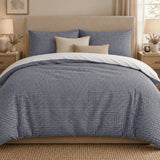
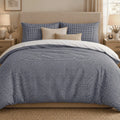
Most of our sets are 100% polyester microfibre with a 3D printed design on the front and a plain white back, fastened with snap buttons, and designed and made in the UK. Turn them inside out and fasten the poppers before each wash, as in the steps above. Our guide to how 3D printed duvet covers work explains what that print is. Every set includes the matching pillowcases, from £26.99 for a single. Browse our printed duvet cover sets.
Written by the Adam Home team in the UK.