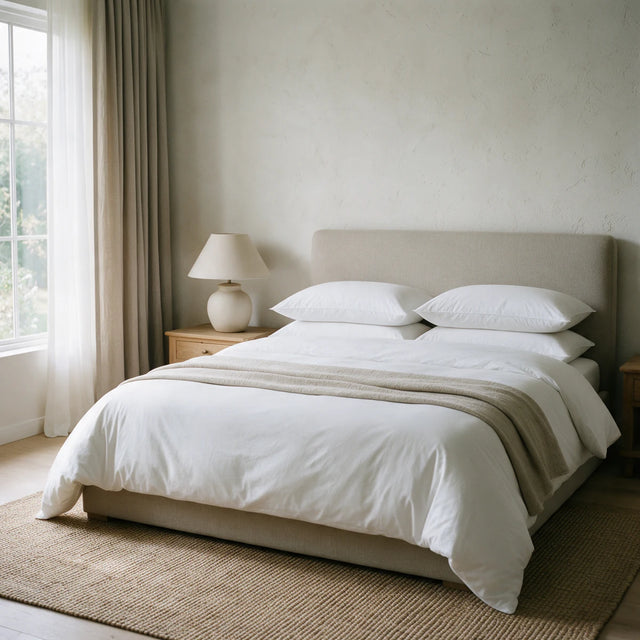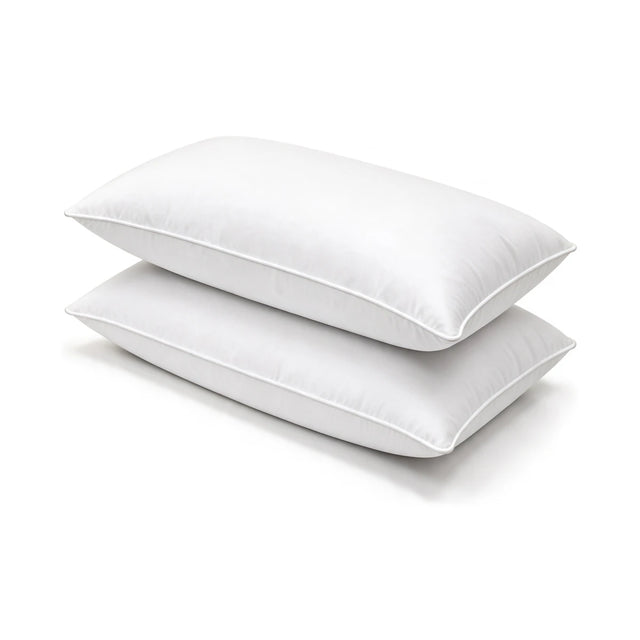
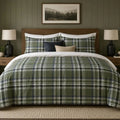

Microfibre bedding is bedding made from microfibre, a synthetic fabric woven from fibres finer than 1 denier, mostly polyester. It's good bedding for anyone who wants a soft, durable, low-crease fabric that's warm in winter. It's a weaker choice for hot sleepers and very sensitive skin, because it breathes less than cotton. This guide lists 5 pros and 3 cons, then answers whether microfibre is breathable, good for skin and good for winter.
| Microfibre | Cotton | |
|---|---|---|
| Fibre | Synthetic, mostly polyester | Natural |
| Breathability | Lower, holds heat | Higher, cooler |
| Durability | Higher, from the tight weave | Lower |
| Creasing and shrinking | Less prone | More prone, can shrink on first wash |
| Static | More likely | Less likely |
| Staining | More prone | Less prone |
| Price | Lower | Higher |
The comparison follows the Sleep Foundation's microfibre against cotton review.
What is microfibre?
Microfibre is a synthetic fibre finer than 1 denier, with a diameter under 10 micrometres, and it's mostly made from polyester. A denier is the weight in grams of 9,000 metres of fibre, so a 1 denier fibre is very fine: 9 kilometres of it weighs 1 gram.
Because each fibre is so fine, a microfibre fabric packs more fibres into the same space than a regular polyester. That tight weave is what makes it soft, smooth and hard-wearing.
What are the 5 pros of microfibre bedding?
Microfibre bedding has 5 main advantages: durability, low creasing, light weight, warmth and price.
- Durable. The Sleep Foundation says microfibre's tight weave makes it more durable than cotton.
- Low-crease. Microfibre is less prone to wrinkling and shrinking than cotton, so it comes out of the wash ready to use.
- Lightweight. The fine fibres make a light fabric, which matters on a large duvet cover.
- Warm. Microfibre holds more heat than cotton, which suits cold bedrooms and people who feel the cold.
- Lower cost. Microfibre bedding costs less than cotton of the same size in the Sleep Foundation's price comparison.
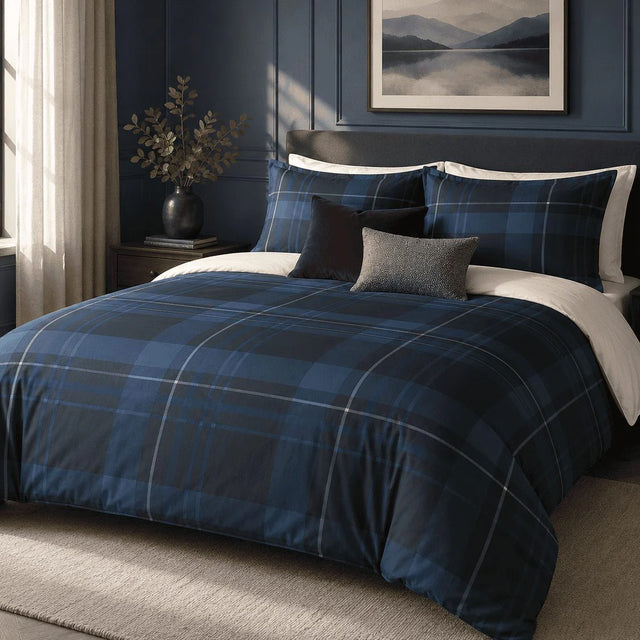
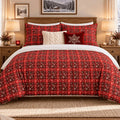
All our microfibre duvet cover sets are 100% polyester microfibre, designed and made in the UK, from £26.99 for a single.
What are the downsides of microfibre sheets?
Microfibre sheets have 3 main downsides: they breathe less than cotton, they build static, and they stain more easily.
- Less breathable. Cotton is more breathable and won't trap heat as easily, according to the Sleep Foundation.
- Static. Microfibre is more likely to build static, especially straight out of a tumble dryer.
- Staining. Microfibre absorbs liquid readily, so spills are more likely to leave a stain if they're left to dry.
Pilling, the small balls that form on worn fabric, can happen with either fabric. The Sleep Foundation says it depends on the finishing process rather than the fibre.

Is microfibre breathable?
Microfibre is less breathable than cotton. Its tight weave of very fine fibres lets less air through, so it holds more body heat. That makes microfibre a warm fabric: good in a cold room, less good for hot sleepers or a hot summer.
The duvet underneath matters more than the cover. A microfibre cover on a light summer duvet stays cooler than a cotton cover on a winter one. Our duvet tog guide for each season matches the duvet to the room.
Are microfibre sheets good for skin?
Microfibre sheets feel smooth on skin, but cotton is the better choice for sensitive skin. The Sleep Foundation describes microfibre as less ideal for people with sensitive skin and cotton as better for allergies. The NHS lists some fabrics and heat among the things that can make eczema worse.
If you have eczema, the NHS advice to keep cool applies at night too, so a breathable fabric and the right duvet tog both help.
Is microfibre good for winter?
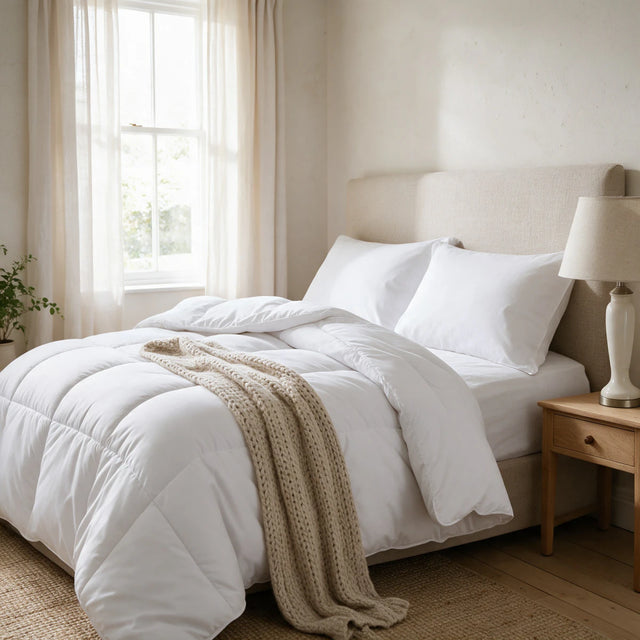
Yes, microfibre is good for winter. It holds more body heat than cotton, and the Sleep Foundation suggests it for cold sleepers and colder climates. A microfibre duvet cover over a 13.5 tog duvet makes a warm winter bed.
Our winter duvet tog guide covers which duvet to put inside it.
Is microfibre the same as polyester?
Microfibre is usually polyester, but not all polyester is microfibre. Microfibre describes how fine the fibre is: under 1 denier and under 10 micrometres across. Polyester is the plastic it's spun from. Microfibre can also be made from polyamides such as nylon, or blends of polyester, polyamide and polypropylene.
Our duvet cover sets are 100% polyester microfibre, so they're both.
Is microfibre good for allergies?
Cotton is the better fabric for allergies, according to the Sleep Foundation. For a house dust mite allergy, NHS leaflets put the weight on 2 other things: zipped covers that fully enclose pillows and mattresses, and washing bedding at 60°C, which kills mites. A cooler wash removes only some of them.
Check the care label before washing any bedding at 60°C. Our microfibre pillow protectors carry an anti-allergy treatment and zip shut along the full width.
How long does microfibre bedding last?
Microfibre bedding lasts longer than cotton, because its tight weave is more durable, according to the Sleep Foundation. How long it looks new depends on the finish and on how it's washed. A gentle wash and a low dryer setting keep the surface smooth for longer.
How do you wash microfibre bedding?
Wash microfibre bedding by its care label, and keep it away from high heat. Our duvet cover sets are machine washable. Wash a spill out before it dries, because microfibre absorbs stains.
Microfibre dries faster than cotton and needs little or no ironing, because it resists creasing.
Who should choose microfibre bedding?
Choose microfibre bedding if you want something durable, low-crease, warm and lower in price, for example for a cold bedroom, a guest room or a busy household. Choose cotton if you sleep hot or have sensitive skin.
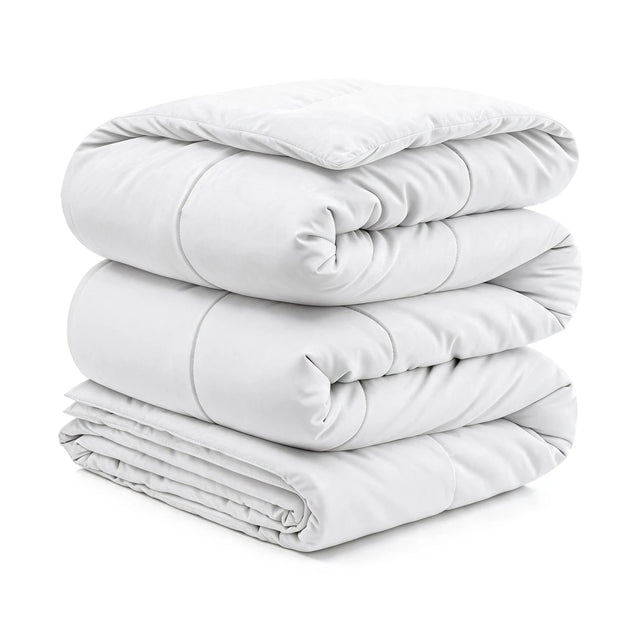
Microfibre is also the fabric in other bedding. Our fitted sheets and pillow protectors are brushed microfibre, and our duvets use a microfibre shell over hollowfibre filling. Our guide to what hollowfibre is explains the filling.
Written by the Adam Home team in the UK.