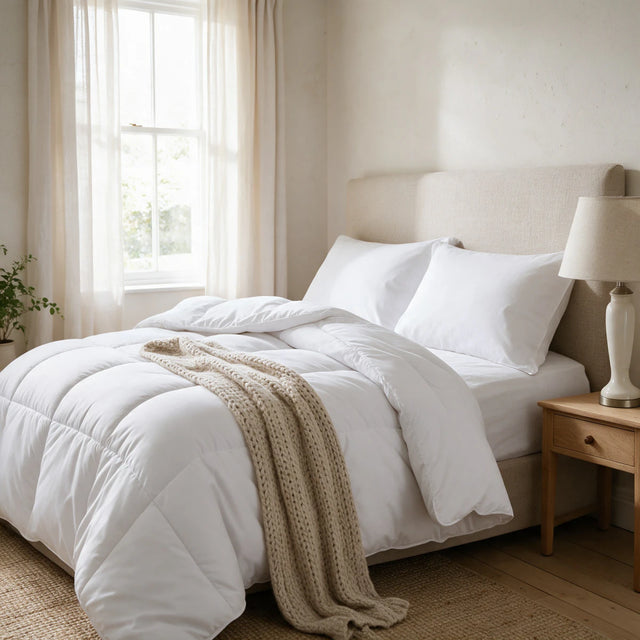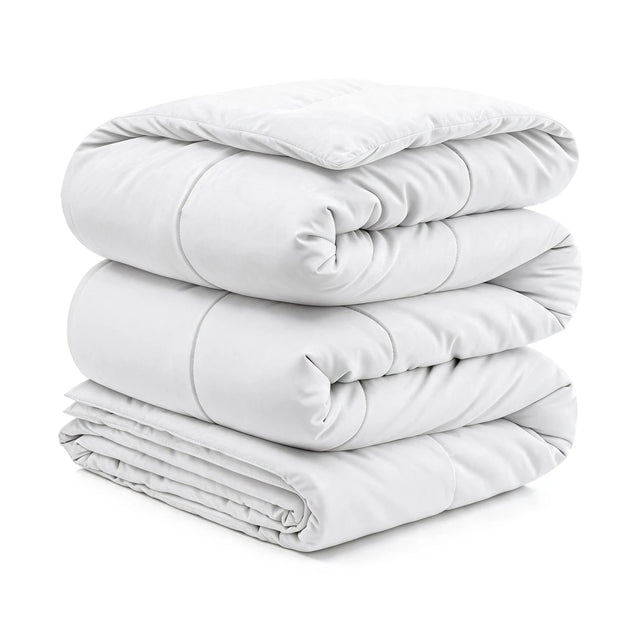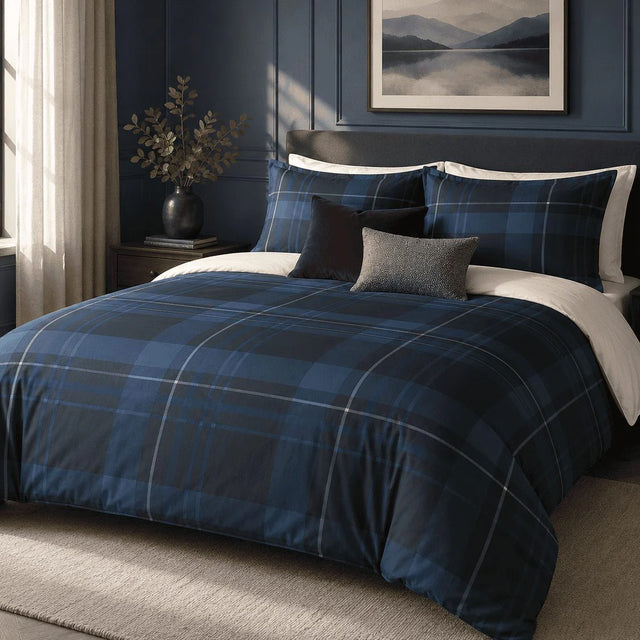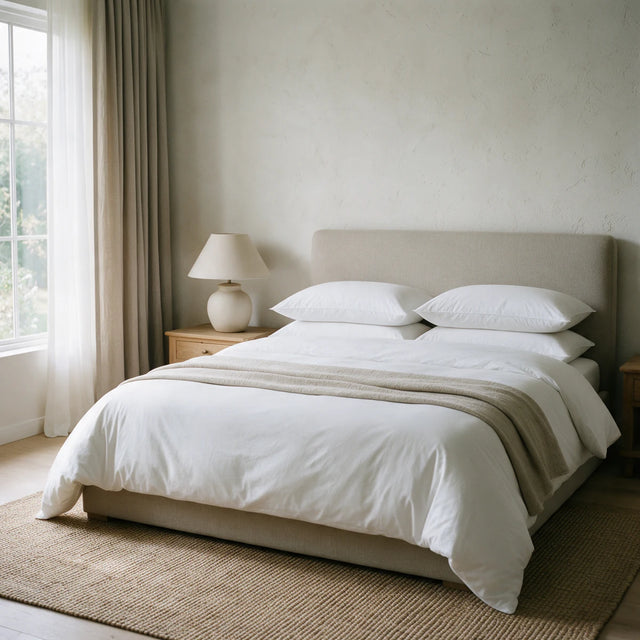
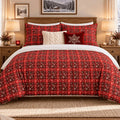
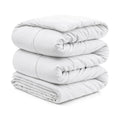
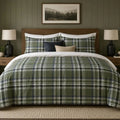

A duvet is a filled bag that goes inside a removable cover, a comforter is the American name for a similar bed covering with its outer fabric sewn on and no separate cover, and a quilt is a thinner layered cover stitched through all its layers. So the 3 differences are the cover, the warmth and the way you wash it. The words also shift between countries: in Britain "comforter" is hardly used, and "quilt" often just means a duvet. Below, each one in turn, and what to buy if you're shopping in the UK.
| Duvet | Comforter | Quilt | |
|---|---|---|---|
| Filling | Down, feathers, wool, cotton, silk or synthetic fibre | Down, feathers, down alternative, cotton, wool or silk | A thin layer of batting between 2 fabric layers |
| Cover needed | Yes, a removable duvet cover | No, the outer shell is sewn on | No |
| Washing | Wash the cover with your sheets; wash the duvet itself less often, by its care label | The whole thing goes in the wash, which is bulky | The whole thing; some need a large-capacity machine |
| Warmth rating | Tog rated in the UK: the higher the tog, the warmer | Usually thinner and less warm than a duvet | Generally the thinnest of the 3 |
| Typical UK use | The main bed covering, used instead of a top sheet and blankets | Rarely used as a word in the UK | Often an older name for a duvet; also a stitched patchwork cover |
The cover is the biggest of the 3 differences, because it decides how you wash the bedding and what you replace when it wears out.
What is the difference between a duvet and a comforter?
A duvet sits inside a removable cover, and a comforter has its outer fabric built in, so you use it as it is. The Sleep Foundation also says duvets tend to be thicker, heavier and warmer than comforters. Both are filled bags of fabric, so the real split is the cover.
A comforter is two lengths of fabric sewn together with a filling inside, stitched or quilted to keep that filling spread out. In the US it usually goes on top of a flat sheet, often without a cover. A British duvet works the other way round: it replaces the top sheet and blankets, and the cover is what you change and wash each week.
You can take a duvet cover off and launder it as often as the bottom sheet, and the duvet underneath stays clean for longer. With a comforter, any spill means washing the whole thing. The Sleep Foundation points out that a damaged comforter has to be replaced, while a duvet owner may only need a new cover.

What is a coverless duvet?
A coverless duvet is a duvet made to be used without a duvet cover, so its outer fabric is the part you sleep under. In practice it works like an American comforter: one piece of bedding with nothing to strip off.
Some UK bedding brands now sell them, and you never have to wrestle a cover on. The catch is washing. With a normal duvet you wash the cover each week. A coverless duvet goes through the machine whole every time it needs cleaning.
We don't sell a coverless duvet or a comforter. Our microfibre duvet is a standard duvet that goes inside a cover.
Is a quilt the same as a duvet?
In British English, often yes: "quilt" and "continental quilt" are long-standing names for a duvet. In American English, no: a quilt is a thinner layered cover stitched through, and the thick filled one is a comforter.
The name goes back to the mid-19th century, when feather bed coverings first arrived in Britain and were known as continental quilts. Terence Conran is reported to have introduced duvets to Britain through his London Habitat shop from 1964. Wikipedia lists quilt, continental quilt, duvet and eiderdown as the words British people use for this kind of bedding.
A quilt in the stricter sense is a multi-layered textile, usually 3 layers with a filling in the middle, held together by stitching that runs through all the layers. Patchwork quilts are made from many small pieces of fabric. The Sleep Foundation describes quilts as generally thinner than other bedding and not always as warm, which is why they suit warm months and hot sleepers.
What is an eiderdown?
An eiderdown is the thinner British bed covering that came before the duvet, used on top of a sheet and blankets for extra warmth. Until the 1970s it was the usual filled cover on a British bed.
The name comes from the down of the eider duck, which was used to stuff them. The duvet's big change was dropping the layers: one duvet in a cover replaced the top sheet, the blankets and the eiderdown.
What do Americans and Brits call each one?
Americans say "comforter" for the thick filled cover and use "duvet" mostly for the cover that goes over it, while Brits say "duvet" for the filled part and "duvet cover" for the case. Wikipedia notes the term comforter is "not generally used" in the UK.
This trips people up when shopping online. An American "duvet" listing may be just a cover with no filling. A British "duvet" is the filled part and is sold without a cover. In older British English, "comforter" also meant a woollen scarf, which has nothing to do with bedding.

Which is warmest: a duvet, a comforter or a quilt?
A duvet is usually the warmest of the 3, then a comforter, then a quilt. In the UK, duvet warmth is measured in togs, and the higher the tog rating, the warmer the duvet.
Comforters and quilts usually go over a top sheet, so the layers together set the warmth. A duvet does that job alone, which is why the tog number matters when you buy one. Our duvet tog guide matches togs to the seasons.
What should you buy if you want a comforter in the UK?
In the UK, buy a duvet and a duvet cover set: that pairing does the job a comforter does in the US. If you searched for a comforter for a double bed, the UK match is a double duvet, 200 x 200 cm, in a double cover.
Check the cover size against the duvet before you buy. Our guide to UK duvet sizes lists every size in cm.
Which duvets and covers do we sell?
Our microfibre duvet has a hollowfibre filling, a down alternative made from hollow polyester fibres with no feathers. Stitched channels keep the filling spread evenly. It comes in 7 togs, from 1 to 15, in Single (135 x 200 cm), Double (200 x 200 cm), King (225 x 220 cm) and Super King (260 x 220 cm), from £15.99. It's machine washable. See all our duvets.
Our guide on what hollowfibre is explains the filling in more detail.
For the cover, our duvet cover sets are 100% polyester microfibre with snap-button closures, designed and made in the UK. Each set has a duvet cover and pillowcases: 1 with a Single and 2 with a Double or larger. Sets start at £26.99 for a Single and £30.99 for a Double. The duvet itself isn't included in a cover set.
Written by the Adam Home team in the UK.