


Yes, you can tumble dry most duvets with a synthetic, hollowfibre or down filling, on a low heat, as long as the care label shows the tumble dry symbol. Wool duvets shouldn't go in a dryer, because heat and movement felt the wool. Silk duvets are usually spot cleaned and aired instead. Below: what the label symbols mean, the setting for each filling, and how to tell when a duvet is properly dry.
| Filling | Tumble dry? | Setting | What the makers say |
|---|---|---|---|
| Synthetic or hollowfibre | Usually yes, if the label allows | Low or cool heat | John Lewis: tumble dry on a cool setting until completely dry |
| Feather and down | Often yes, check the label | Low heat, with dryer balls | M&S: low heat with dryer balls so the filling doesn't clump |
| Wool | No | Air dry flat or over a line | Devon Duvets: never tumble dry a wool duvet |
| Silk | Rarely needed | Air on a line | Gingerlily: silk duvets should almost never need cleaning |
The care label on your own duvet always overrides this table.
Can you put a duvet in the dryer?
Yes, you can put a duvet in the dryer if its care label shows the tumble dry symbol, a circle inside a square. One dot inside the circle means a reduced temperature, two dots mean normal heat, and a cross through the symbol means the duvet doesn't tolerate machine drying.
These symbols come from the ISO 3758 care labelling code, which GINETEX, the international care labelling association, helped to write. GINETEX also lists natural drying symbols, drawn as lines inside a square, for line drying and flat drying.
Sleep Foundation says duvets filled with down, down alternative or polyester can go in the dryer, while wool, silk or feather fillings can't. Other guides allow feather on low heat, so the label decides.

How do you tumble dry a duvet?
Tumble dry a duvet on its own, on low heat, with dryer balls, and run extra cycles until every part is dry. Shake the duvet out before it goes in and between cycles so the filling spreads evenly.
Here are the 6 steps:
- Check the label for the tumble dry symbol and the number of dots.
- Run an extra spin after washing. M&S says this removes excess water and speeds up drying.
- Shake the duvet out so it isn't folded or twisted, then load it alone. Sleep Foundation says not to dry it with other bedding, including the duvet cover.
- Choose low heat or your dryer's duvet programme, if it has one. Bosch says the duvet programme is listed in the user manual.
- Add dryer balls or clean tennis balls.
- Check the duvet after each cycle, shake it, and repeat until it's completely dry.
Our guide on how to wash a duvet covers the wash itself: temperature, detergent and drum size.
What setting do you use for each duvet filling?
Use low or cool heat for synthetic, hollowfibre and down duvets, and no tumble drying at all for wool. Silk duvets rarely need washing, so airing them on a line usually replaces drying.
Synthetic and hollowfibre. John Lewis tells customers to tumble dry its washable synthetic duvet on a cool setting until completely dry. Belledorm notes that synthetic duvets are very absorbent and says to tumble dry on low if the label allows. Our guide to what hollowfibre is explains how the hollow polyester fibres trap air.
Feather and down. M&S advises a low heat with dryer balls so feather or down doesn't clump. Soak&Sleep warns that some feather and down fills clump and lose their warmth if they aren't properly dried, and recommends professional drying. The German down and feather industry association, VDFI, also says down and feathers should be dried professionally.
Wool. Devon Duvets says to never tumble dry a wool duvet: even a cool setting adds heat and movement that can shrink or felt the wool, and that damage can't be reversed. Spread it flat or drape it over a strong line or airer.
Silk. Gingerlily, sold through John Lewis, says a silk duvet in a washable cover should almost never need cleaning, and suggests airing it on an outdoor line once or twice a year. Its washing instruction is spot clean only.
What size tumble dryer do you need for a duvet?
You need a large-capacity dryer with room for the duvet to tumble freely. Beko suggests a 10 kg or larger dryer if you regularly dry duvets, and describes a 7 kg dryer as fine for a light bedding load.
No appliance maker we found publishes a dryer size for each duvet size, so the duvet's volume matters more than its weight. Bosch recommends drying large items on their own, without overloading, and checking the maximum load for each programme in the manual.
A washer-dryer dries less than it washes. Which? gives the example of a model that washes 8 kg but dries 5 kg, so check the drying figure, not the washing one. If your dryer is too small, Soak&Sleep recommends professional cleaners, whose large-capacity machines suit a duvet.

Do dryer balls or tennis balls help a duvet dry?
Yes, dryer balls and clean tennis balls help a duvet dry evenly. Sleep Foundation says they help fluff the filling and may speed up drying, and M&S says they stop down or feather fillings clumping together.
Belledorm suggests a couple of tennis balls for natural fillings too. Leave them out for wool, which shouldn't go in the dryer at all.
How long does a duvet take to dry?
A duvet takes several hours to dry, and it may need a few tumble drying cycles before it's completely dry. Air drying takes longer than machine drying: Sleep Foundation gives anywhere from a few hours to a full day.
Soak&Sleep says a feather and down duvet can take several hours of tumble drying. We haven't found a maker who publishes exact times by size, so check the duvet rather than the clock.
How do you dry a duvet without a dryer?
Dry a duvet without a dryer by laying it flat on a large drying rack in a well-ventilated room, hanging it over a bannister, or pegging it on an outdoor washing line. Shake it often to spread the filling, as M&S advises.
M&S also suggests a dehumidifier when drying indoors, to speed things up and prevent damp, musty smells. Sleep Foundation says to unfurl the duvet so it isn't folded or twisted, and to let air reach both sides.
How do you know a duvet is fully dry?
A duvet is fully dry when it weighs the same as it did before washing and no damp spots remain in the corners or seams. Soak&Sleep suggests weighing it before the wash and after drying. If the two weights match, it should be dry.
Without scales, feel the duvet all over with your hands, as Sleep Foundation suggests, and pay attention to the thickest parts and the corners.
Don't put a damp duvet back on the bed or into storage. Sleep Foundation and M&S both warn that dampness leads to mildew or mould, and Sleep Foundation adds that the filling can clump.
Can you tumble dry an Adam Home duvet?
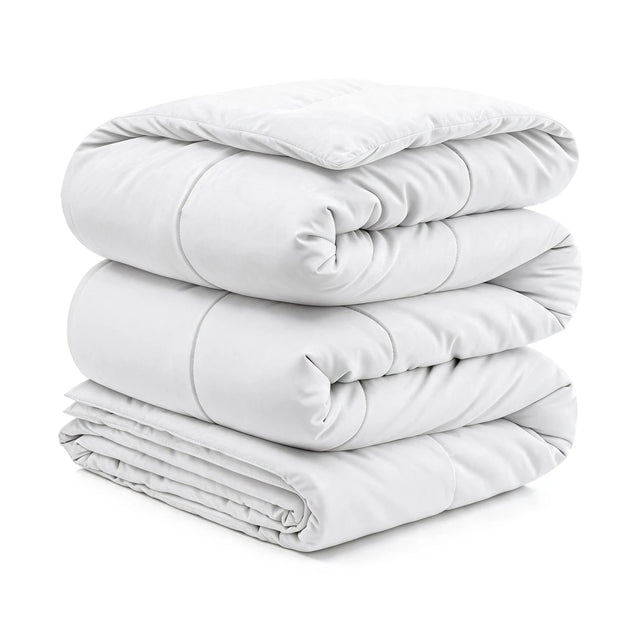
Follow the care label on your Adam Home duvet before you tumble dry it. Our machine washable duvet has a hollowfibre down-alternative filling, with no feathers, in stitched channels. The product page doesn't give a tumble dry instruction, so the label is the guide.
It comes in 7 togs from 1 to 15, in single, double, king and super king, from £15.99. Whatever the drying method, get it completely dry before you put the cover back on.
Written by the Adam Home team in the UK.