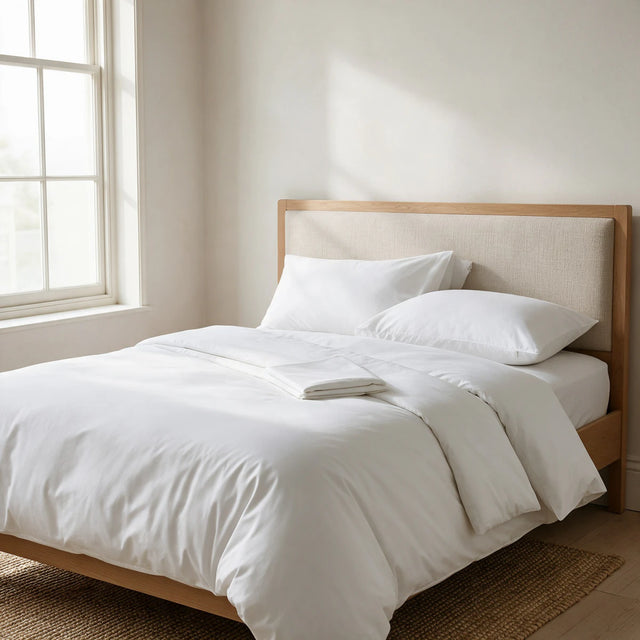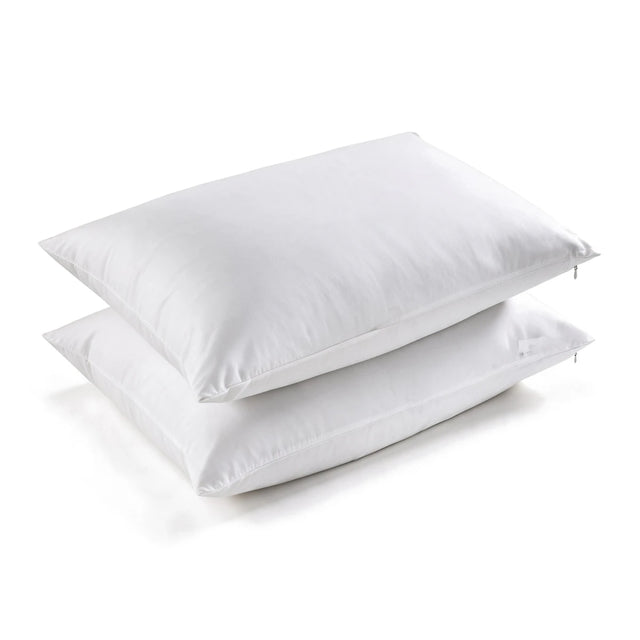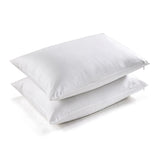
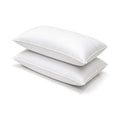
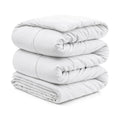
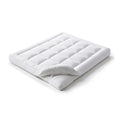


A pillow protector is a zipped cover that goes on the pillow itself, under the pillowcase, to keep sweat, skin oils, dust and allergens out of the filling. It stays on when the pillowcase comes off for washing. You need one if you have a house dust mite allergy, sleep on feather pillows, or want your pillows to stay clean between washes. This guide explains what a protector does, whether you need one, how it differs from a pillowcase, and how to choose and wash one.
| Pillow protector | Pillowcase | |
|---|---|---|
| Goes on | The pillow | Over the protector |
| Closure | Zip, fully enclosed | Open end or flap |
| Job | Keeps the filling clean | The surface you sleep on |
| Washed | Less often, and after spills | About weekly |
| Standard UK size | 50 x 75 cm | 50 x 75 cm or 48 x 74 cm |
What is the point of pillow protectors?
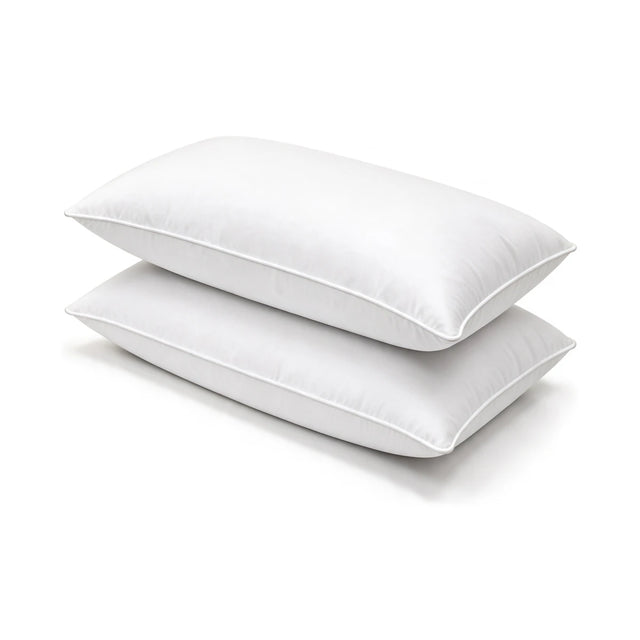
The point of a pillow protector is to keep the pillow's filling clean. A pillowcase is a thin, open layer, so sweat, skin oils and dust pass through it into the pillow. A protector adds a second, zipped layer that stops them reaching the filling, so the pillow itself rarely needs washing.
A protector also helps people with a house dust mite allergy. NHS allergy leaflets recommend zipped covers that fully enclose pillows and mattresses, so mites and their allergens are sealed away from the person sleeping.
Do I really need a pillow protector?
You need a pillow protector if you have a house dust mite allergy or asthma, use feather pillows, or want pillows to stay clean between washes. You can manage without one if you replace pillows often and wash them regularly.
The Sleep Charity advises replacing pillows every 2 to 3 years. A protector won't stop a pillow wearing out, but it keeps the filling clean for that whole life. Our pillow protectors start at £9.99 for 2.

Do you put a pillowcase over a pillow protector?
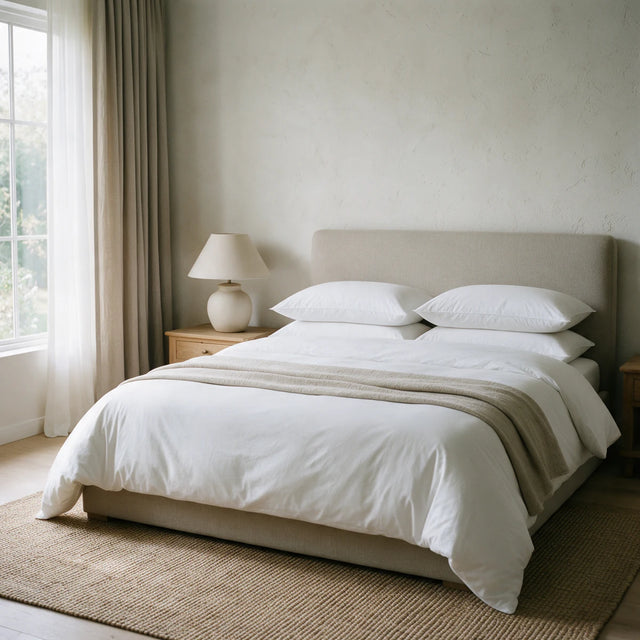
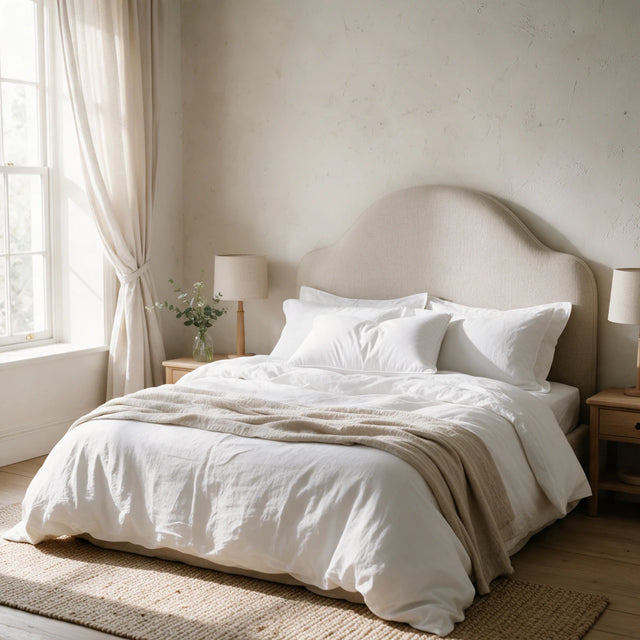
Yes, the pillowcase always goes over the pillow protector. The protector zips onto the pillow and stays there, and the pillowcase goes on top as the layer you sleep on. When you change the bed, the pillowcase comes off for washing and the protector stays on the pillow.
That order is the same in a fully made bed: pillow, protector, pillowcase. Our guide on how to make a bed gives the order for every layer.
Can you use a pillow protector instead of a pillowcase?
No, a pillow protector isn't made to replace a pillowcase. It's a plain white functional layer, washed less often than a pillowcase, so sleeping on it directly means washing it weekly and losing the barrier it's there to provide. Use both: the protector underneath, the pillowcase on top.
Why does a pillow protector need a zip?
A pillow protector needs a zip because only a fully enclosed cover keeps dust mites and allergens away from the pillow. A flap opening, like the flap on a housewife pillowcase, leaves a gap. NHS allergy leaflets specify zipped covers that fully enclose the pillow for that reason. Both of our protectors zip shut.
Which kind of pillow protector should you choose?
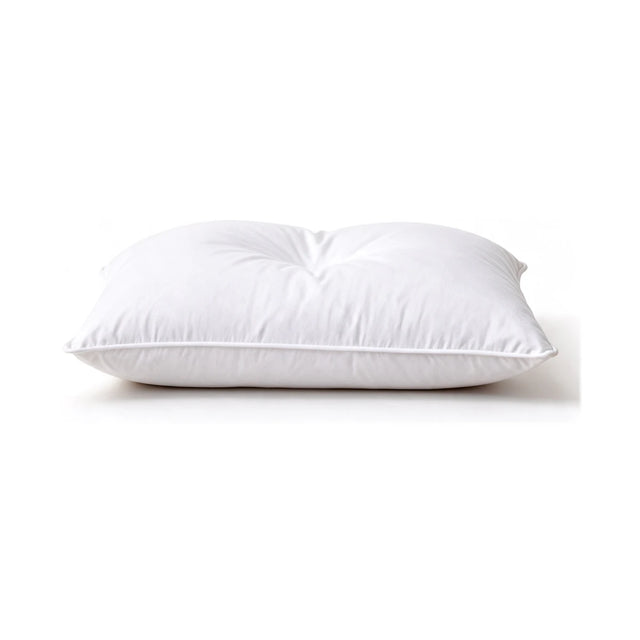
Choose between 2 kinds: quilted and plain. A quilted protector adds a thin padded layer you can feel through the pillowcase and stops feather quills poking through. A plain microfibre protector is a single smooth layer you won't notice. Our guide to quilted vs plain pillow protectors compares them in detail.
| Protector | Fabric | 2 pack |
|---|---|---|
| Microfibre | 100% brushed microfibre, full-width zip | £9.99 |
| Quilted white | Diamond-quilted polycotton, full zip | £9.99 |
| Quilted bamboo or cooling | Quilted, full zip | £13.99 |
| Quilted copper | Quilted, full zip | £14.99 |
Do feather pillows need a protector?
Yes, feather pillows benefit most from a protector, because a quilted protector stops quills working through into the pillowcase. Our duck feather pillows have a double-stitched, feather-proof cotton cover, and their product page recommends pairing them with our quilted protectors, which are woven to stop feather poke-through. The quilted protector's own page states that it stops feather leakage from older pillows.
Do pillow protectors make you hot?
A plain microfibre protector adds the least warmth, because it's a single breathable layer with no membrane. A quilted protector adds a thin layer of filling, which holds in a little more warmth. If you sleep hot, choose the plain one. Plastic-backed protectors trap the most heat, and neither of ours has a plastic layer.
How many pillow protectors do you need?
You need one protector for every pillow in use, plus a spare set if you want one on while the other's in the wash. A double bed with 2 pillows each needs 4 protectors, or 8 with spares. Our protectors come in packs of 2, 4, 6 and 8, so an 8 pack covers 4 pillows twice over.
Are pillow protectors waterproof?
No, our pillow protectors aren't waterproof. They're breathable fabric barriers, and the microfibre one is made without a membrane, so it stays quiet. They slow a spill down, but a large spill can still reach the pillow. Wash the protector straight away after one.
For a waterproof layer, our waterproof mattress protector comes in small double and cot bed sizes, with a terry cotton top.
What size pillow protector do you need?
A standard UK pillow needs a 50x75 cm protector. A standard pillow is 48x74 cm, so the protector fits it with a little room to zip. Our chart of UK pillow sizes covers king, square and toddler pillows.
How often should you wash a pillow protector?
Wash a pillow protector less often than the pillowcase over it, and straight away after a spill. Pillowcases go in the wash about weekly, as the Sleep Foundation advises for bedding. Our quilted protectors wash at 40°C and tumble dry low, and our microfibre protectors machine wash and dry.
For a house dust mite allergy, NHS leaflets say a 60°C wash kills mites while cooler washes remove only some, so check the care label before washing hotter.
Written by the Adam Home team in the UK.