
The best duvet for hot sleepers is a low tog duvet, one band lighter than the average: 1 tog in summer, 4.5 tog in spring and autumn, and 7.5 tog in winter. Couples who share one duvet can often go lighter again, because two people heat the bed. This guide covers which tog suits each season, what to choose for two people, whether a size up helps, the bedroom temperature to aim for, which fillings and covers breathe best, whether microfibre runs warm, and what helps with menopause night sweats.
Here's the tog we'd pick by sleeper and season:
| Sleeper | Season | Suggested tog |
|---|---|---|
| Hot sleeper, alone | Summer | 1 tog |
| Hot sleeper, alone | Spring and autumn | 4.5 tog |
| Hot sleeper, alone | Winter | 7.5 tog, or 10.5 tog in a cold room |
| Couple, one or both run hot | Summer | 1 tog |
| Couple, one or both run hot | Spring and autumn | 2.5 to 4.5 tog |
| Couple, one or both run hot | Winter | 7.5 tog |
| Night sweats, for example in menopause | All year | One band below your usual tog |
The usual UK comfort bands for adults are 1 to 2.5 tog minimal, 3 to 4.5 tog summer, 7.5 to 10.5 tog spring and autumn, and 12 to 13.5 tog winter. The table moves a hot sleeper down one band. It's our suggestion, not an official chart, because no official tog chart for hot sleepers exists.
What tog is best for hot sleepers?
The best tog for hot sleepers is 1 tog in summer, 4.5 tog in spring and autumn, and 7.5 tog in winter. Expert Reviews advises a lower tog rating if you're a hot sleeper, and these weights sit one comfort band below the usual choice.
Tog measures thermal resistance, so a lower number holds less of your body heat in. 4.5 tog holds 0.45 square metre kelvin per watt and 10.5 tog holds 1.05, more than twice as much. If you wake up sweating under a 10.5 tog in October, 4.5 or 7.5 tog is the obvious next step. Our duvet tog guide covers the full range for average sleepers, and the summer duvet tog guide covers hot nights in more detail.
What tog duvet is best for two people?
If one or both of you run hot, the best tog duvet for two people is 1 tog in summer, 2.5 to 4.5 tog in spring and autumn, and 7.5 tog in winter.
If one of you runs hot and the other runs cold, pick the tog for the hot sleeper. The colder partner can add a throw on their side, which is easier than the hot sleeper lying half out of a heavy duvet. Time4Sleep's Jonathan Warren, quoted by Expert Reviews, describes another route: the Scandinavian sleep method, where a couple share a bed but each has their own duvet. Two single duvets let each of you choose a different tog.
Why do couples sleep hotter under one duvet?
Couples sleep hotter under one duvet because each person adds body heat to the same covered space. Sleep Foundation says the average adult produces between 75 and 90 watts of heat overnight, and that a partner, child or pet raises the bed's temperature further.
Sleep Foundation's advice for people who overheat next to a partner goes as far as a separate bed. Most couples try a lighter duvet first, and that's where we'd start too.
Should couples buy a duvet one size bigger?
Yes, couples can buy a duvet one size bigger so each person has more duvet to themselves. Expert Reviews says you may want to go a size up if your partner hogs the duvet or if you're tall.
A bigger duvet gives you more width to move away from your partner's side without losing your own cover. On a 135 cm double bed, our double duvet is 200 cm wide and a king is 225 cm, so a size up adds 25 cm across the bed. Split between two people, that's 100 cm each under a double, 112.5 cm under a king and 130 cm under a super king.

A size up also needs a cover in the same size, and it hangs lower at the sides. A king duvet on a double bed hangs about 45 cm each side, which can touch the floor on a low bed. Our duvet size guide has the overhang for each bed.
What temperature should a bedroom be for hot sleepers?
A bedroom for hot sleepers should be around 16 to 18°C, the range The Sleep Charity recommends. Sleep Foundation gives a slightly wider range of 15.6 to 20°C (65 to 68°F), with about 18.3°C as the best room temperature for sleep.
The duvet can only do so much in a hot room. If the bedroom is still above 20°C at bedtime, even 1 tog can feel warm. The Sleep Charity's hot-night advice is to use just a cotton sheet, or a duvet with a low tog rating, and to wear light cotton nightwear. The NHS suggests keeping curtains and blinds shut during the day and opening windows at night when it's cooler outside.

Is microfibre too warm for hot sleepers?
No, a microfibre duvet isn't too warm if you choose a low tog, because the tog rating measures how warm the whole duvet is. A 1 tog microfibre duvet is far cooler than a 10.5 tog duvet with any filling.
The fabric still matters next to your skin. Sleep Foundation's comparison of sheets says microfibre traps heat more easily than cotton, and that cotton's natural fibres suit sleepers who run hot. Our guide to microfibre bedding covers that trade-off. Our own product page describes the microfibre duvet as "Lightweight and breathable", and it weighs around 1.2 to 2.2 kg depending on size.
Which duvet fillings and covers breathe best?
Natural fillings and cotton covers breathe best for most hot sleepers. Sleep Foundation recommends bedding that is lightweight, breathable and moisture-wicking, and lists fleece and down as insulating fabrics hot sleepers should avoid.
Mark Tremlett of Naturalmat, quoted by Expert Reviews, says a natural duvet gives the best breathability, and that wool releases heat when it gets a little too warm. A low tog hollowfibre duvet is the other route: the warmth drops with the tog, and you can pair it with a cotton or cotton-rich sheet and pillowcases to keep cotton against your skin.
What tog duvet helps with menopause night sweats?
A lower tog than you'd normally use helps with menopause night sweats, together with a cool bedroom. Expert Reviews suggests a lower tog for hot sleepers, especially during menopause, and the NHS advises keeping your bedroom cool at night.
The NHS describes hot flushes as your face, neck and chest suddenly feeling very hot or cold, and calls them night sweats when they happen at night. Its other suggestions are lightweight clothing, a cool shower, a fan or a cold drink, and cutting down on triggers such as spicy food, caffeine, hot drinks, smoking and alcohol.
Night sweats have other causes too, including anxiety, some medicines and low blood sugar. The NHS says to see a GP if you have night sweats regularly that wake you up or worry you, or if they come with a fever, a persistent cough or weight loss you can't explain. A lighter duvet isn't a reason to put that visit off.
Which Adam Home duvet suits hot sleepers?
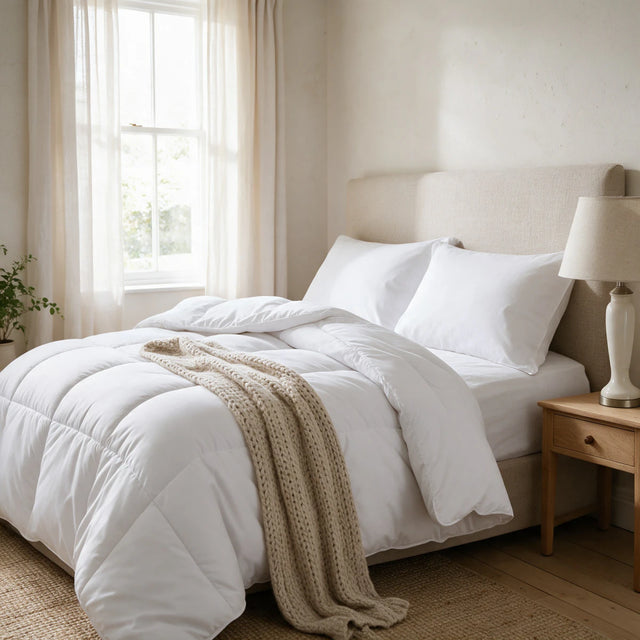
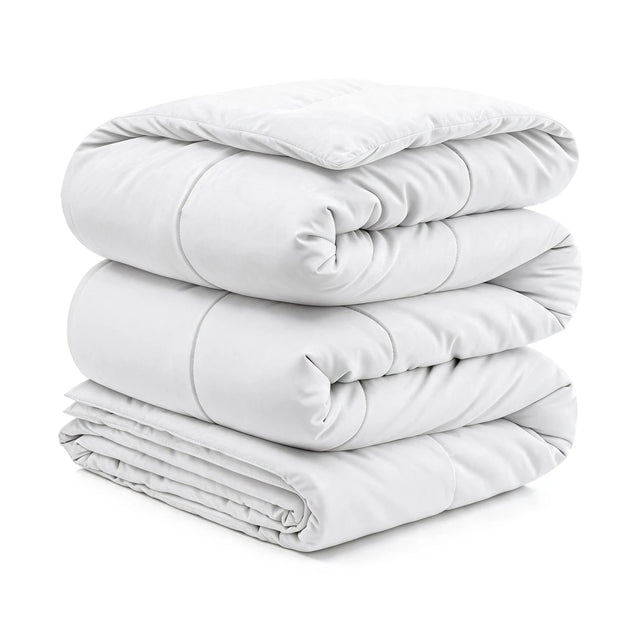
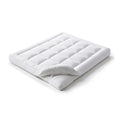
Our microfibre duvet suits hot sleepers in its lightest weights: 1, 2.5 and 4.5 tog. These low tog duvets have a hollowfibre down-alternative filling with no feathers, held in stitched channels so the filling stays spread out.
1 tog comes in double and king, from £15.99. 2.5 tog starts at £16.99 and 4.5 tog at £17.99, from single size. The same listing goes up to 7.5 tog for a hot sleeper's winter, and on to 15 tog. It's machine washable, which helps if night sweats mean more washing than usual.
Written by the Adam Home team in the UK.