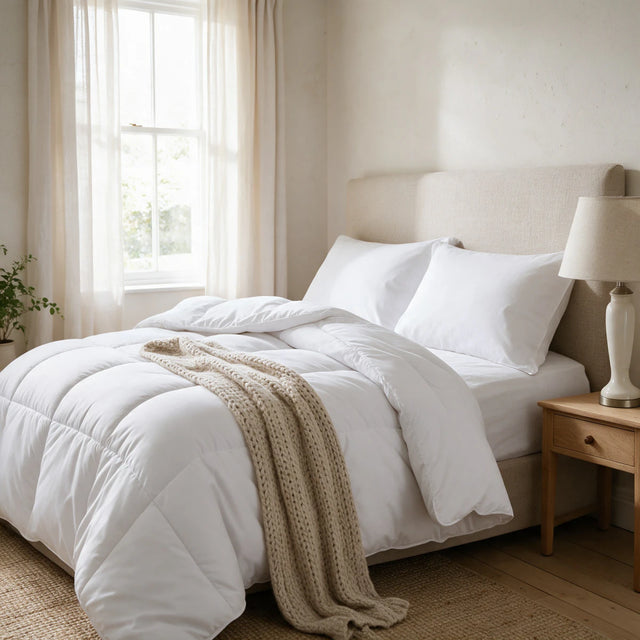




Replace a synthetic duvet every 2 to 5 years. Natural fillings last longer: Woolroom puts feather duvets at 5 to 8 years, feather and down at 7 to 10 and wool at 10 to 15, and most UK bedding brands give about five years as the general rule. Condition counts for more than age, so a duvet that has gone flat, lumpy, cold or smelly needs replacing even if it's only two years old. This guide covers how long a synthetic duvet lasts, lifespans by filling, the 7 signs a duvet is worn out, how washing and covers make one last, and what to do with an old duvet in the UK.
How often should you replace a duvet?
Replace a duvet about every 5 years, or every 2 to 5 years if it has a synthetic filling. A well-cared-for natural duvet can go longer, and any duvet showing the signs below should go sooner.
The bedding brands don't agree on one number. Christy says experts "consider replacing your duvet every five years". Soak&Sleep says every two to five years, and adds that a good duvet that's properly cared for may last longer. Land of Beds puts the lifespan of many duvets at five to ten years. Scooms' founders, quoted by Ideal Home, say to replace yours once you've had it for longer than 5 to 7 years, because the filling soaks up body oils and hair that washing stops removing after several years.
Soak&Sleep admits there's no exact rule. We'd use the years as a prompt to check the duvet, then let its condition decide.
How long does a synthetic duvet last?
A synthetic duvet lasts about 2 to 5 years. Woolroom gives that range for hollowfibre and polyester fillings and says synthetic duvets tend to have the shortest lifespan of the main fillings.
The reason is the fibre. Woolroom says synthetic fibres can flatten fairly quickly and stand up less well to repeated washing, and flat fibres trap less air, so the duvet gets less warm. Soak&Sleep makes the same point: a synthetic duvet may need replacing sooner if the filling starts to flatten or clump. Ideal Home's reviewer notes that lumps are often the downfall of cheaper synthetic duvets.
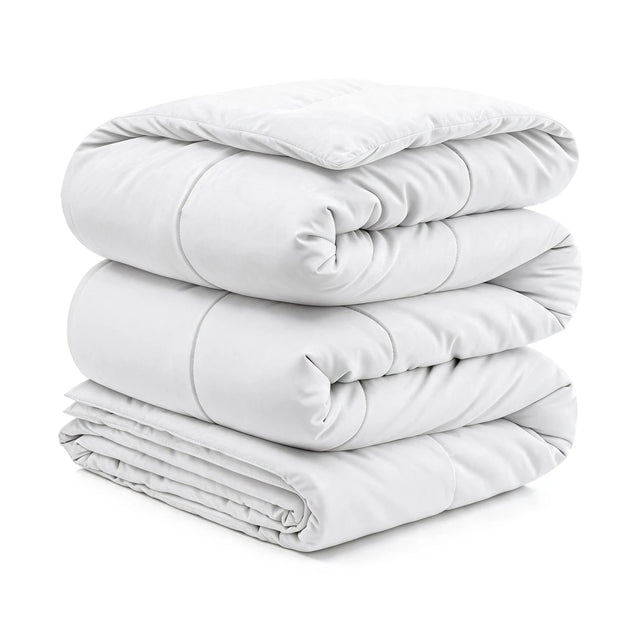
Construction helps. Stitched channels or boxes hold the filling in place, so it can't slide to the edges. Our microfibre duvet has a hollowfibre filling with no feathers, sewn into stitched channels to stop it bunching. It's machine washable and comes in 1 to 15 tog, from £15.99. Our guide to duvet fillings compares synthetic, feather, down, wool and silk.
How long do feather, down and wool duvets last?
Feather duvets last about 5 to 8 years, feather and down about 7 to 10 years and wool about 10 to 15 years, according to Woolroom. Natural fillings generally outlast synthetic ones if you look after them.
| Filling | Typical lifespan | What wears it out |
|---|---|---|
| Synthetic (hollowfibre, polyester) | 2 to 5 years | Fibres flatten and clump, less resilient to washing |
| Feather | 5 to 8 years | Feathers compress and shift, warmth gets uneven |
| Feather and down | 7 to 10 years | Moisture and repeated compression |
| Wool | 10 to 15 years | Crimped fibres spring back, so wear is slower |
All four ranges come from Woolroom, which makes wool duvets, so read the wool figure as a maker's own estimate. Soak&Sleep is less specific: it says feather and down can have a long lifespan when properly cared for, and a good wool duvet can last several years. Woolroom also points out that spills, accidents and care affect lifespan whatever the filling.

What are the signs a duvet needs replacing?
A duvet needs replacing when it stays flat or lumpy after a shake, leaves you cold, smells or stains after washing, or leaks filling. There are 7 signs to look for.
- It's thin and limp. Soak&Sleep calls this one of the first signs, and a flat duvet isn't giving you the warmth it used to.
- Lumps don't shake out. Emma Beck of Bensons for Beds told Ideal Home it's time to replace a duvet when a regular shake no longer fixes clumped filling.
- You wake up cold or feel cold patches. Soak&Sleep lists cold patches and flattened filling as signs.
- Odours or stains stay after washing. Christy and The Fine Bedding Company both name stains that persist after a wash.
- Your allergy symptoms get worse at night. The Fine Bedding Company says dust mites and allergens can build up in an old duvet.
- Filling escapes or the fabric is thinning. Christy notes leaks around the stitching, and Soak&Sleep says repairing a leaking duvet is usually pointless.
- It feels damp. Woolroom lists a feeling of dampness or lingering smells.
One of these on its own, such as a smell, might clear with a wash. Two or three together usually mean the filling is past its best.
How can washing and a cover make a duvet last longer?
Wash the duvet about every six months or as its care label says, dry it completely, air it often and always keep it in a cover. Those four habits slow down the wear on the filling.
Soak&Sleep suggests washing every six months, airing the duvet regularly and using a duvet protector. Christy says a duvet cover shields the duvet from dust, allergens and skin oils, and the cover is far easier to wash. Don't overdo it, though: Christy and Woolroom both warn that washing too often can make the filling lumpy or damage it. Our guide on how to wash a duvet covers drum size, temperature and drying.
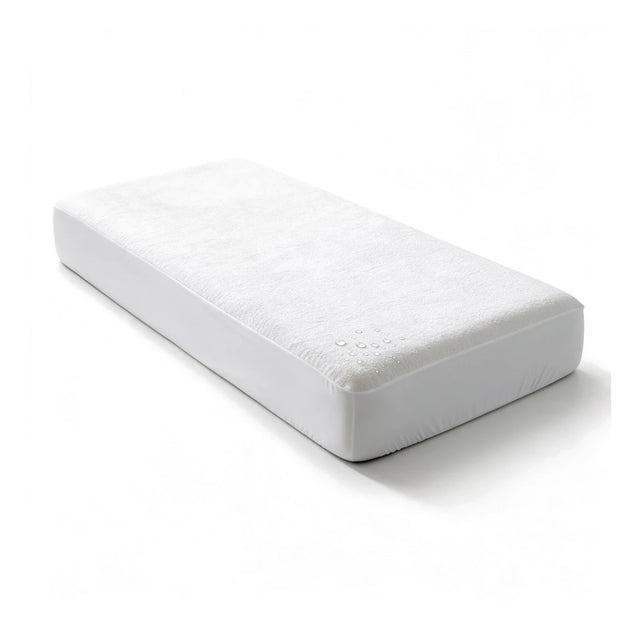
Make sure it's fully dry before it goes back on the bed or into a cupboard. Soak&Sleep says this for every duvet, and a damp duvet is one of Woolroom's replacement signs. Out of season, a breathable bag helps, as our guide to storing a duvet explains. A zipped protector does the same job for your pillows, which our pillow protectors guide covers.

What should you do with an old duvet?
Give a clean duvet in good condition to an animal charity, and put a ripped or soiled one in general waste. Most council textile banks don't take duvets, so check your council's A to Z first.
Warwickshire County Council says duvets, pillows and quilts are generally non-recyclable and can't go in its textile banks, but some animal charities may use them for bedding. Worcestershire County Council says the same about its textile banks, suggests animal charities or offering a good duvet free for reuse, and says a ripped or stained one goes in the black or grey bin or the non-recyclable container at a recycling centre.
Ring before you drop one off. Julia Youd of Dogs Trust told Ideal Home that people can contact their local Dogs Trust rehoming centre or another animal rescue, but that Dogs Trust doesn't accept feather-filled duvets. Ideal Home also says some homeless charities take duvets only if they're thoroughly clean, and most charity shops don't take used ones. Dunelm's in-store take-back scheme excludes duvets and pillows too.
The cover is easier. Worcestershire suggests charity shops for old duvet covers in good condition, and Warwickshire's textile banks take bedding other than duvets, pillows and quilts.
What should you look for in a replacement duvet?
Choose the filling and tog first, then the size. A synthetic filling costs less and is easy to wash, while a natural filling usually lasts longer.
If you go synthetic, look for stitched channels or boxes and a machine-washable label, so you can wash it at home every six months. Our duvets are hollowfibre in Single to Super King, with seven togs from 1 to 15. Whatever you buy, keep a note of the month it arrived. Then in five years you won't have to guess how old it is.
Written by the Adam Home team in the UK.