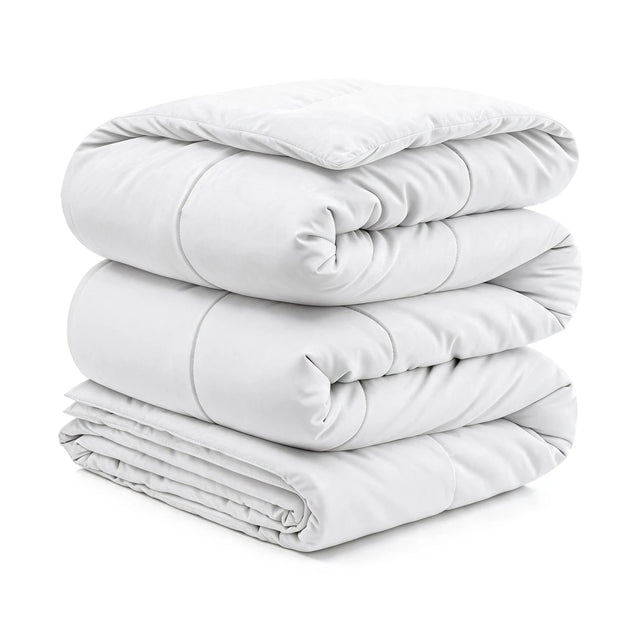



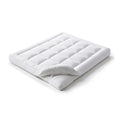


To store a duvet, wash it and let it dry right through, put it loosely into a breathable cotton bag or an old duvet cover, and keep it somewhere cool, dry and well ventilated inside the house. Lofts, garages and sheds are the wrong places. Check it every few months, then air it and give it time to loft before it goes back on the bed. Damp is what spoils a stored duvet, and each of the five steps below is there to keep it out. After the steps, this guide covers bags, vacuum packing for synthetic and feather duvets, where to keep a winter duvet, moths, musty smells and lofting.
- Wash the duvet and dry it completely. Follow the care label, and don't pack it while any part still feels cool or damp.
- Choose a breathable bag. A cotton storage bag or a spare duvet cover lets moisture out. A plastic bag holds it in.
- Fold it loosely. Feather and down duvets in particular shouldn't stay squashed for months.
- Store it somewhere cool, dry and well ventilated, such as a wardrobe shelf or a box under the bed, away from direct sunlight.
- Check it every few months, then air it and let it loft before you use it again.

Why does a duvet have to be fully dry before storing?
A duvet has to be fully dry because trapped moisture turns into mildew, mould and clumped filling while it sits in storage. M&S and the Sleep Foundation both say to dry it completely before it's put away.
Soak&Sleep goes further: never store bedding while it's even slightly damp. The filling in the middle of a thick duvet dries last, so feel the centre and the corners, not just the surface. A dehumidifier in the room helps if you're drying it indoors.
Wash it first, too. A duvet that has spent the winter on the bed goes into storage carrying sweat and skin, and as the moth section explains, soiled fabric is what moths go for. Our guides on how to wash a duvet at home and tumble drying a duvet cover drum sizes, temperatures and drying times.
Should you store a duvet in a plastic bag or a breathable bag?
Store a duvet in a breathable bag. Soak&Sleep says cotton or fabric storage bags are usually the best choice, and that plastic bags can trap moisture and belong to short-term transport, not long-term storage.
The German down and feather industry association, VDFI, is blunter about natural fillings. It calls plastic bags unsuitable for feather and down duvets and suggests a cotton bag or an old duvet cover instead. That last one costs nothing, and it's what I'd use.
| Storage option | Synthetic duvet | Feather or down duvet |
|---|---|---|
| Cotton bag or old duvet cover | Good for long-term storage | Good for long-term storage |
| Vacuum bag | Fine short term if space is tight | Avoid: long compression damages the loft |
| Plastic bag | Short-term transport only | Unsuitable, according to VDFI |
| Box with a tight lid | Fine once fully dry | Advised by English Heritage where moths are a risk |
Sources: Soak&Sleep, VDFI, IKEA and English Heritage. The two feather and down rows pull in different directions, and the moth section explains why.
Can you vacuum pack a duvet?
You can vacuum pack a synthetic duvet for short-term storage, but makers advise against it for feather and down. Soak&Sleep says long compression can damage a natural duvet's loft and the warmth that comes with it.
The guidance isn't the same for both. Soak&Sleep says vacuum bags "can be suitable for short term storage use if space is limited" for synthetic duvets, and VDFI says to avoid compressing feather and down bedding for long periods. So a hollowfibre duvet can go in a vacuum bag over the summer if your cupboards are full. A goose down duvet is better off in a cotton bag, even if it takes up more room.
If you do vacuum pack, the duvet has to be bone dry first, for the same reason as step 1. Moisture sealed into the bag has nowhere to go.
Where should you store a winter duvet?
Store a winter duvet inside the heated part of your home, in a cool, dry, well-ventilated spot such as a wardrobe shelf or an under-bed box. Soak&Sleep says to avoid lofts, garages and sheds, where temperature and humidity swing.
IKEA suggests storage boxes in the wardrobe or under the bed, which keeps dust off as well. Wardrobes on outside walls need care. Government guidance on damp names the low parts of walls behind sofas and wardrobes as cold spots where condensation forms, and advises leaving a gap between furniture and external walls. VDFI's rule is simple: the winter duvet goes away in summer, the summer one in winter.

When you swap, our guides on the best tog for a summer duvet and the best tog for a winter duvet help you check you're putting the right one on the bed.
How do you protect a stored duvet from moths?
Protect a feather or down duvet from moths by washing it before storage and keeping it sealed. English Heritage says moths eat feathers, live in the feather stuffing of duvets, and that feather duvets should be stored in sealed boxes or bags.
The larvae do the damage, and English Heritage says they can make holes in a cotton cover as they come out. They prefer dark, undisturbed places and textiles soiled with food or urine, which is the reason to wash before you pack. Moths also live in bird nests, including nests in attic eaves, one more reason to keep a feather duvet out of the loft.
This is where the advice clashes. VDFI says no plastic for natural fillings because of damp, and English Heritage says seal them because of moths. If moths have been a problem in your home, I'd follow English Heritage and use a box with a tight lid, with the duvet bone dry and in a cotton bag inside it. Lavender and cedar repel adult moths for three months at most, English Heritage says, and they don't touch larvae already in the filling.
Synthetic duvets are a smaller worry. English Heritage's list of moth food is wool, fur, feathers and untanned skins, and a hollowfibre filling isn't on it.
How do you stop a stored duvet smelling?
Stop a stored duvet smelling by packing it fully dry, in a breathable bag, somewhere without condensation. A musty smell is a sign moisture got in, either before the duvet went away or from the cupboard it was kept in.
In UK homes, condensation is the most common form of damp, according to government guidance on damp and mould. It builds up from showering, drying laundry and cooking when the moisture can't get out. So the wardrobe in the room where the washing dries is a poor place for a duvet, and so is the cupboard next to the bathroom.
If yours already smells, wash and dry it again following the care label rather than masking it with spray. Then store it somewhere drier.
How long does a duvet take to loft after storage?
Give a duvet up to a day to loft after storage. Our microfibre duvet product page says to allow 24 hours for it to loft fully after unpacking, and Soak&Sleep says to take a vacuum-packed duvet out well before you need it.
Shake it out, air it, and leave it flat on the bed or over a rack. The microfibre duvet has a hollowfibre down alternative filling, with no feathers, held in stitched channels so it doesn't bunch into the corners. It's machine washable, comes in 1 to 15 tog, and starts from £15.99. The product page doesn't give vacuum packing instructions, so check its care label first. For the long gap between winters, a cotton bag is the safer choice. You can see all our duvets and toppers in one place.
Written by the Adam Home team in the UK.