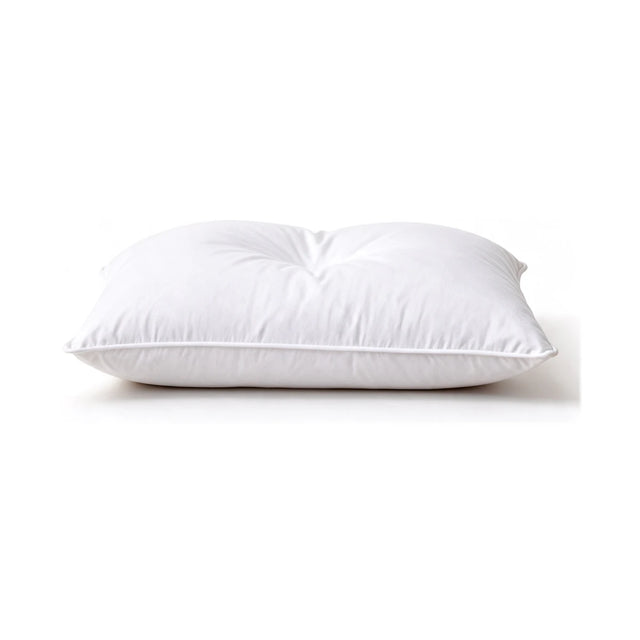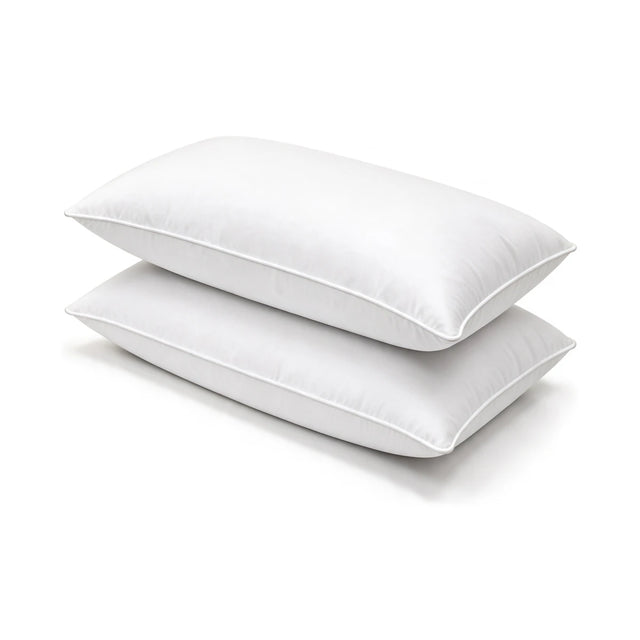


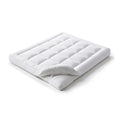


Yes, duck feather pillows are good, as long as you want a soft pillow you can push into shape. A duck feather pillow is a pillow filled with the flat, quilled back and wing feathers of ducks, usually with some down mixed in for loft. It costs less than a down pillow, sleeps cooler than one, and suits side sleepers who fold the pillow under the neck. The catches are daily plumping, the odd quill poking through, and no hypoallergenic claim. This guide covers the 5 pros, the 4 cons, duck versus goose, whether hotels use feather pillows, allergies, lifespan and care.
| Question | Short answer |
|---|---|
| Are duck feather pillows good? | Yes, for soft, mouldable support at a lower price than down |
| Duck or goose? | Goose has bigger clusters and costs more; at the same loft the quality is the same |
| Do hotels use them? | Many do, with a feather-free pillow for guests who ask |
| OK with a dust mite allergy? | NHS advice is to swap feather pillows for synthetic ones |
| How long do they last? | 1 to 3 years |
Are duck feather pillows any good?
Yes, duck feather pillows are good for people who like a soft, squashable pillow, sleep hot, or want natural filling without paying down prices. The Sleep Foundation names side sleepers, hot sleepers and people on a budget as the best fit.
Here are the 5 main pros:
- Mouldable shape. You can fold or scrunch a feather pillow to fill the gap between your ear and the mattress, which is why the Sleep Foundation rates them for side sleepers.
- Cooler sleep than down. Feathers leave more room for air to move than down clusters, so a feather pillow holds less heat.
- Lower price. Feather pillows cost less than down pillows, and the more down in the mix, the higher the price.
- Long life for the money. The Sleep Foundation gives feather and down pillows 1 to 3 years, against 6 months to 2 years for polyester.
- Easy recovery. A good shake each morning puts the loft back without a trip through the dryer.
What are the downsides of duck feather pillows?
The 4 downsides of duck feather pillows are flattening, quills, noise and smell, and allergies. None of them stops a feather pillow being comfortable.
- Flattening. Feather pillows go flat faster than down and need plumping more often to keep their height.
- Quills. Every feather has a stiff quill down the middle, and even a thick shell can let the odd one poke through.
- Noise and smell. The Sleep Foundation lists both as cons of feather fill. A slight smell is more likely with duck than goose at lower lofts, according to Canadian Down and Feather, and it's rare with proper care.
- Allergies. Feather pillows aren't hypoallergenic, so they're the wrong pick for some allergy sufferers (more on that below).

Duck or goose feather: which is better?
Neither is better at the same loft: goose clusters are larger, so goose reaches higher loft more easily, but duck and goose of equal fill power are the same quality. Duck costs less, which makes it the better value for most people.
| Feature | Duck | Goose |
|---|---|---|
| Cluster size | Slightly smaller | Larger, because geese are bigger birds |
| Loft | High loft is harder to reach | High loft is easier to reach |
| Quality at the same loft | Same | Same |
| Price | Lower | Higher, driven by demand as much as quality |
| Smell | Slightly more likely at low lofts | Less likely |
Soak and Sleep, a UK bedding brand, makes the same point: the quality of the down, its fill power and the pillow's construction matter more than the bird. Under the British Standard BS EN 12934, a feather and down label gives the fill percentages by weight in decreasing order, so the label tells you how much down you're getting.
Do hotels use duck feather pillows?
Many hotels use feather and down pillows, and most also keep a feather-free pillow for guests who ask. Marriott's own shop sells a Marriott Hotels pillow with a feather core inside a down outer chamber, and a Ritz-Carlton pillow with duck feather inner chambers.
Not every hotel goes feather. Premier Inn says its pillows are made with blown hollowfibre, sold as a soft and firm pair. Marriott also sells a hypoallergenic fibre pillow labelled a "Hotel Feather-Free Rooms Exclusive". LODGING Magazine reported in 2024 that hotels see rising requests for feather-free rooms. If you're after that hotel feel at home, our guide to what makes a hotel quality pillow covers both routes.
Are duck feather pillows OK if you have allergies?
No, not if you have a house dust mite allergy: an East Kent Hospitals NHS leaflet advises replacing feather pillows with synthetic ones, or buying new pillows every 6 months, or using barrier covers.
Allergy UK recommends allergen-proof covers that fully enclose the pillow, and says water at 60°C or above kills mites while cooler washes don't. Our duck feather pillows wash in cold water, so a feather pillow can't get that hot wash. If dust mites are your problem, a washable hollowfibre pillow from our standard pillows range is the safer choice. If you're fine with feathers, a zipped protector still keeps the pillow cleaner. Our guide to how quilted pillow protectors work has the details.
Who should choose a duck feather pillow?
Choose a duck feather pillow if you sleep on your side and like to fold the pillow under your neck, if you run hot at night, or if you want natural fill at a lower price than down.
Skip it if you want a pillow that stays the same height all night without plumping, or if you have a dust mite allergy. Stomach sleepers often prefer something flatter. Our guide on how to choose a pillow matches pillow height to sleeping position.
How long do duck feather pillows last?
Duck feather pillows last 1 to 3 years, according to the Sleep Foundation, which is longer than the 6 months to 2 years it gives polyester pillows. Memory foam lasts 2 to 3 years and latex 2 to 4.
To check yours, fold it in half. If it doesn't spring back to its normal shape, it's time for a new one.

How do you look after a duck feather pillow?
Look after a duck feather pillow by shaking it every morning, keeping it in a zipped protector, and washing it in cold water only when it needs it. Dry it right through before it goes back on the bed.
- Shake and plump it daily to spread the feathers and lift the loft.
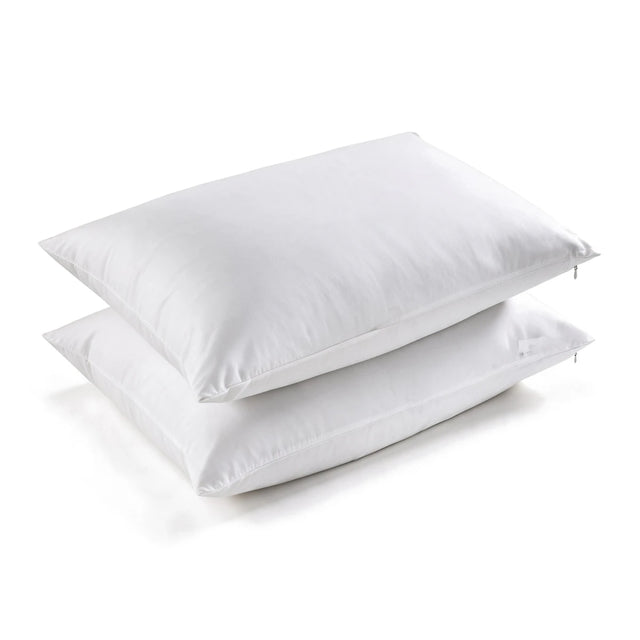
- Use a zipped protector under the pillowcase to keep sweat and dust off the shell.
- Machine wash in cold water, following the care label.
- Dry thoroughly, because damp feathers clump and can start to smell.
The same habits keep feather cushions in shape too. Our guide to feather vs hollowfibre cushions compares the two fillings on a sofa.
Which duck feather pillows do we sell?
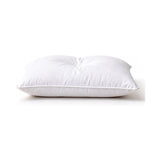
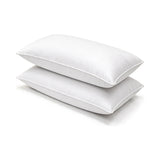
Our duck feather pillows are standard 48x74 cm (19x29 in) pillows filled with a duck feather and down blend, in a 100% cotton, double-stitched, feather-proof cover. A 2 pack (approx. 2.4 kg) is £19.99 and a 4 pack (approx. 5 kg) is £34.99. They're made to European standards in an ISO 9001 certified factory, and they machine wash in cold water.
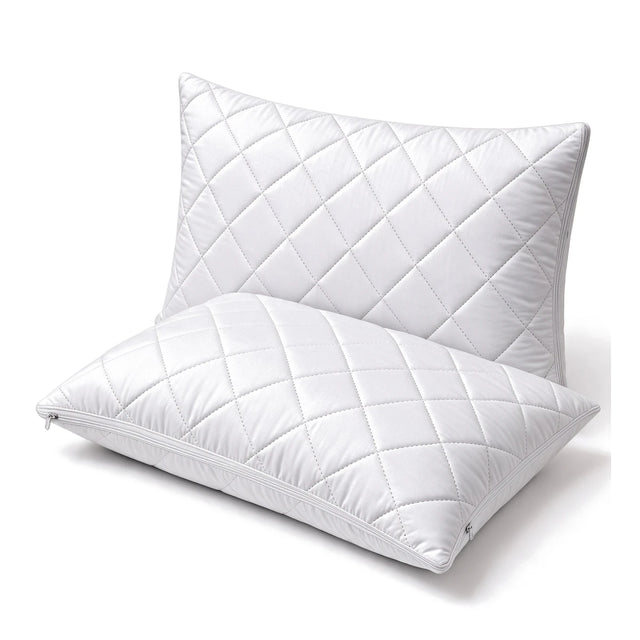
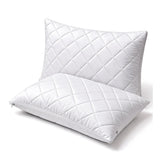
Pair them with our quilted pillow protectors, from £9.99 for 2. The tight polycotton weave and full zip stop feathers poking through as the pillows age.
Written by the Adam Home team in the UK.