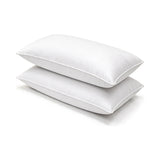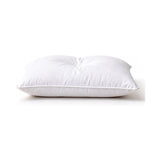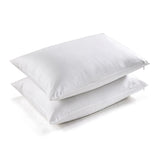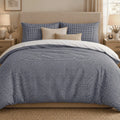
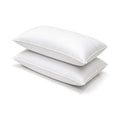


A pillow is a cushion that supports your head and neck so your spine stays level while you sleep. To choose one, check 5 things in this order: your sleeping position, the filling, the firmness, the size and how it washes. Sleeping position comes first because it decides how high the pillow needs to be, and the wrong height bends your neck for the whole night. The sections below take each one in turn, then cover how many pillows to use and when to replace them.
What should I look for when buying a pillow?
Look for 5 things when buying a pillow: a height that matches your sleeping position, a filling you like the feel of, a firmness that holds that height, a size that fits your pillowcases, and a pillow you can wash. Get the height right first, because a pillow that's too high or too low tilts your neck all night.
- Sleeping position. Side sleepers need the most height, back sleepers medium height and stomach sleepers very little.
- Filling. Hollowfibre, feather and down, and memory foam each feel different and wash differently.
- Firmness. A firm pillow holds its height under your head, and a soft one flattens.
- Size. The standard UK pillow is 48x74 cm and fits a 50x75 cm pillowcase.
- Care. A pillow you can machine wash stays fresher between replacements.
How high should a pillow be?
A pillow should be high enough to keep your head in line with your spine. For a side sleeper, that means filling the gap between the ear and the mattress, which is about the width of the shoulder. Back sleepers need roughly half that height, and stomach sleepers need a nearly flat pillow or none at all.
| Sleeping position | Pillow height | Firmness | From our range |
|---|---|---|---|
| Side | High, fills the shoulder gap | Firm | Bounce Back Firm, Textured |
| Back | Medium | Medium | Hotel Quality, Bounce Back Medium |
| Stomach | Low | Soft | Bounce Back Soft, Quilted |
| Changes position | Medium, mouldable | Medium or soft | Duck Feather, Quilted |
Side sleepers
Side sleepers need the highest, firmest pillow. If you wake with a stiff neck or your lower arm goes numb, the pillow is probably too low and your head is tipping towards the mattress. The broader your shoulders, the more height you need, so a broad-shouldered side sleeper is the clearest case for a firm pillow.
Back sleepers
Back sleepers need a medium-height pillow that supports the curve of the neck without pushing the chin towards the chest. A medium hollowfibre pillow gives that height without pushing the head forward.
Stomach sleepers
Stomach sleepers need a low, soft pillow, because a high one bends the neck backwards. A soft hollowfibre pillow, a flattened feather pillow, or no pillow at all keeps the head closer to level.
What is the best pillow filling?
Hollowfibre is the best pillow filling for most people: it's a polyester fibre with a hollow core that traps air, springs back after washing, carries no feathers for allergy sufferers to react to, and costs less than natural fill. Duck feather and down suits people who like to push a pillow into shape.
| Filling | How it feels | Washing | Suits |
|---|---|---|---|
| Hollowfibre | Springy, holds its shape | Machine wash | Most sleepers, people with feather allergies |
| Duck feather and down | Heavier, soft, mouldable | Machine wash cold, dry thoroughly | People who shape their pillow |
| Memory foam | Dense, slow to recover | Cover only | People who want a fixed shape |
Our guide to what hollowfibre is and how it's made explains why the hollow core matters, and our guide to hotel quality pillows covers the fillings hotels choose.
Which of our pillows suits you?
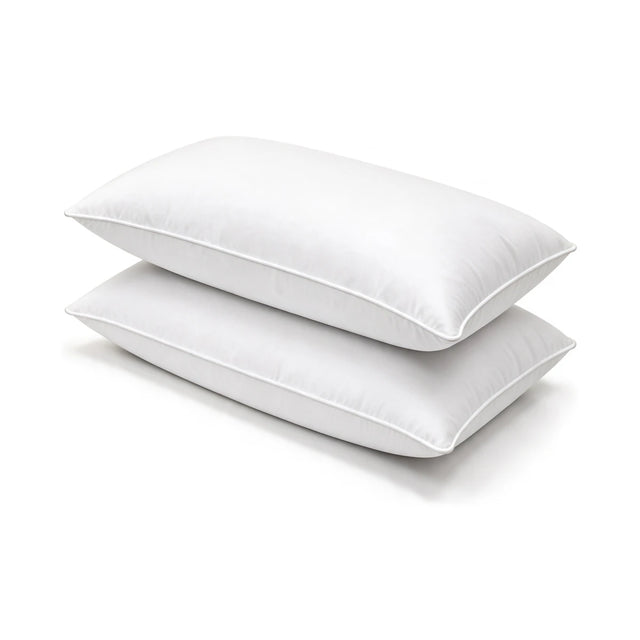
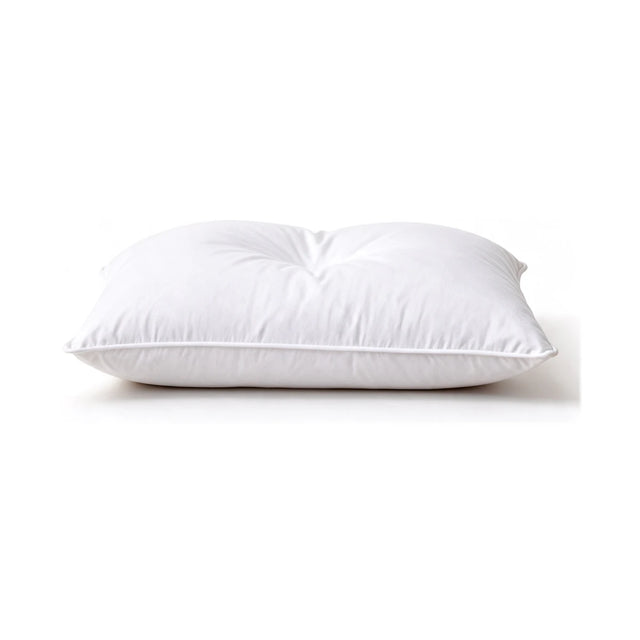
Our bed pillows come in 5 hollowfibre styles and a duck feather and down pillow, all 48x74 cm. The Bounce Back range is the only one sold in three firmnesses, which makes it the easiest place to start if you're matching firmness to how you sleep.
| Pillow | Filling | Cover | Firmness | From |
|---|---|---|---|---|
| Hotel Quality | Virgin hollowfibre | Down-proof cover | Medium | £11.99 for 2 |
| Bounce Back | Virgin hollowfibre | 100% brushed cotton | Soft, medium or firm | £12.99 for 2 |
| Satin Stripe | Virgin hollowfibre | Brushed cotton blend | Medium | £10.99 for 2 |
| Textured | Hollowfibre | Textured cotton | Medium to firm | £14.99 for 2 |
| Quilted | 3D hollowfibre | Quilted cotton-poly | Soft | £8.99 for 1 |
| Duck Feather | Duck feather and down | 100% cotton | Soft, mouldable | £19.99 for 2 |

What size pillow do I need?
You need a standard UK pillow, 48x74 cm, for a single, double, king or super king bed, with one per person on a single and two per person if you like to sit up and read. A standard pillow fits a 50x75 cm pillowcase with room to spare.
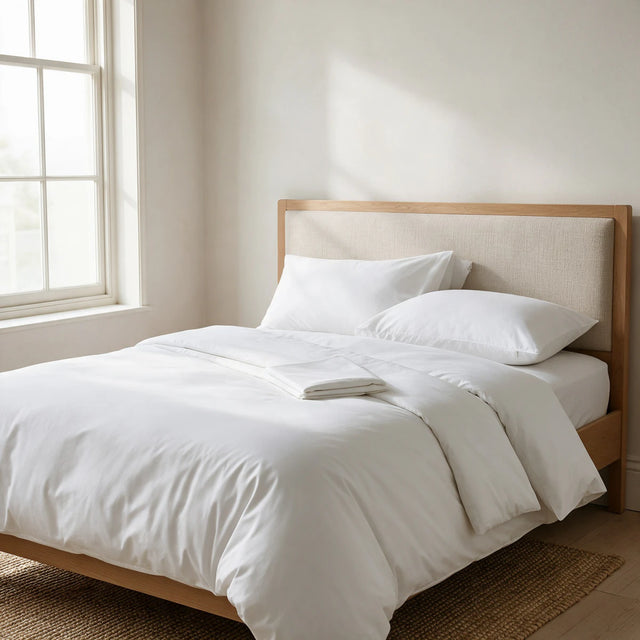
The pillowcases in our duvet cover sets are 54x77 cm, roomy enough for a thick pillow. Our guide to UK pillow sizes covers king, European square and toddler pillows too.
Can you wash a pillow?
Yes, hollowfibre and feather pillows can be machine washed, while memory foam can't. Our hollowfibre pillows go in a cool wash with a mild detergent and a low tumble dry, and our duck feather pillows wash in cold water and need drying all the way through before they go back on the bed.
Drying is the step that decides whether a washed pillow comes back plump. Fibre that's still damp in the middle clumps, and feather that's put away damp can smell. If you have a dust mite allergy, NHS allergy leaflets advise washing bedding at 60°C, so check each care label and wash pillowcases and protectors at the highest temperature their labels allow.
How often should you replace a pillow?
Replace a pillow every 2 to 3 years, which is the guidance from The Sleep Charity. The Sleep Foundation gives a range by filling: about 6 months to 2 years for polyester, and 1 to 3 years for feather and down. Replace sooner if the pillow sags, stays flat, or has yellowed.
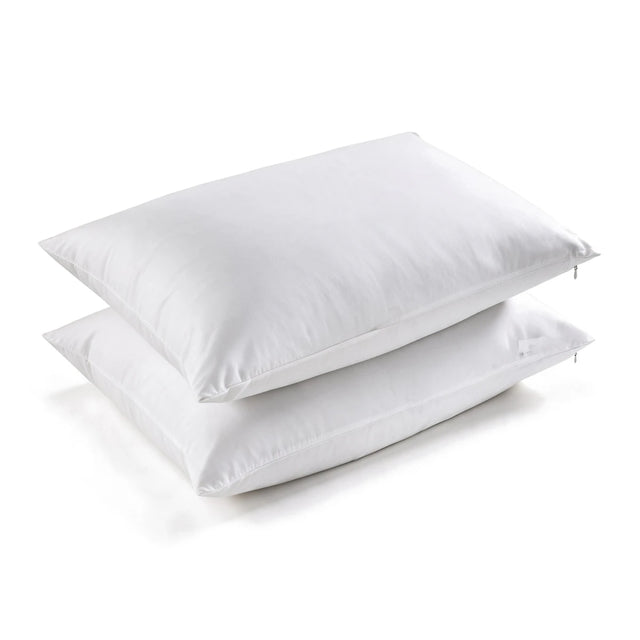
A zipped protector under the pillowcase keeps sweat out of the filling and helps a pillow reach the top of that range. Our guide to what a pillow protector is for explains the difference it makes, and the correct order of bedding layers shows where it sits.
Written by the Adam Home team in the UK.