


The best pillow for side sleepers is a medium to medium-firm pillow at least 10 cm (4 in) thick, or over 15 cm (6 in) thick if you have broad shoulders, going by the Sleep Foundation's medically reviewed side sleeper guide. A side sleeper pillow is a bed pillow with enough loft, or height, to fill the space between your head and the mattress so your head stays level with your spine. This guide covers the type of pillow, how thick it should be, a 4-step height check, firmness, 5 fillings, a pillow between the knees, and how our soft, medium and firm pillows line up.
| Question | Short answer |
|---|---|
| What type of pillow? | Medium to medium-firm, high loft, filling the gap between head and mattress |
| How thick? | At least 10 cm (4 in), over 15 cm (6 in) for broad shoulders |
| Firm or soft? | Medium to medium-firm suits most side sleepers |
| Best filling? | Latex and solid foam hold their height with the least effort |
| Pillow between the knees? | Yes, it stops the top knee collapsing onto the lower one |
What type of pillow is recommended for side sleepers?
A medium to medium-firm pillow with high loft is recommended for side sleepers. The Sleep Foundation says the pillow should fill the space between your head and the mattress, which keeps your head level with your spine.
Your shoulder is the reason. Lying on your side lifts your head further off the bed than lying on your back, so side sleepers usually do best with a thicker pillow, the Sleep Foundation's page on side sleeping explains. Side sleeping is also the most common position. In a 2017 study, 664 Danish adults wore motion sensors in bed and spent on average 54.1% of their time in bed on their side, 37.5% on their back and 7.3% on their front.
How thick should a side sleeper pillow be?
A side sleeper pillow should be at least 10 cm (4 in) thick, and over 15 cm (6 in) if you have broad shoulders, according to the Sleep Foundation's side sleeper guide.
Loft is a pillow's height or thickness. The Sleep Foundation measures it with the pillow uncompressed and calls anything over 5 in, about 13 cm, high loft. So those figures describe the pillow before your head goes on it.
Two things move the number. The first is your build: broad shoulders hold your head further from the mattress, so you need more height to close the gap. The second is your mattress, because the same guide says the right loft depends on how far you sink into it.

How do you know if your pillow is the right height?
Your pillow is the right height when your head and neck stay straight, in line with the rest of your spine, as you lie on your side. That's the test in the sleeping posture section of a Gloucestershire Hospitals NHS leaflet.
The NHS website's neck pain page gives the same rule in fewer words: when sleeping, make sure your head is the same height as the rest of your body. To check yours, follow these 4 steps:
- Lie on your side on your own mattress, with the pillow you use now.
- Keep the arm you're lying on in front of your chest, not under it or behind you, as the leaflet advises.
- Ask someone to look at your head and neck from behind.
- Read the result. If your head is pushed up, the pillow is too thick, and if it drops towards the mattress, the pillow is too thin.
The leaflet says the number of pillows you use can vary with their thickness, as long as your head stays straight. So two thinner pillows that pass the check are fine.

Do side sleepers need a firm pillow?
Not always. The Sleep Foundation's side sleeper guide says a medium to medium-firm pillow is ideal, one that doesn't sink too much or lift your head too high. Go firmer when a softer pillow flattens below the height you need.
Firmness is how well a pillow keeps its shape under weight, and the firmer a pillow is, the less it compresses, according to the Sleep Foundation's firm pillow guide. A tall, soft pillow can squash down to a short one once your head is on it.
The Sleep Charity says a pillow that's too soft lets the head flop and curves the neck, and one that's too hard gives you a crick in the neck. The Sleep Foundation adds that a pillow that's too firm can cause discomfort around the neck and shoulders. Our own rule of thumb, printed on the listing for our firm bounce back pillows, is that the broader your shoulders, the firmer the pillow.
Which filling is best for a side sleeper pillow?
Latex and solid foam hold their height with the least effort, the Sleep Foundation's side sleeper guide says. Feather and fibre fillings work too, but they need plumping to keep their loft.
| Filling | Holds its height | What the Sleep Foundation says |
|---|---|---|
| Latex | Well, with little effort | Side sleeper testers found it more supportive because it doesn't sink as deeply |
| Memory foam | Well, as a solid block | Softens with body heat. Solid foam or latex cores usually give the best support |
| Feather | Needs regular plumping | Coarser and denser than down, so you don't sink as deeply. Sleeps cool |
| Down | Compresses under the head | Not always firm enough for side sleepers, so often reinforced with feathers |
| Hollowfibre (polyester) | Springy, needs fluffing | Can be made at any loft, but most never get as firm as latex |
Hollowfibre is a polyester fibre with a hollow core that traps air, and it fills 5 of our 6 bed pillows. All 5 go in the washing machine, and our Bounce Back pillow comes in soft, medium and firm with the same virgin hollowfibre inside. Feather is the mouldable choice, for people who like to push a pillow into shape. Our guide to whether duck feather pillows are good weighs up the pros and cons.
Should side sleepers put a pillow between their knees?
Yes, the Sleep Foundation suggests side sleepers put a pillow between their knees, because it stops the top knee collapsing onto the lower one and can relieve pressure on the hips.
Without that support, your upper leg drops onto your lower leg and twists your spine, the Sleep Foundation's page on side sleeping says. Its side sleeper pillow guide says a knee pillow can also reduce pressure in the lower back. A spare standard pillow is enough to try it. If you'd rather use one long pillow for this, our guide to body pillow benefits and how to sleep with one covers the shapes.
Which of our pillows suit side sleepers?
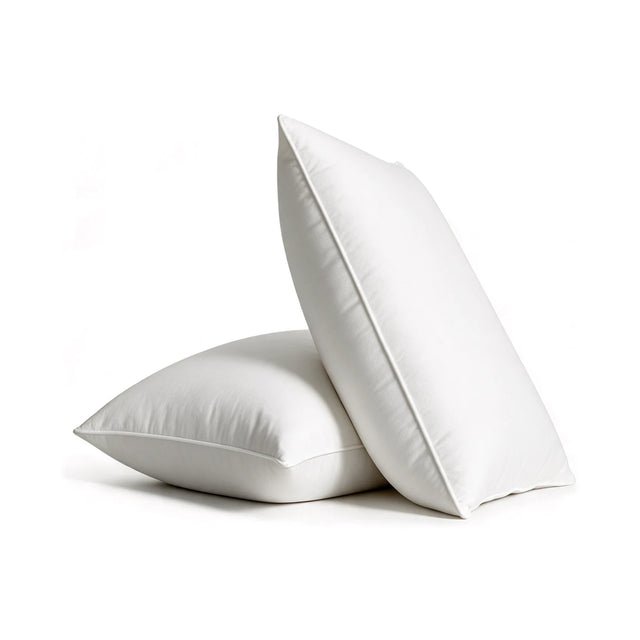
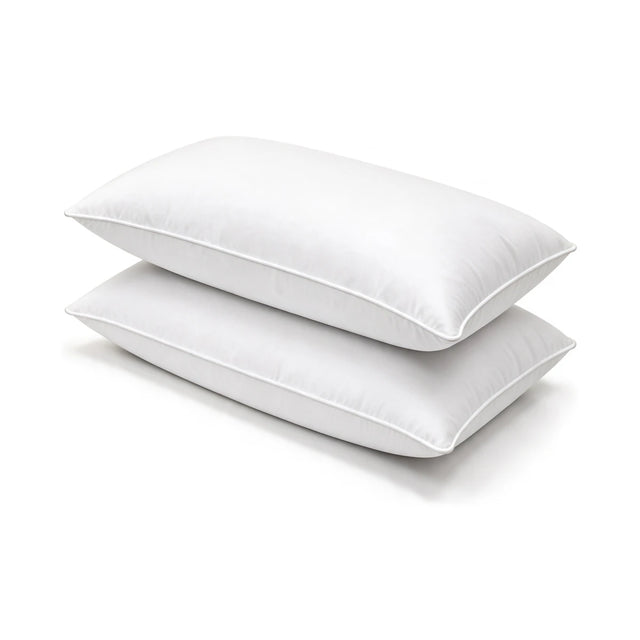
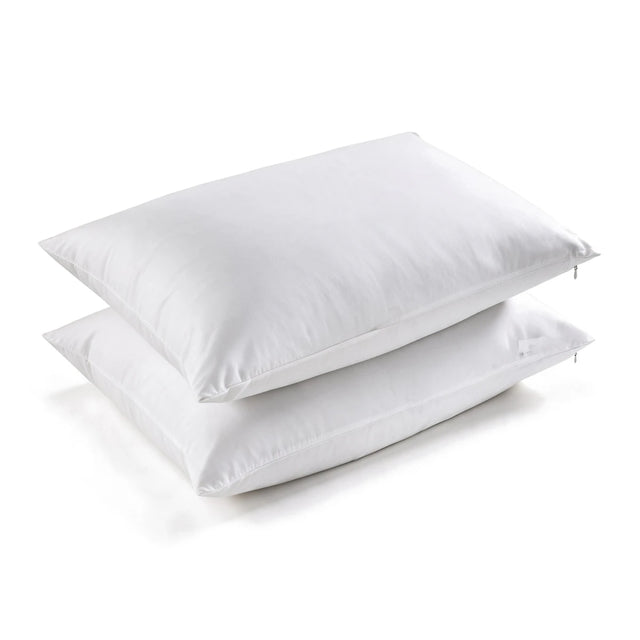
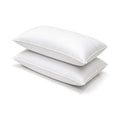
Our firm Bounce Back pillow is the one we list for side sleepers: its listing says firm is "for side sleepers who need their neck held level". A 2 pack of firm bounce back pillows is £13.99 and a 4 pack is £20.49.
Here's how 5 of our pillows compare, in their listings' own words:
| Pillow | Firmness | What the listing says | From |
|---|---|---|---|
| Bounce Back Firm | Firm | "Side sleepers with broad shoulders should go firm" | £13.99 for 2 |
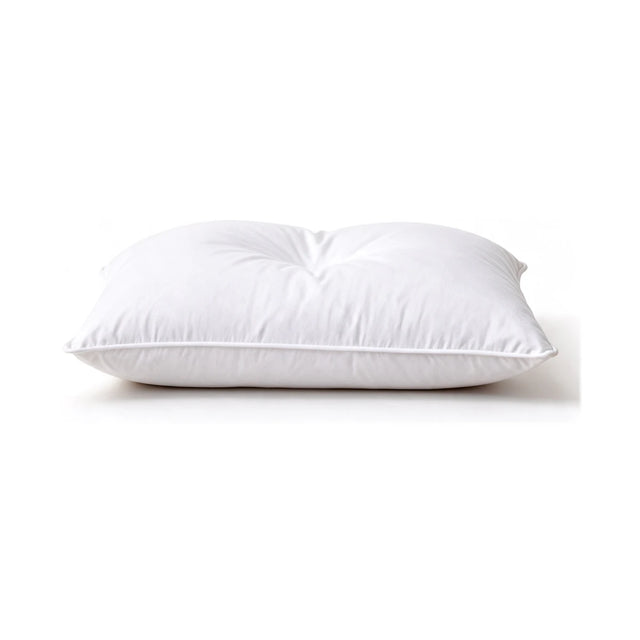
| Textured | Between our soft quilted and firmest Bounce Back | "the plump firmness side sleepers need" | £14.99 for 2 |
| Hotel Quality | Medium | "suits side and back sleepers" | £11.99 for 2 |
| Quilted | Soft, plush | "suits stomach, back and side sleepers" | £8.99 for 1 |
| Duck Feather | Soft, mouldable | "scrunch one into the shape your neck actually wants" | £19.99 for 2 |
Narrow shoulders point towards the medium end, and broad shoulders towards firm. None of our listings gives a loft in centimetres, so run the 4-step check with the new pillow on your own bed. If someone else in your bed sleeps on their back or front, our guide on how to choose a pillow matches height and firmness to each position.
Written by the Adam Home team in the UK.