
Wash most bedding at 40°C, and use 60°C when you want to kill dust mites or germs, as long as the care label allows it. The wash temperature on a care label is the number inside the washtub symbol, and GINETEX, the international care labelling association, says that number is the maximum in degrees Celsius and must not be exceeded. Allergy UK says washing at 60°C or above kills dust mites, and a 2008 study found a 40°C wash killed fewer than 1 in 10 of them. This guide covers a temperature table for 8 kinds of bedding, 40 versus 60, dust mites, shrinkage, 30°C washes and 4 checks for picking a setting.
What temperature should you wash each type of bedding at?
Which? recommends 60°C for most sheets, duvet covers and pillowcases, about 30 to 40°C on a gentle cycle for hollowfibre and microfibre duvets, and 40 to 60°C for mattress protectors. The care label sets the upper limit every time.
The table puts that general advice next to what our own listings say, item by item. Where we don't sell the item or the listing gives no number, the sewn-in label is the instruction to follow.
| Item | General advice | What our listing says |
|---|---|---|
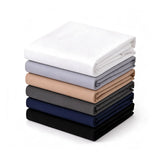
| Sheets | 60°C for most fabrics (Which?), 30°C for silk (Which?) | Extra Deep Fitted Sheet: "machine washable", no temperature given, so follow the care label |
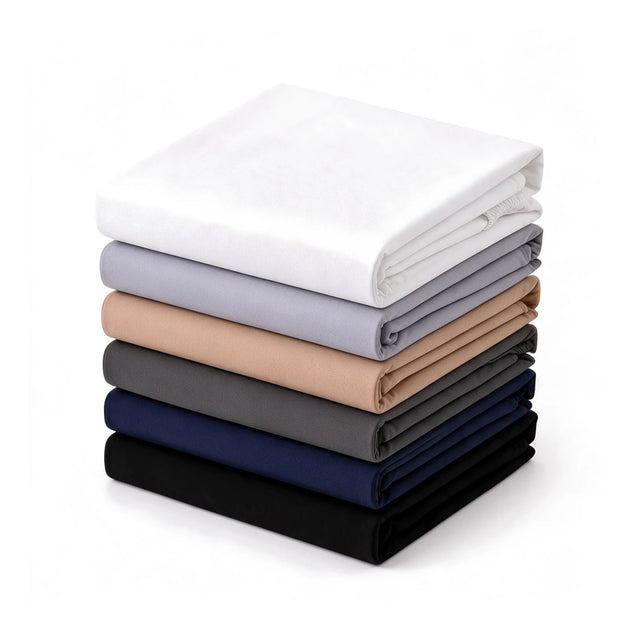
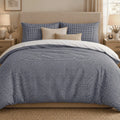
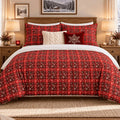
| Duvet covers | 60°C for most fabrics (Which?) | Microfibre sets: "machine washable", so follow the care label. Mona Stripe polycotton: machine wash cold/warm, tumble dry low |
| Pillowcases | 60°C for most fabrics (Which?) | Pillowcases 48x74 cm: machine washable at 40°C |
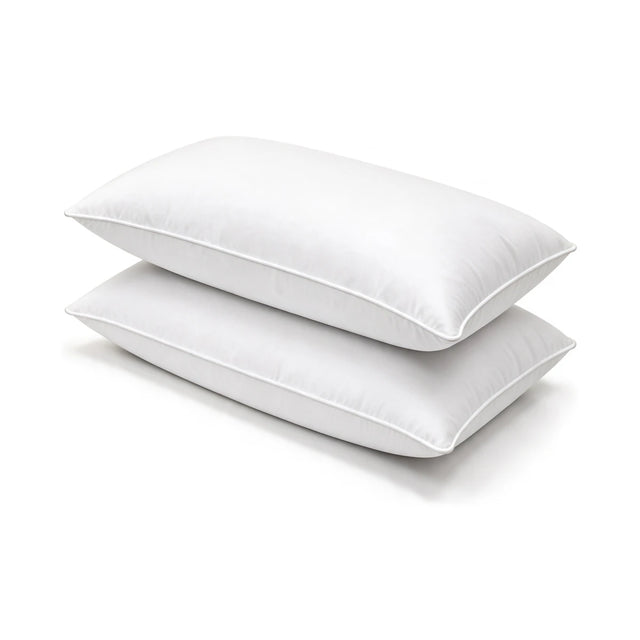
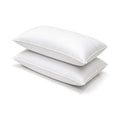
| Pillows | Follow the care label | Hollowfibre pillows: machine wash cool with mild detergent, tumble dry low. Duck feather: cold water, dry thoroughly |
| Duvets | Hollowfibre or microfibre about 30 to 40°C, wool no more than 30°C, feather and down to the dry cleaners (Which?) | Microfibre duvet: "machine washable", so follow the care label |
| Pillow protectors | Follow the care label | Quilted: machine wash at 40°C, tumble dry low. Microfibre: "machine wash and dry" |
| Mattress protectors | 40 to 60°C (Which?) | Waterproof mattress protector: no wash temperature given, so follow the care label |
| Mattress toppers | Follow the care label | Quilted mattress topper: machine washable at 30 to 40°C, tumble dry safe |
Our pillowcases show why the label wins. Which? gives 60°C for most pillowcases, but ours are listed at 40°C, so 40°C is their limit. Allergy UK suggests a different route for those items: breathable barrier covers that completely enclose pillows, duvets and mattresses, with weekly washes for any bedding that isn't encased. Our zipped pillow protectors close with a full zip, from £9.99 for 2.
Should I wash bedding at 40 or 60?
Wash bedding at 40°C for everyday cleaning and at 60°C when hygiene comes first, such as during an illness or for an allergy routine, as long as the label allows 60. Which? says a 60°C wash cleans slightly better than its 40°C programme.
The trade-off is cost. Which? found running costs go up by more than half on a programme that hot, which could add almost £60 a year depending on the machine. Heat also isn't the whole story on germs. Which? says a 40°C wash won't kill most bacteria or viruses without a bleach-based product, and that some bacterial spores and viruses survive 60°C too, so the detergent you pick still counts. The same article quotes NHS guidance to wash household linen at 60°C to stop germs spreading.
We'd wash at 40°C most weeks, switch to 60°C after a stomach bug, and never go above the label. Colour is the other thing heat affects, and our guide to washing printed duvet covers without fading covers that side.
Does 40 degrees kill dust mites?
No, a 40°C wash doesn't kill most dust mites. In a 2008 Yonsei University study in Annals of Allergy, Asthma and Immunology, a 40°C wash killed 9.6% of dust mites, while a 60°C wash killed all of them.
House dust mites are tiny creatures about a quarter of a millimetre long, according to Allergy UK. The same study measured how much mite allergen stayed in the sheets afterwards: 26.8% after a 30°C wash, 2.4% after 40°C and 1.3% after 60°C. So 40°C rinses most of the allergen out but leaves the mites alive. That matches Allergy UK, which says cooler washes take the allergen away for a while but the mites survive.

Which? adds that the 60°C cycle should last at least 15 minutes. For bedding that can't take 60°C, a Cambridge University Hospitals NHS leaflet says a cooler wash only partly kills mites but is better than nothing. The leaflet suggests dry cleaning instead, or 12 hours in the freezer once a month for pillows. Our guide to washing pillows without clumping has the full pillow method.
Does 60 degrees shrink bedding?
Yes, 60°C can shrink cotton bedding, because heat releases the tension put into yarn and fabric during manufacture, Cleanipedia explains. Polyester and microfibre shrink much less.
Wikipedia's entry on fabric shrinkage says natural fibres shrink more than synthetic ones, because they absorb more water and swell. Fabric sold as "pre-shrunk" is meant to shrink less than 3% in either direction in standard wash tests, the same entry says. Microfibre is a synthetic fibre finer than 1 denier, most often polyester, and it's what 90 of our 91 duvet cover sets and our fitted sheet are made from. The fitted sheet listing says it "resists fading and shrinking through weekly washes".
Drying heat counts as much as water heat. Cleanipedia says a hot dryer makes cotton fibres contract more and recommends the lowest heat setting. Our hollowfibre pillow and quilted protector listings both say tumble dry low.
Is 30 degrees hot enough to wash bedding?
No, 30°C isn't hot enough for a hygiene wash, but it's the right setting for delicate fabrics and for bedding labelled 30. In the 2008 study, a 30°C wash killed 6.5% of mites and left 26.8% of the mite allergen in the sheets.
Which? gives 30°C for silk sheets and no more than 30°C for wool duvets. Our quilted mattress topper sits at 30 to 40°C. The upside is energy: Which? says a 30°C wash uses 38% less energy than 40°C. The same study found rinsing made a bigger difference after a 30°C wash than after hotter ones, so an extra rinse is worth adding if 30 is the label's limit.
How do you choose the right wash temperature?
To choose the right wash temperature, follow the 4 checks below. The checks come from the GINETEX care symbols and the Which? and Cleanipedia advice above.
- Read the number in the washtub. That's the hottest wash allowed, in degrees Celsius.
- Look under the washtub. One bar means a milder cycle with less mechanical action, and two bars mean a very mild cycle, the kind used for woollens.
- Pick the reason for the wash. Use 40°C for a routine clean, and 60°C for illness or dust mites if the label goes that high.
- Set the drying heat. Choose low heat in the tumble dryer, or dry outside, since Which? says sunlight helps kill micro-organisms on sheets.

Duvets bring a size problem on top of the temperature question. Our guide on how to wash a duvet at home covers drum size and drying.
Written by the Adam Home team in the UK.