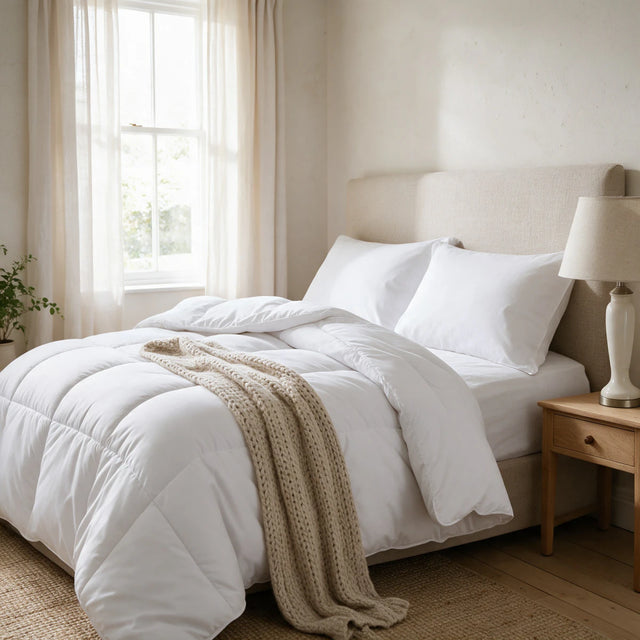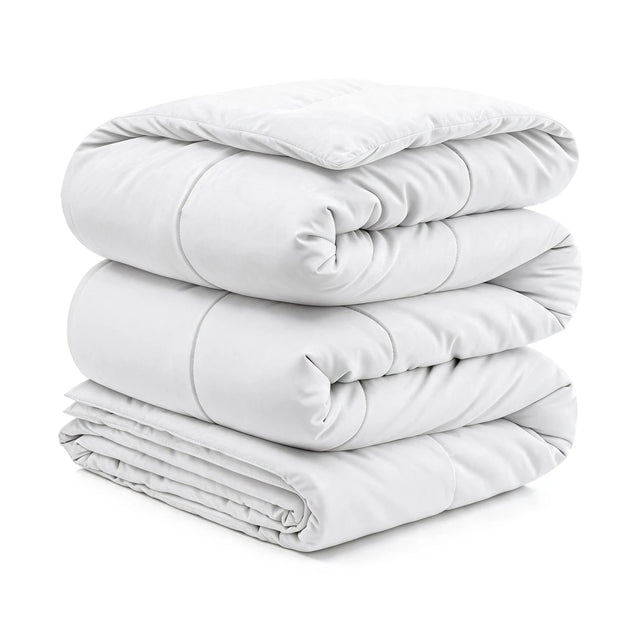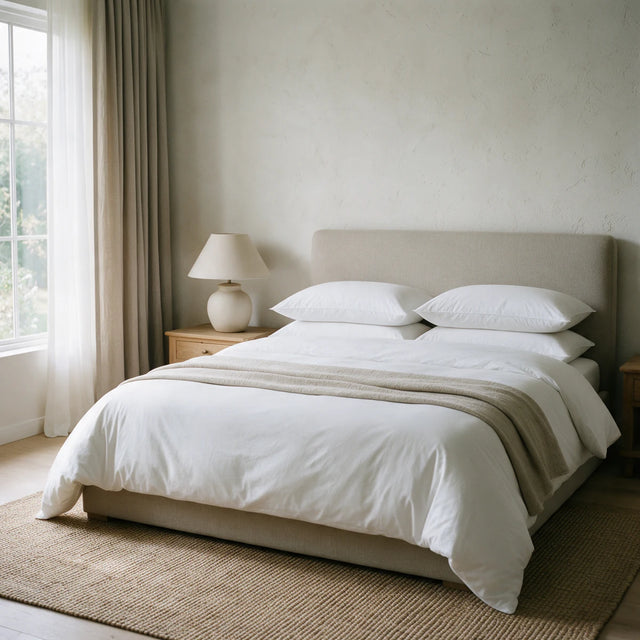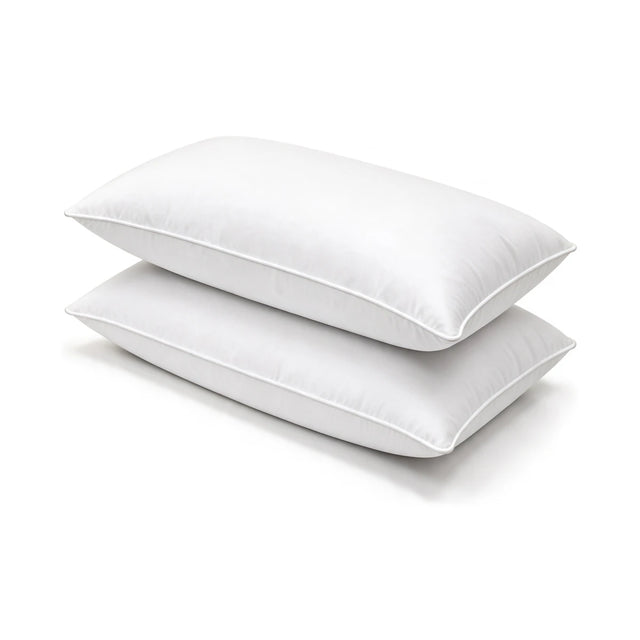

A winter duvet is a duvet rated 10.5 tog or higher, made to keep you warm when the bedroom is cold. The right one depends on how warm your bedroom stays overnight: 10.5 tog suits a room that stays heated, 13.5 tog suits a room that cools down after the heating goes off, and 15 tog suits a cold or unheated room. This guide matches each tog to a bedroom temperature, answers whether 10.5 is enough and whether 15 is too hot, and covers couples who disagree.
| Your bedroom in winter | Tog to choose |
|---|---|
| Heating on through the night, room stays warm | 10.5 tog |
| Heating goes off at night, room cools by morning | 13.5 tog |
| Cold, draughty or unheated room | 15 tog |
| You run hot whatever the weather | 10.5 tog |
| You feel the cold | 13.5 or 15 tog |
Tog measures how well a duvet holds in heat, not how heavy it is. Our guide on what a tog rating means explains how it's measured.
What temperature should a bedroom be in winter?
A bedroom should be around 16 to 18°C for sleep, according to The Sleep Charity, with young children and older people needing it slightly warmer. The charity also says a room above 24°C can make you restless, and a room below 12°C can make it harder to fall asleep.
That range is the reason winter togs exist. Once the heating goes off, a bedroom that drops below 16°C before morning leaves the duvet to make up the difference. A cheap room thermometer on the bedside table tells you which side of the range your room sits on at 3am, which is the reading that matters.

Is 10.5 tog enough for winter?
Yes, a 10.5 tog duvet is enough for winter in a bedroom that stays heated. It's the middle weight of the UK range, and in a room that holds 16 to 18°C overnight it keeps most adults warm. If the heating goes off and the room is cold by morning, 10.5 tog feels thin and 13.5 tog is the better choice.
A 10.5 tog duvet also stretches into winter with a blanket on top for the coldest weeks. That works best if you already own one and the room only drops below the range on a handful of nights. Our page on the 10.5 tog duvet covers when it works and when it doesn't.
Is a 13.5 tog duvet the best winter weight?
A 13.5 tog duvet is the best winter weight for a bedroom that cools down overnight. It holds 29% more heat than 10.5 tog, measured as thermal resistance: 1.35 against 1.05 square metre kelvin per watt. Only 15 tog is warmer among standard UK ratings.
The step from 10.5 to 13.5 is the one most people notice, because it's the same 3-tog jump as from 7.5 to 10.5. The step from 13.5 to 15 is smaller, at 1.5 tog, and makes the most difference in a room that's genuinely cold.
Is a 15 tog duvet too hot?
Yes, a 15 tog duvet is too hot for most centrally heated bedrooms. It's the warmest standard rating, made for cold rooms, older houses with little insulation and people who feel the cold badly. In a room held at 18°C or above, 15 tog is more insulation than most adults need.
If your bedroom sits at the bottom of The Sleep Charity's range or below it through the night, 15 tog is the right duvet. Older houses with single glazing, rooms over an unheated garage and loft rooms under a thin roof are the usual cases.
What tog suits an unheated bedroom?
An unheated bedroom in winter suits a 15 tog duvet. With no heating, the room can drop well below 12°C on a cold night, and 15 tog holds the most warmth of any standard duvet. If the room is unheated but well insulated and stays above 14°C, 13.5 tog is often enough.
Check the room with a thermometer for a few nights before buying. The difference between the two is £1 to £3 on our duvets, so the room, not the price, should decide.
What if one of you runs hot and the other feels the cold?
Choose the tog for the warmer sleeper, then add a blanket or throw on the colder sleeper's side. A blanket can be added to half the bed, while a duvet that's too warm leaves the hot sleeper uncovered and still too warm.
A bigger duvet helps too. Sizing up from a double to a king gives 12.5 cm more overhang each side, so the person who pushes the duvet away still has enough to keep their back covered. Our UK duvet sizes chart lists every overhang.
Can you put two duvets together for winter?
Yes, two duvets laid on top of each other add their tog ratings together, so a 4.5 tog and a 9 tog duvet give about 13.5 tog. Tog is a measure of thermal resistance, and resistances stacked in layers add up. That's how all-season duvets work: a light and a medium duvet that fasten together with poppers for winter.
The catch is the cover. Two duvets in one cover is a squeeze, and two separate covers slide against each other through the night. If you're buying from scratch for a cold room, one 13.5 or 15 tog duvet is easier to live with. If you already own a summer duvet and a 10.5 tog, stacking them for the coldest weeks costs nothing.
How warm should you dress for bed in winter?
Dress lightly and let the duvet do the work. Thick pyjamas under a 15 tog duvet stack warmth the same way two duvets do, and it's easy to overshoot. If you wake up hot in a 13.5 tog duvet, try thinner nightwear for a week before you swap duvets.
Which of our duvets come in winter togs?
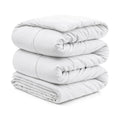
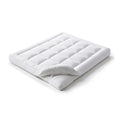
Our microfibre winter duvet comes in 10.5, 13.5 and 15 tog, in single, double, king and super king. The filling is hypoallergenic hollowfibre in stitched channels, so it stays spread across the duvet rather than drifting into the corners. Allow 24 hours after unpacking for it to loft fully.
| Size | 10.5 tog | 13.5 tog | 15 tog |
|---|---|---|---|
| Single | £19.49 | £19.99 | £20.99 |
| Double | £22.49 | £22.99 | £23.99 |
| King | £22.99 | £23.99 | £26.99 |
| Super king | £26.99 | £28.99 | £30.99 |
For spring and summer, our duvet tog guide for each season covers the lighter weights from 1 to 7.5 tog.
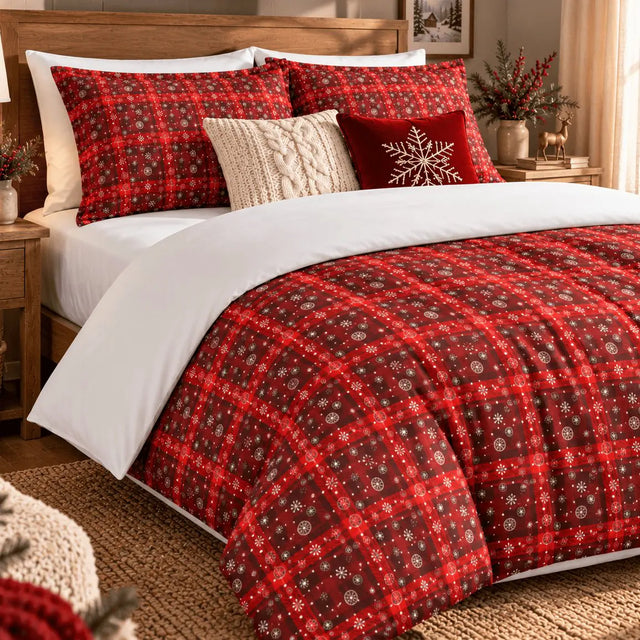
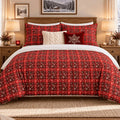
Two duvets with the same tog can feel quite different, depending on the filling. Our guide to duvet fillings compares hollowfibre, microfibre, feather, down, wool and silk, and down alternative duvets explains the synthetic option. Dressing the bed for the season? Our Christmas duvet covers come in 10 designs, from single to emperor.
Written by the Adam Home team in the UK.