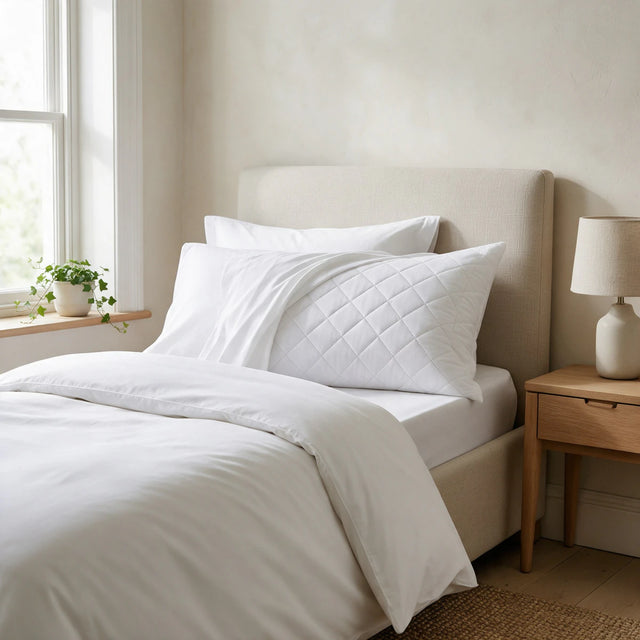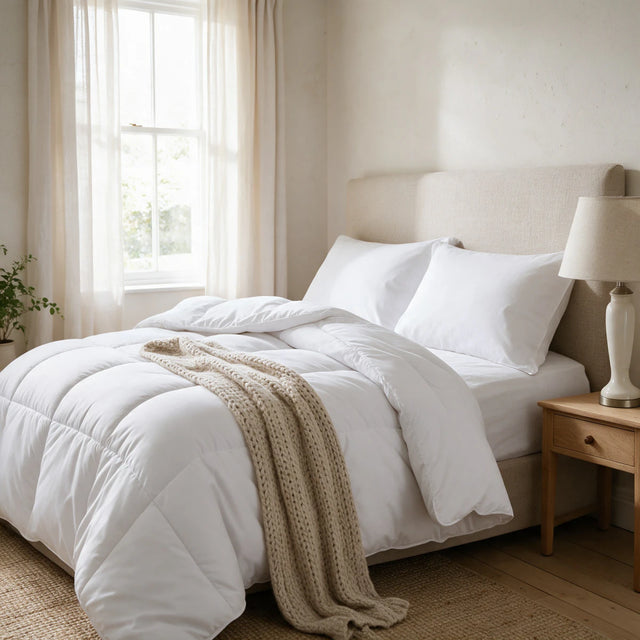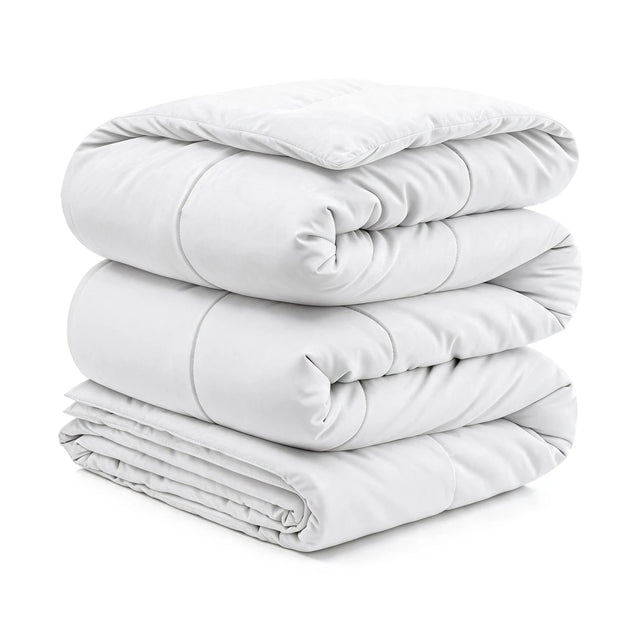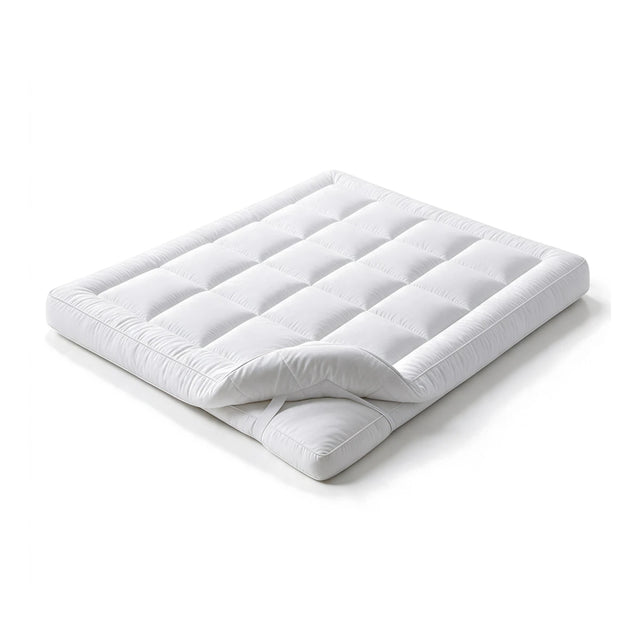
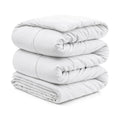
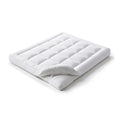
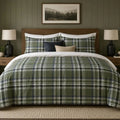

Polycotton bedding is bedding made from polycotton, a woven fabric blended from cotton and polyester fibres, most often 65% polyester to 35% cotton or an even 50/50 split. The polyester side makes it crease less, shrink less and dry faster than pure cotton, and it costs less. The cotton side makes it breathe better than pure polyester. The catches are a slightly rougher feel than cotton and bobbles that build up over time. This guide covers blend ratios, 5 pros, 4 cons, whether polycotton suits bedding, a cotton versus polycotton versus microfibre table, the polycotton products we sell and how to wash them.
What is the usual polycotton blend ratio?
The usual polycotton blend ratio is 65% polyester to 35% cotton, according to UK fabric retailer Pound Fabrics, which adds that the mix can vary. Some bed linen is an even 50/50 split.
Wiktionary defines polycotton as a fabric made from a blend of cotton and artificial fibres, especially polyester, and the word itself is a blend of "polyester" and "cotton". Belledorm's 200 thread count Easycare sheets, a UK bed linen range, are a "tightly packed 50/50 cotton and polyester blend". Our own U pregnancy pillow cover is 50/50 too.
The ratio changes how the fabric behaves. More polyester means more of the easy-care side, and more cotton means more of the breathable side. A listing that says "polycotton" with no numbers doesn't tell you which way the fabric leans, so check the label.

What are the advantages of polycotton bedding?
The 5 advantages of polycotton bedding are less creasing, faster drying, less shrinking, more strength and a lower price than pure cotton. Wikipedia's polyester entry says cotton and polyester blends can be strong, wrinkle and tear resistant, and shrink less.
- Less creasing. Pound Fabrics calls polycotton "pretty crease resistant", which cuts down on ironing.
- Faster drying. Belledorm says its 50/50 sheets are ready for the bed "in half the time of pure cotton".
- Less shrinking. Pound Fabrics says polycotton is less prone to shrinking in the wash than cotton.
- More strength. Pound Fabrics says polycotton is more durable than cotton, which can rip or tear more easily.
- Lower price. Cotton costs more than polyester, so polycotton is generally priced between the two, Pound Fabrics says.
Strength is the advantage that matters most for bedding that gets washed every week. Wikipedia notes polyester's toughness makes it a frequent choice for children's wear, and the same logic applies to a child's bed.
What are the disadvantages of polycotton?
The 4 disadvantages of polycotton are lower breathability than cotton, pilling over time, a rougher feel than pure cotton and microfibre shedding in the wash. Pound Fabrics names the first 3 directly.
- Lower breathability. Pound Fabrics says polycotton isn't as breathable as cotton, though it breathes better than pure polyester. The Sleep Foundation says polyester sheets tend to breathe poorly and can trap moisture.
- Pilling. Pound Fabrics says polycotton can develop bobbles on the surface over time.
- Rougher feel. Polycotton has a slightly rougher feel than 100% cotton, according to Pound Fabrics.
- Microfibre shedding. Wikipedia's polyester entry estimates that an average 6 kg wash of polyester-cotton fabric releases 137,951 fibres.
Pilling is the con people notice first, and there's a reason blends do it. Wikipedia's entry on pills says that in a blend, pills form as the weaker fibre wears and breaks, while stronger synthetic fibres hold on to the pills so they don't fall off. In polycotton the cotton wears and the polyester keeps the bobble in place. Wikipedia says pills can be removed by shaving the fabric.
Is polycotton good for bedding?
Yes, polycotton is good for bedding if you want sheets and covers that need little ironing, dry quickly and stand up to frequent washing. Polycotton is a weaker pick for hot sleepers, because it breathes less than pure cotton.
The Sleep Foundation says polyester is often blended with cotton to give a smoother feel and better temperature regulation than polyester on its own. UK retailer Soak&Sleep suggests a cotton-polyester blend for "softness with added durability and less creasing". We'd use polycotton on a child's bed, a guest bed or anything that goes through the machine a lot, and keep pure cotton for someone who runs hot at night.
Is polycotton better than cotton?
No, polycotton isn't better than cotton for breathability or softness, but it is better for easy care: it creases less, shrinks less, dries faster and costs less. Pick cotton for comfort on warm nights and polycotton for low effort.
The table sets cotton, polycotton and polyester microfibre side by side. Microfibre is a synthetic fibre made of threads finer than 1 denier, most commonly polyester, according to Wikipedia.
| Attribute | Cotton | Polycotton | Polyester microfibre |
|---|---|---|---|
| Breathability | Breathes best, won't trap heat as easily (Sleep Foundation) | Less than cotton, more than polyester (Pound Fabrics) | Not as breathable as cotton (Sleep Foundation) |
| Creasing | More prone to wrinkling (Sleep Foundation) | Crease resistant, less ironing (Pound Fabrics) | Wrinkle resistant (Sleep Foundation) |
| Shrinking | Might shrink after the first wash (Sleep Foundation) | Less prone than cotton (Pound Fabrics) | Less prone than natural fibres (Sleep Foundation) |
| Drying time | About twice as long as polycotton (Belledorm) | About half the time of cotton (Belledorm) | Dries quickly (Wikipedia, microfibre towels) |
| Pilling | Can pill, depends on finishing (Sleep Foundation) | Bobbles over time, held on by polyester (Pound Fabrics, Wikipedia) | Can pill, depends on finishing (Sleep Foundation) |
| Price | Most expensive (Pound Fabrics) | Between cotton and polyester (Pound Fabrics) | Cheaper than cotton on average (Sleep Foundation). Our duvet cover sets from £26.99 |
Polycotton sits between the two on breathability and price, and lands closer to microfibre on creasing, shrinking and drying. Our guide to microfibre vs cotton duvet covers goes deeper on the two ends of the table, including thread count.

Which Adam Home products are polycotton?
The 4 Adam Home products made with polycotton are the quilted pillow protectors, the kids 7.5 tog duvet and pillow set, the U pregnancy pillow cover and the quilted cushion inserts. Only the pregnancy pillow cover gives a blend ratio.
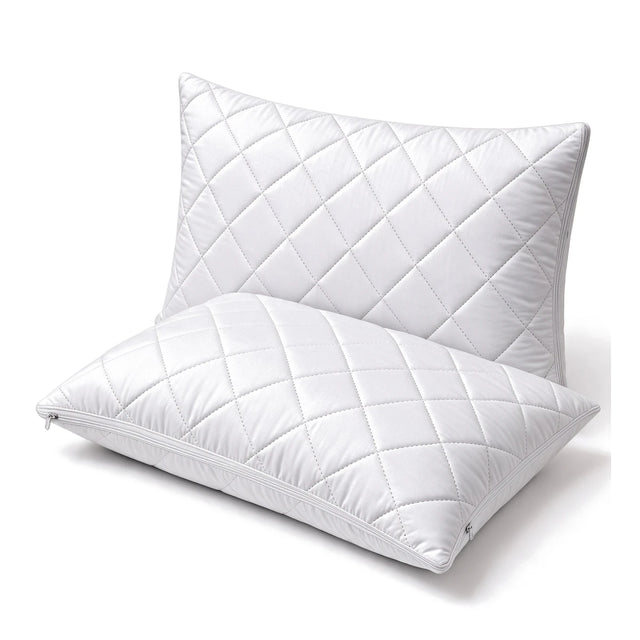
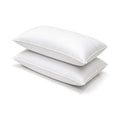
- Quilted pillow protectors. The listing describes a "tightly woven polycotton" shell with diamond quilting and anti-allergy filling, 50x75 cm with a full zip, from £9.99 for 2.
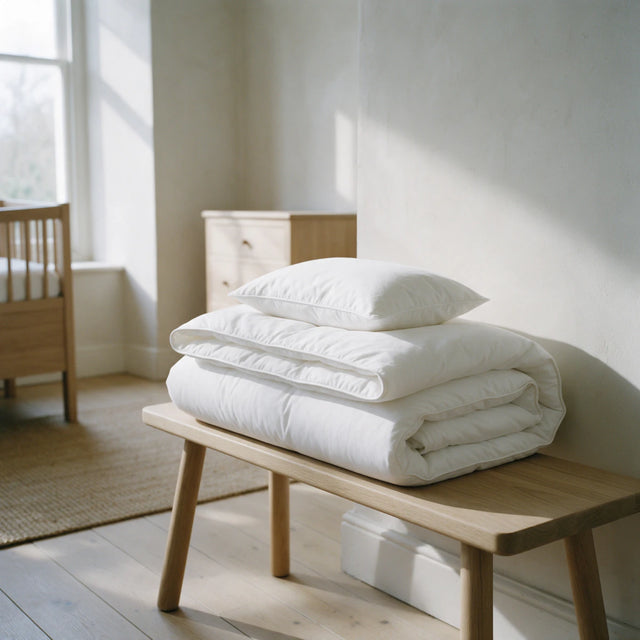
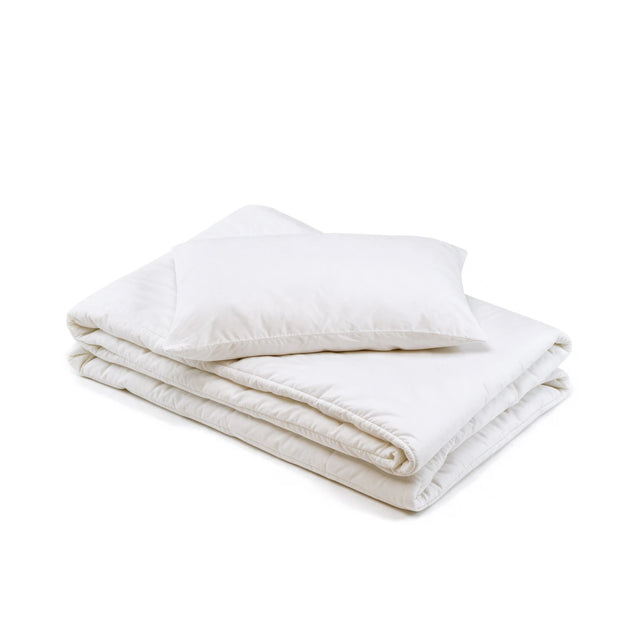
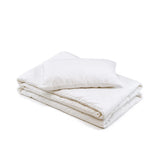
- Kids duvet and pillow set, 7.5 tog. A 120x150 cm duvet and a 40x60 cm pillow in a "soft polycotton shell" with virgin hollowfibre filling, for children over 12 months, £15.99.
- U pregnancy pillow cover. The replacement cover is "50/50 polycotton" in 8 colours, from £9.99 for the cover alone.
- Quilted cushion inserts. A "quilted polycotton cover" over a hollowfibre core, in packs of 4 from 30x45 cm to 50x50 cm, from £14.99.
The tight weave on the quilted polycotton pillow protectors also stops feathers poking through older duck feather pillows, the listing says. Our guide to quilted vs plain pillow protectors compares them with the microfibre version. For a cot bed, the kids polycotton duvet and pillow set is the one to look at.
Our duvet cover sets aren't polycotton: the listings say "100% polyester microfibre". Our guide to what microfibre bedding is covers that fabric's own pros and cons.
How do you wash polycotton bedding?
To wash polycotton bedding, follow the care label, wash at 40°C or lower and tumble dry on a low heat. Belledorm gives that advice for its 50/50 sheets and also says to avoid harsh bleach and fabric softener.
Belledorm adds that its polycotton sheets don't need ironing in most cases, and a quick steam or low-heat iron sorts out minor creases. Our polycotton listings each give their own instructions, and they aren't all the same.
| Product | Wash | Dry |
|---|---|---|
| Quilted pillow protectors | Machine wash at 40°C | Tumble dry low |
| Kids 7.5 tog duvet set | Machine wash cold or warm, no bleach | Tumble dry low |
| U pregnancy pillow cover | Machine wash at 40°C | Tumble dry safe |
| Quilted cushion inserts | Machine wash cold | Tumble dry low |
Low heat in the dryer is the common thread across all 4. If the label and this table ever disagree, go with the label sewn into the product.
Written by the Adam Home team in the UK.