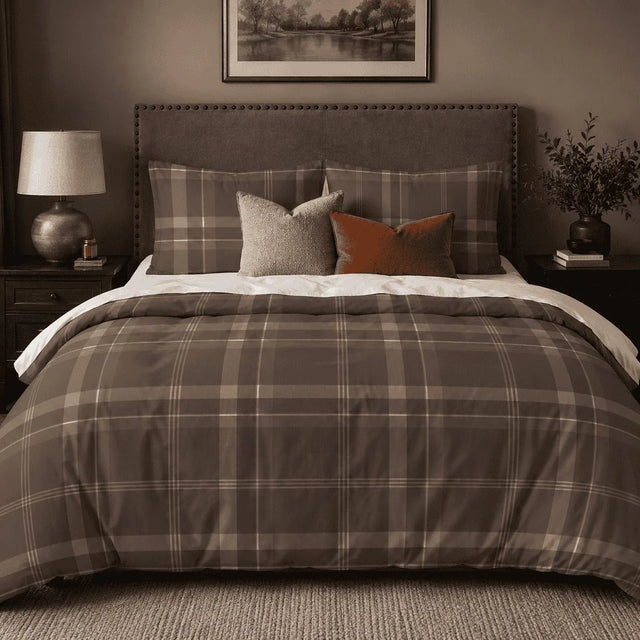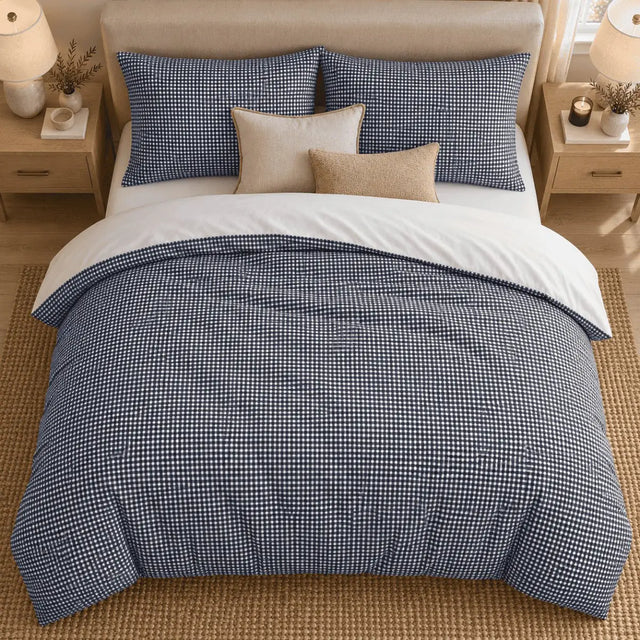



A duvet cover with a zip is the quickest to close, but it isn't better in every way. Buttons are easier to mend, snap buttons (poppers) press shut fast and have no slider to wear out, and an envelope flap has no fastening at all. The right one depends on how often you change the bed and whether you'd rather fix a fastening or replace it. Below: the four side by side, what happens to zips in the wash, and how to get a zipped cover on.
| Closure | Speed to close | In the wash | Repair | Comfort |
|---|---|---|---|---|
| Zip | One pull along the opening | Close it first, as YKK advises | Worn slider needs a new slider, or the whole zip | Flat when closed, a hidden zip looks like a seam |
| Sewn buttons | Slowest, each one goes through a hole | Fasten them first | Easiest: sew a loose button back on | Raised buttons along the foot end |
| Snap buttons (poppers) | Quick, press each pair together | Fasten them first | A lost popper needs a snap kit or pliers to replace | Small flat discs that rarely snag |
| Envelope or flap | Tuck the flap over the duvet | Nothing to fasten or catch | Nothing to break | No hardware at all |
Speed favours the zip, repair favours buttons, and the envelope wins on having nothing to go wrong. Snap buttons sit in the middle on all three.
Are zip duvet covers better than buttons?
A zip duvet cover is better if speed matters most, because one pull closes the whole opening. Buttons are better if you want a fastening you can fix yourself with a needle and thread.
The trade-off is in what fails. A zip can stop closing when its slider gets bent or opens up so the teeth no longer meet, and the fix is a new slider or a new zip. A button that comes loose is a quick sewing job. If you change your bedding once a week, the zip saves you time every week. If you'd rather never deal with a broken slider, buttons or poppers are simpler to live with.

What are snap buttons, or poppers, on a duvet cover?
Snap buttons, also called poppers or press studs, are pairs of interlocking discs. One disc has a lip that clicks into a groove on the other, and they stay together until you pull them apart. On a duvet cover, a row of them closes the opening at the foot end.
Snap fasteners were used on military equipment for their speed and because they don't snag easily, and they are easier for children to use than buttons. They're fixed to the fabric by sewing, riveting or snap pliers. That makes them quick to use, but a popper that comes off is harder to replace than a sewn button.
Do zips break in the wash?
A zip can be damaged in the wash if it's left open, because the open teeth and slider take the strain of the drum. YKK, the zip maker, says to close its zips before washing to lessen the pressure and damage that can affect how they work.
Most zip failures come from the slider rather than the teeth. Outdoor brand Vaude explains that frequent or rough use can bend the slider or make it spread, so the teeth stop meshing, and that a new slider is the usual repair. Close the zip fully before every wash, and don't force it over a bunched corner of the duvet.
How do you wash a duvet cover with each closure?
Wash any duvet cover with its closure done up: close the zip, fasten the buttons and press the poppers shut. Puffy's care guide advises turning the cover inside out and fastening buttons or zips first, to stop tangling and damage. Then follow the care label.
- Zip: close it all the way. If you iron near it, YKK says to keep it closed and iron below 130°C.
- Sewn buttons: fasten them, and check for any loose ones before the wash so they don't come off in the drum.
- Snap buttons: press every pair shut, so smaller items can't get caught inside the cover.
- Envelope: nothing to do up. Turn it inside out like any other cover.
The duvet inside needs its own care. Our guide on how to wash a duvet covers that part. For printed covers, see how to wash a duvet cover without fading.
How do you put on a duvet cover with a zipper?
Put a zipped duvet cover on the same way as any other, then zip it at the end. The burrito method is the easiest on your own: roll the duvet and the inside-out cover together, feed the roll through the opening, close the zip and unroll.
- Turn the cover inside out and lay it flat on the bed, with the opening at the foot end.
- Lay the duvet on top and line up its corners with the cover's corners.
- Roll the duvet and cover together from the head end towards the opening, keeping the edges straight.
- Pull the opening over one end of the roll and work it along until the whole roll is inside.
- Close the zip, or fasten the buttons or poppers.
- Unroll towards the head of the bed and give the duvet a shake.
The Sleep Foundation describes the same steps, with the closure done up before you unroll. Check the duvet and cover are the same size first. Our UK duvet sizes chart lists them.

What is an envelope or hidden flap closure?
An envelope closure has no zip, buttons or ties. A deep flap of fabric folds over the end of the duvet and tucks inside, like the flap of an envelope. Covers without a fastening are also called flat or flap covers.
Without a fastening, the flap has to be deep enough to hold the duvet in. Dutch bed maker Auping, for example, gives its covers an extra-long tuck-in flap across the full width and down both sides. A shallow flap can let the duvet slip out at the foot of the bed.
Which closure do Adam Home duvet covers use?
Our microfibre duvet cover sets close with snap buttons, not a zip. Each set is 100% polyester microfibre, designed and made in the UK, and machine washable, with a duvet cover and matching pillowcases.
We think snap buttons suit a cover you'll wash often. They press shut quickly, sit flat and don't snag easily, and there's no slider to bend or spread over time. The trade-off is that you close them one pair at a time, which takes a little longer than a single zip pull. Press every pair shut before the cover goes in the machine.
Our snap-button duvet cover sets come in Single, Double, King, Super King and Emperor, from £26.99. Each set includes one pillowcase with a Single and two with a Double or larger, and the duvet itself is sold separately. Our guide to what comes in a duvet cover set explains the rest, and the microfibre bedding guide covers the fabric.
Which duvet cover closure should you choose?
Choose a zip if you want the fastest change and don't mind replacing a slider one day. Choose sewn buttons if you like to mend things yourself, snap buttons if you want a quick fastening with no slider to wear out, and an envelope if you want nothing to fasten at all.
Whichever you pick, do it up before washing and match the cover to your duvet size. Browse our duvet cover sets in plaid, abstract, floral and seasonal prints.
Written by the Adam Home team in the UK.