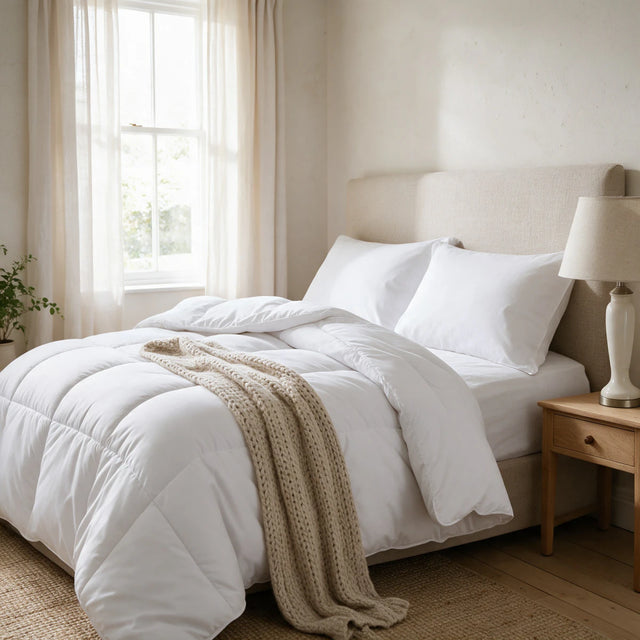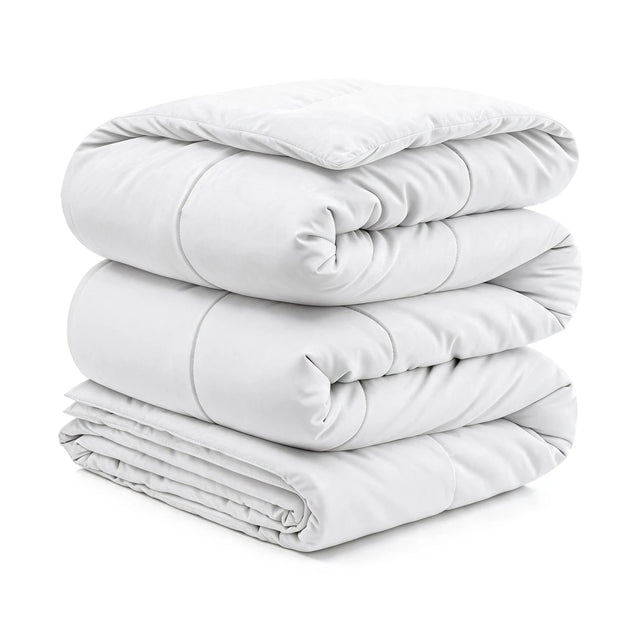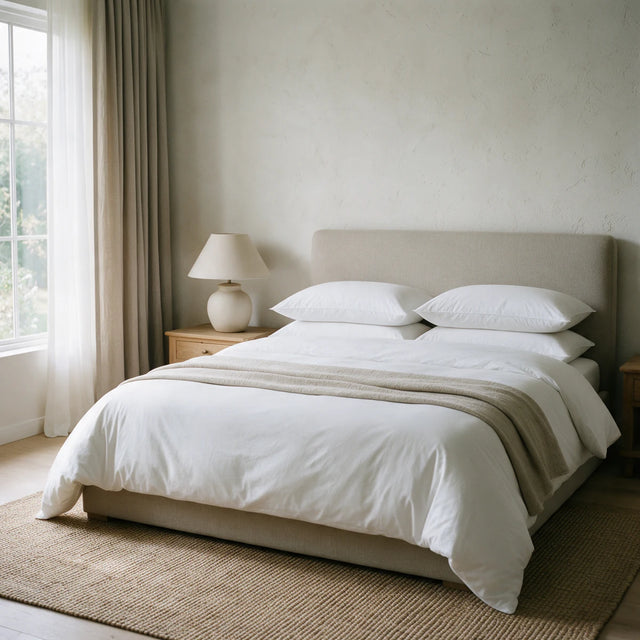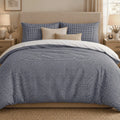
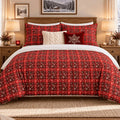
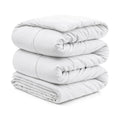
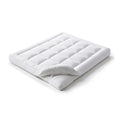

A down alternative duvet is a duvet filled with man-made fibres, usually polyester, that are made to look, feel and insulate like down without using any feathers. At the same tog it keeps you just as warm as a down duvet, it usually weighs a little more, and you can wash it at home. That makes it the usual choice for allergy households, families who wash bedding often and anyone on a budget. Adam Home's microfibre duvet has a hollowfibre down alternative filling, from £15.99. Below: the fibres, warmth and weight, allergies, vegan status, washing and who it suits.
What is a down alternative duvet?
A down alternative duvet is a duvet whose filling copies down using man-made fibres instead of feathers from ducks or geese. Peacock Alley describes them as filled with man-made materials designed to have the look and feel of natural down.
Down itself is the layer of fine, fluffy feathers that grows under a bird's tougher outer feathers. Most of the down sold today comes from domestic geese, according to Wikipedia, with China supplying about 70% of the world's supply. A down alternative leaves the bird out entirely.
The name tells you the filling isn't down, but not which fibre is inside, so read the filling line on the label. Our guide to duvet fillings compared puts down alternatives next to feather, down, wool and silk.
What fibres are used in a down alternative duvet?
Most down alternative duvets use polyester, spun into one of three forms: hollowfibre, microfibre or cluster fibre. Peacock Alley adds that some use rayon.
Hollowfibre is polyester spun with a hollow core, so each strand holds a little air inside it as well as between strands. It's springy and gives the duvet its loft. Our guide to what hollowfibre is explains how the hollow core is made.
Microfibre is polyester spun finer than 1 denier, under 10 micrometres across, which gives a softer, silkier fill. Cluster fibre, also called ball fibre, is hollow polyester crimped and rolled into small balls. Next's buying guide describes a "micro fibre cluster filling" that can be re-plumped to keep its shape.
Polyester is a synthetic polymer. Wikipedia traces the PET used in fibres back to crude oil, and notes that recycled PET is increasingly used in textiles.

Is down alternative as warm as down?
Yes, a down alternative duvet is as warm as a down duvet of the same tog. Tog measures how well the duvet holds in heat, whatever the filling, and John Lewis says synthetic duvets give the same warmth as natural-filled ones.
So a 10.5 tog down alternative and a 10.5 tog goose down duvet keep you equally warm. Pick the tog for your bedroom first. The filling then decides the weight, the feel and how you clean it.
Is a down alternative duvet heavier than down at the same tog?
Yes, a down alternative duvet is usually heavier than a down duvet of the same tog. Down traps more air per gram, so a synthetic needs more filling to reach the same warmth.
John Lewis says a synthetic duvet at an equivalent tog "may be heavier" than one with a high down content. Next's guide says feather and down generally feel lighter than synthetic fibres, and Peacock Alley calls down alternatives bulkier and heavier.
If you want the lightest duvet for its warmth, down wins. If you like to feel the duvet on you, the extra weight is a plus.
| Question | Down alternative | Down |
|---|---|---|
| Warmth at the same tog | The same | The same |
| Weight at the same tog | Usually heavier | Lighter |
| Allergies | Non-allergenic filling | Can gather dust mites and mould with age |
| Washing | Machine washable, dries faster | Professional laundering usually advised |
| Animal products | None in the filling | Goose or duck down |
| Price | Lower | Higher |
Warmth, weight, allergy and washing rows come from John Lewis's duvet buying guide, the down allergy row from Wikipedia, and the price row from Peacock Alley. Your own duvet's label comes first.
Is down alternative hypoallergenic?
Yes, down alternative fillings are generally sold as hypoallergenic, and John Lewis calls synthetic fillings non-allergenic. The word itself just means "causes fewer allergic reactions", and Wikipedia notes that no country officially regulates or certifies it.
For dust mite allergy, the NHS advice is to use synthetic bedding and covers and wash bedding regularly at 60°C or above. Allergy UK says 60°C or hotter kills mites, while cooler washes remove allergen and leave the mites alive. It also recommends breathable barrier covers that fully enclose duvets and pillows.
Wikipedia notes that down becomes more allergenic as it ages and collects mould and dust mites, and cites a Finnish study that found true feather allergy rare. So for most people the trouble is the mites, and a duvet you can wash hot often is the practical fix. A hypoallergenic filling doesn't treat allergies, and if you have symptoms, your GP or pharmacist is the right person to ask.
Is a down alternative duvet vegan?
Yes, a polyester down alternative filling is vegan, because it contains no feathers, down or other animal material. The Vegan Society's definition of veganism excludes animal exploitation for clothing or any other purpose.
Down usually comes from birds raised for meat or pâté, says Wikipedia, and some is plucked from live birds, a practice animal welfare groups call cruel. If that's why you're avoiding down, check the outer fabric and the label too, since the filling line only covers what's inside.
Can you wash a down alternative duvet at home?
Yes, most down alternative duvets can be washed at home in the washing machine. John Lewis says microfibre and hollowfibre are both machine washable and dry more quickly than natural duvets.
Down is harder. John Lewis recommends professional laundering for natural duvets, because they need drying thoroughly straight away, which is tricky at home. Drum size matters with any duvet: AO.com's washing machine expert told Ideal Home that a double or king duvet needs at least a 9 kg drum. Always follow the care label for temperature and drying. Our step-by-step guide on how to wash a duvet at home covers the method.

Who does a down alternative duvet suit?
A down alternative duvet suits three groups of people best: allergy households, families who wash bedding often and anyone shopping on a budget.
First, allergies. The NHS points people with dust mite allergy towards synthetic bedding washed at 60°C or above, and a down alternative is synthetic bedding. Check the label allows that temperature before you rely on it.
Second, families. Spills, pets and children in the bed mean more washing, and a duvet that goes in the machine and dries faster saves trips to the launderette.
Third, budget. Peacock Alley says natural down typically costs more than synthetic bedding. Down is still the pick if the lowest weight for its warmth matters most to you and you're happy to pay for laundering.
What is the Adam Home down alternative duvet?
Our down alternative duvet is the Adam Home microfibre duvet, filled with hollowfibre and no feathers. The product page calls the filling "a down alternative: hollow polyester fibres that trap warm air the way down does, minus the allergens".
It lists "Hypoallergenic hollowfibre filling, no feathers" and stitched channels that keep the filling spread out. It's machine washable, and it needs 24 hours to loft fully after unpacking. It weighs around 1.2 to 2.2 kg depending on size.
It comes in 1, 2.5, 4.5, 7.5, 10.5, 13.5 and 15 tog, in Single 135 x 200 cm, Double 200 x 200 cm, King 225 x 220 cm and Super King 260 x 220 cm. The 1 tog comes in Double and King only. Prices start from £15.99 for the 1 tog Double, and Super King runs from £21.99 to £30.99. The product page doesn't give a wash temperature or tumble-drying advice, so follow the label on the duvet. You can choose your tog and size on the down alternative duvet page.
Written by the Adam Home team in the UK.