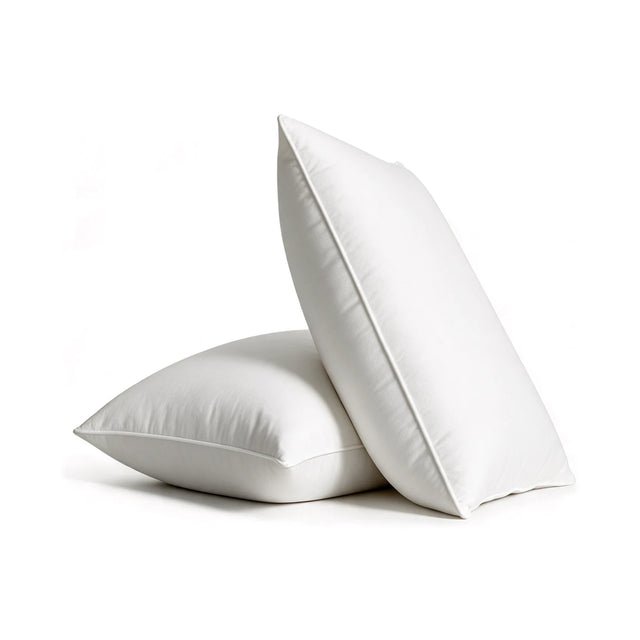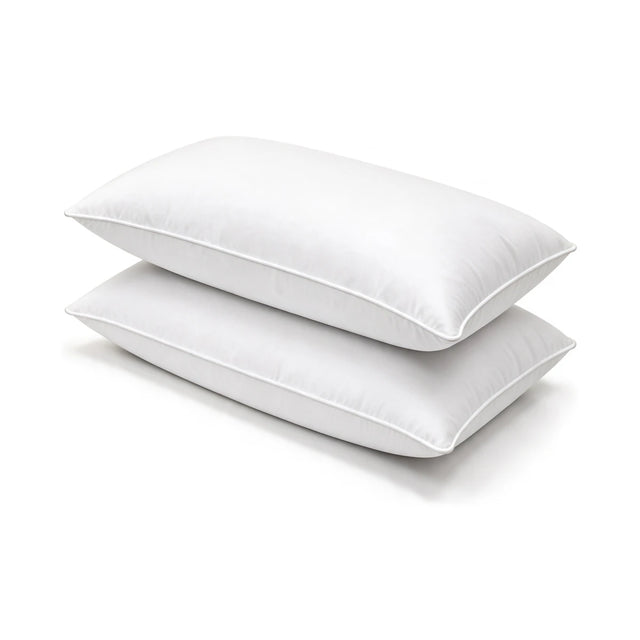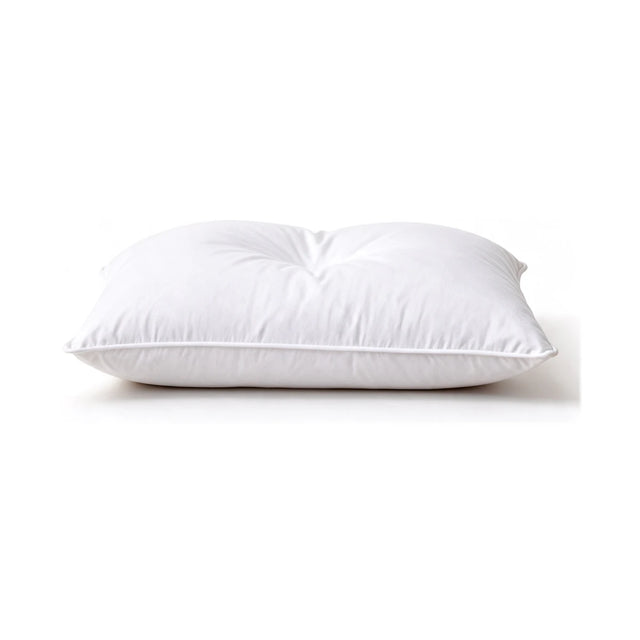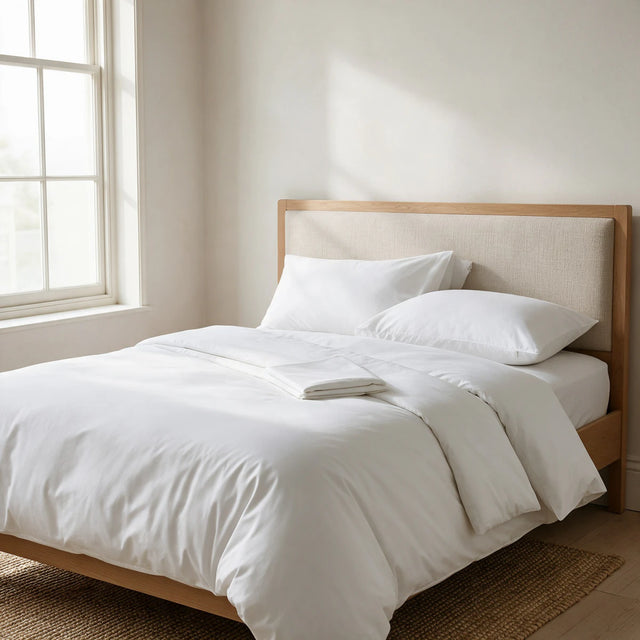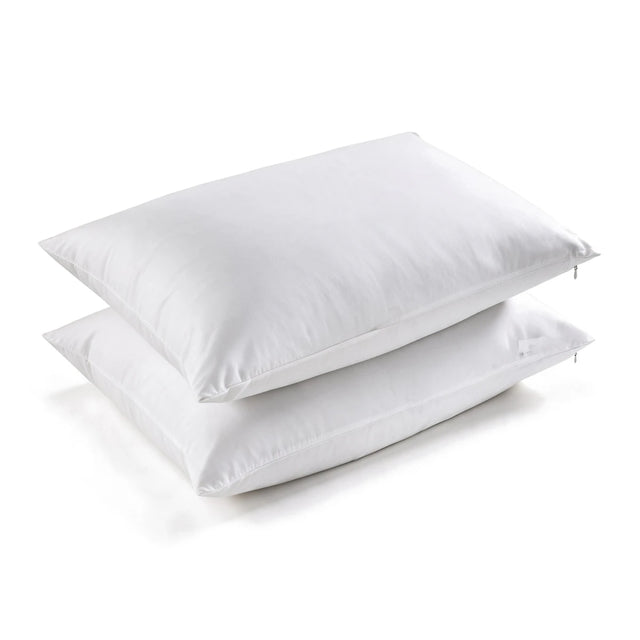

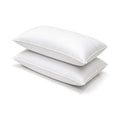
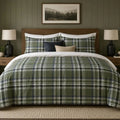

A bounce back pillow is a bed pillow filled with springy hollowfibre that recovers its height after your head has pressed it down overnight. "Bounce back" is a UK retail name, not a standard. We couldn't find a British Standard or a dictionary entry that defines it, so each brand uses it for its own springy polyester filling, often spiral-crimped hollowfibre. Our own come in soft, medium and firm, filled with virgin hollowfibre, from £12.99 for 2. This guide covers what the name means, how the filling springs back, whether the pillows go flat, which firmness to pick, side sleepers and washing.
What is a bounce back pillow?
A bounce back pillow is a pillow filled with springy synthetic fibre, usually hollowfibre, that regains its shape after being squashed. The name is a selling term, so the filling behind it changes from brand to brand.
Hollowfibre is a polyester fibre with a hollow core running down each strand. Virgin hollowfibre is newly made fibre, not recycled or mixed with offcuts. Here's how 3 listings describe the bounce:
| Listing | Filling named | What it says about the bounce |
|---|---|---|
| Absolute Hometextiles bounce back pillows | Spiral fibre, 600 g | Spiral fibres let the pillow bounce back to its original shape |
| Silentnight Ultrabounce (Mattress Next Day listing) | Spiral shaped hollowfibre | Pillows "spring back to life after all-night use" |
| Adam Home bounce back pillows | Virgin hollowfibre | Quick rebound, clump-resistant, rebounds after every wash and every night |
Two of the three name a spiral fibre, and none gives a test or a number for the bounce. So read the filling line on the listing. The name on its own won't tell you much.
How does a bounce back pillow spring back?
A bounce back pillow springs back because its fibres are crimped into springy curls that push apart again once the weight comes off, and because each hollow strand holds air. Fluffing the pillow puts back the air your head pressed out.
Crimp is the wave or coil put into a fibre. A 1995 DuPont patent for pillow fillings calls crimp "a very important characteristic" because it gives the filling its bulk, and an earlier DuPont patent says crimp plays a key role in how fibre recovers after it's compacted. The 1995 patent also describes fibres that curl into a helix on their own as they're spun, which is the spiral fibre the bounce back listings mention.
Polyester filling is often coated with silicone too. The DuPont patents describe this "slickening" and say it's applied to improve the filling's aesthetics. Then there's the air. The Sleep Foundation says fluffing breaks up clumps and forces air back into the fill to restore its loft. Our guide to what hollowfibre is and how it's made covers the spinning process in more detail.

Dreams describes the result as polyester blended with springy hollow fibres for a "plump, bouncy feel". Ours have that springy virgin hollowfibre inside a brushed cotton cover, in three firmnesses, and you can compare them on our soft, medium and firm bounce back pillows page.
Do bounce back pillows go flat?
Yes, bounce back pillows go flat in the end, like every polyester pillow. The Sleep Foundation calls polyester pillows among the least durable and says to replace them every 6 months to 2 years.
The Sleep Charity's advice for pillows in general is every two to three years. Dreams explains the wear: over time, fillers compress and lose their elasticity, and the pillow stops holding your neck properly.
A pillow also flattens a little every night. The fill compresses beneath your head, the Sleep Foundation says, and down alternative fillings compress easily enough to need fluffing daily. A morning shake fixes that kind of flat. Worn-out fibre doesn't come back.
The 1995 DuPont patent also measured how a fibre pillow wears. Its test pillows went through one cycle of mechanical stomping followed by a home wash and tumble dry. Their height barely moved, but the force needed to squash them to half height fell by about 30%.

Those were lab pillows, not ours. The test still shows that a fibre pillow can feel softer well before it looks thinner. The fold test is the quicker check, and our guide on how often to replace pillows walks through it. Our listing doesn't promise a lifespan, and we'd trust the fold test over the calendar.
Which bounce back pillow firmness should you choose?
Choose soft if you sleep on your front, medium if you sleep on your back and firm if you sleep on your side. That's how our listing matches them, and it adds a rule of thumb: "the broader your shoulders, the firmer the pillow".
| Firmness | What our listing says | 2 pack | 4 pack |
|---|---|---|---|
| Soft | For stomach sleepers | £17.99 | £26.49 |
| Medium | For backs | £12.99 | £18.99 |
| Firm | For side sleepers who need their neck held level | £13.99 | £20.49 |
Dreams' buying guide points the same way. The guide tells front sleepers to stick to soft, thin pillows, back sleepers to go medium, and side sleepers to go firm or medium-firm with high loft. The Sleep Charity gives the reason firmness matters at all: a pillow that's too soft lets the head flop and curves the neck, and one that's too hard gives you a crick in the neck.
All three firmnesses come in the standard UK size, in packs of 2 or 4. The soft pillow costs the most of the three, and the medium 2 pack is the cheapest way in.
Are bounce back pillows good for side sleepers?
Yes, a firm bounce back pillow is the one we list for side sleepers, as long as it's thick enough for your build. The Sleep Foundation calls a medium to medium-firm pillow ideal for side sleepers.
Height matters as much as firmness here. The Sleep Foundation's side sleeper guide, medically reviewed by a physical therapist, says side sleepers usually need a pillow at least 10 cm (4 in) thick, and over 15 cm (6 in) with broad shoulders. The Sleep Charity adds that a good pillow should hold your head in the same line with your shoulders and spine as when you stand up straight.
Our listing doesn't give a height in centimetres, so check the pillow on your own bed. Our guide to pillows for side sleepers covers the height check step by step and compares fillings.
How do you wash a bounce back pillow?
Wash our bounce back pillows on a cool machine wash with mild detergent and tumble dry them on low. That's the care line on the listing, and the sewn-in care label has the final say.
The cover is 100% brushed cotton with a down-proof weave, and our listing says the virgin hollowfibre inside rebounds after every wash. Let the pillow dry right through before it goes back on the bed, then fluff it to bring the loft back up. Our guide on how to wash pillows without clumping has the full 8 steps.
Written by the Adam Home team in the UK.