
It's better to sleep without a pillow only if you sleep on your front, and even then a very thin pillow is the other option. Sleeping without a pillow, or pillowless sleep, is a set-up where your head rests straight on the mattress. The Sleep Foundation says front sleepers are "generally best suited for going pillowless", while side and back sleepers usually need a pillow to keep the head and spine in line. It also says research on pillowless sleep is limited, so most of what follows is advice by position, not proven benefit. The sections below cover who should skip a pillow, the claimed benefits, what it means for your neck, thin pillows versus none, how to make the switch and which of our pillows suit a low set-up.
Who should sleep without a pillow?
Front sleepers are the one adult group the Sleep Foundation says can generally sleep without a pillow, and the NHS says babies shouldn't have a pillow at all. Back and side sleepers usually need one.
Here's how the advice breaks down for 5 groups of sleepers:
| Who | Without a pillow? | The reason given | Source |
|---|---|---|---|
| Front (stomach) sleepers | Yes, or a very thin pillow | The head turns to one side to breathe, and a pillow makes that angle sharper | Sleep Foundation |
| Back sleepers | Usually no | There's a small gap under the neck, and without a pillow the head can tilt down | Sleep Foundation |
| Back sleepers on a very soft mattress | Sometimes | The mattress may already lift the head, so a pillow can tip it too high | Sleep Foundation |
| Side sleepers | No | The gap between head and mattress is at its widest, and the neck can overextend | Sleep Foundation |
| Babies under 12 months | Yes, no pillow at all | Safer sleep advice: no pillows, duvets or soft toys in the cot | NHS |
Front sleeping is the least common position, so for most adults the answer is no. A 2017 study in Nature and Science of Sleep tracked 664 working adults with motion sensors. They spent 7.3% of their time in bed on their front, 37.5% on their back and 54.1% on their side.
The Sleep Foundation suggests talking to a healthcare professional before a big change, and names heartburn and obstructive sleep apnoea as conditions where a pillow may help. For heartburn, the NHS suggests raising the head of the bed by around 10 to 20 cm instead of stacking extra pillows, which it says "can increase pressure on your belly".

Our guide to pillows for back and front sleepers covers both set-ups in more detail, and the guide to pillows for side sleepers covers the higher end of the scale.
What are the benefits of sleeping without a pillow?
The 4 claimed benefits of sleeping without a pillow are straighter alignment for front sleepers, less neck and back pain, fewer face creases and better hair. The Sleep Foundation says clinical studies on going pillowless are lacking.
Taking them in order, the Sleep Foundation's view is this. First, alignment: for a front sleeper, a flat surface keeps the head closer to the line of the spine, and this is the one claim tied to a clear reason. Second, pain: the support for it is anecdotal reports from some sleepers, not trials. Third, skin: early evidence suggests a pillow pressed against the face leaves impressions that may add to wrinkles, though back sleeping keeps your face off the pillow anyway. Fourth, hair: there's no research linking pillows to hair health, it says.
So the honest case for ditching the pillow is narrow. It rests on one group, front sleepers, and one mechanism, the angle of the neck.
Is sleeping without a pillow bad for your neck?
For most back and side sleepers, yes. The Sleep Foundation says leaving out the pillow is "likely to have detrimental effects on sleep posture" for most people, and front sleepers can still wake with a stiff neck from the turned head.
NHS advice points the same way, towards a low pillow, not no pillow. The NHS neck pain page suggests "a low, firm pillow", says to keep your head "the same height as the rest of your body" when sleeping, and adds "do not sleep on your front". A Cambridge University Hospitals NHS physiotherapy leaflet advises one pillow, so your head doesn't tilt to the side, forwards or backwards. An NHS Borders physiotherapy leaflet asks readers to avoid sleeping on their stomach, because it "can increase the strain on your neck over time".
None of these NHS sources tells you to sleep flat. The Sleep Charity puts the balance simply: a pillow that's too soft lets the head flop and curves the neck, and one that's too hard gives you a crick. If you're torn between one pillow and two, our guide on how many pillows to sleep with goes through it by position.
Is a thin pillow better than none?
For most people, yes. The Sleep Foundation treats a thin pillow as the halfway step, and suggests a pillow 3 inches (about 7.5 cm) thick or less for front sleepers.
Side and back sleepers sit higher on the scale. The same source suggests 3 to 5 inches, about 7.5 to 12.5 cm, for both, and warns that a pillow that's too thin may not keep a side sleeper's head level with the spine. Firmness follows position too: the Sleep Foundation says front sleepers "should go for a softer pillow", back sleepers do best with medium and side sleepers with firmer.
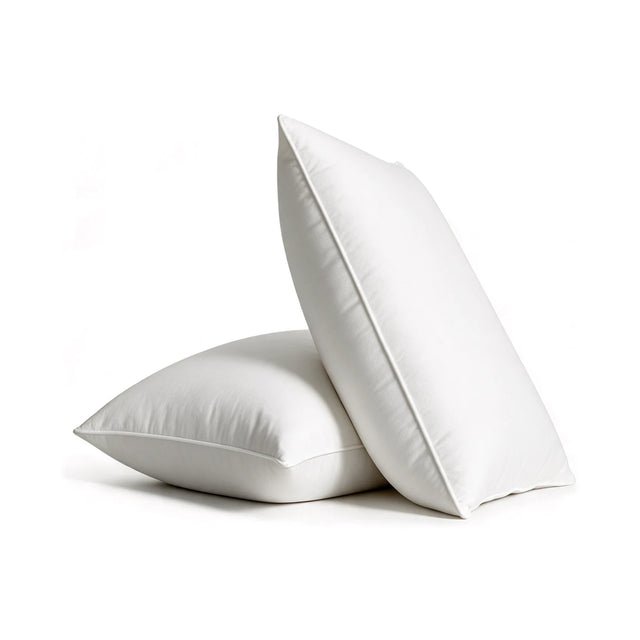
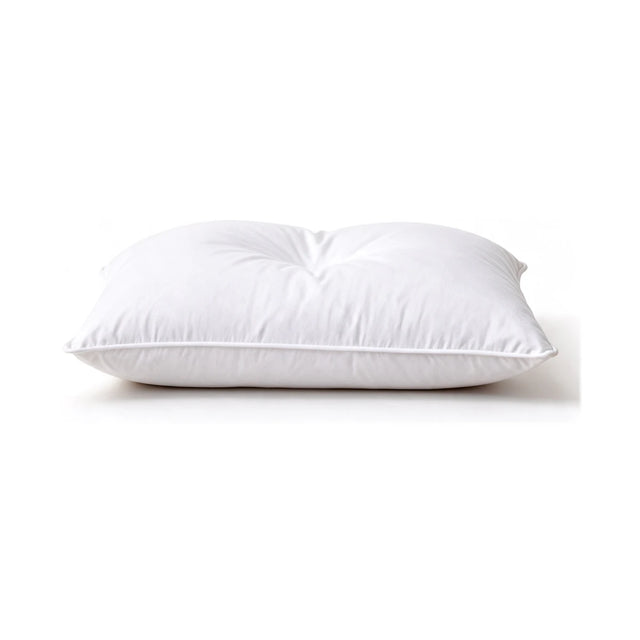
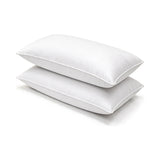
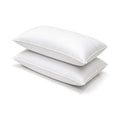
Our soft pillows are the Soft option of the Bounce Back range, which the listing describes as "soft for stomach sleepers". Soft starts at £17.99 for a pack of 2.
How do you get used to sleeping without a pillow?
To get used to sleeping without a pillow, go flatter in stages: a thin pillow or folded blanket first, then a mattress check, a hip pillow for front sleepers and a pillow check if you wake stiff.
The Sleep Foundation's 4 steps, in order:
- Swap to a thin pillow or a folded blanket first, which gives your body time to adapt to a flatter surface.
- Check that your mattress suits your position and body size, because a good pillow can't make up for a mattress that doesn't support your posture.
- Put a thin pillow under your hips if you sleep on your front, to keep the spine straighter. The stomach sleeping page places it between the lower stomach and mid-thigh.
- Look at your pillow again if you wake up stiff, and replace it if it's worn out.

For front sleepers, the Sleep Foundation's stomach sleeping page puts the mattress "on the firmer side", with just enough give for pressure points. And if you do wake stiff, the pillow may simply be worn out. The Sleep Charity suggests replacing pillows every two to three years.
Which of our pillows suit a low set-up?
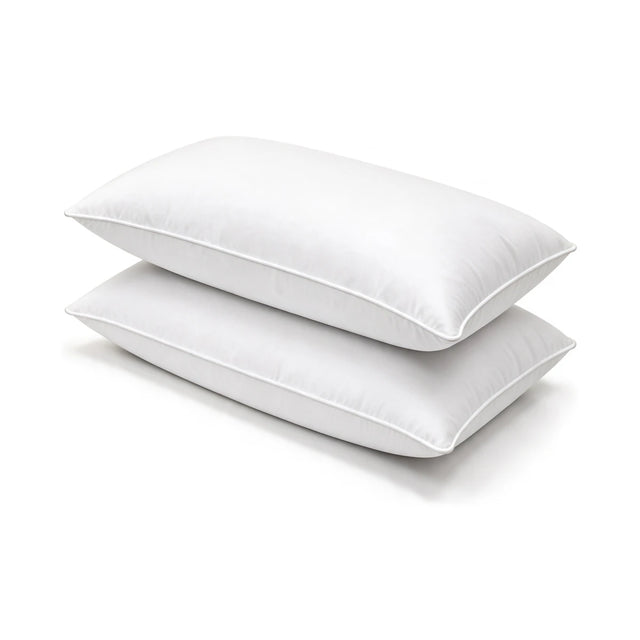
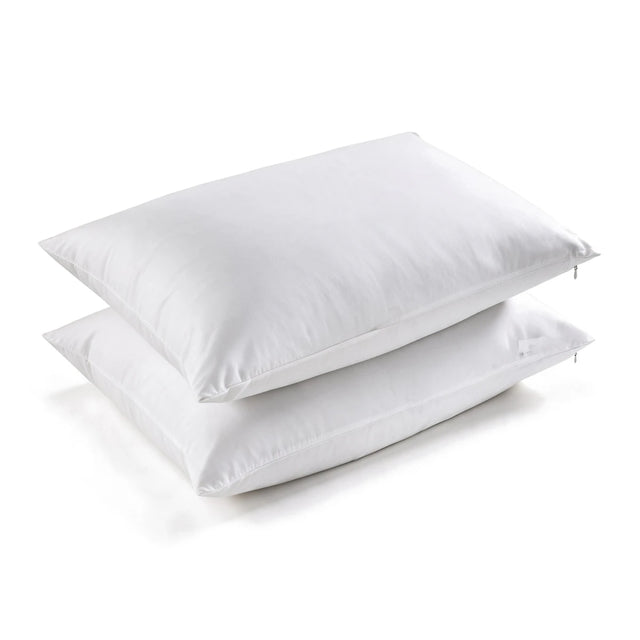
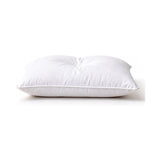
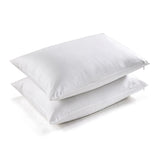
Bounce Back in Soft is the one our listings put forward for front sleepers, in the words "soft for stomach sleepers". Quilted pillows are listed as suiting "stomach, back and side sleepers", and Hotel Quality pillows give medium support for side and back sleepers.
| Pillow | What the listing says | Size | From |
|---|---|---|---|
| Bounce Back, Soft | "Soft for stomach sleepers" | Standard UK size | £17.99 for 2 |
| Bounce Back, Medium | "Medium for backs" | Standard UK size | £12.99 for 2 |
| Bounce Back, Firm | "Firm for side sleepers who need their neck held level" | Standard UK size | £13.99 for 2 |
| Quilted | "Suits stomach, back and side sleepers" | 48x74 cm | £8.99 for 1 |
| Hotel Quality | Medium support, "suits side and back sleepers" | 48x74 cm | £11.99 for 2 |
None of our listings gives a pillow height in centimetres, so we can't tell you how any of them measures against the 7.5 cm mark. All three ranges are hollowfibre and go in the washing machine. For a child moving up from no pillow at all, our toddler pillow is low loft, comes in 40x60 cm or 36x58 cm and is listed for children over 12 months, at £7.99. Our guide to choosing the right pillow covers height and filling for every position.
Written by the Adam Home team in the UK.