


Replace your pillows every 2 to 3 years, which is The Sleep Charity's advice, and sooner if one fails the fold test. Synthetic pillows wear out first: the Sleep Foundation gives polyester 6 months to 2 years, against 1 to 3 years for feather and down. The fold test is a 30-second home check that shows whether a pillow's filling still springs back. This guide covers lifespans by filling, the fold test, 7 signs a pillow is finished, dust mite allergies, protectors and old pillows.
How often do experts recommend replacing pillows?
Experts recommend replacing pillows every 1 to 3 years. The Sleep Charity says 2 to 3 years, and Which? reports the same benchmark from the National Bed Federation, the trade body for UK and Irish bed makers.
The Sleep Foundation, a US sleep information site, says most experts recommend 1 to 2 years, and Belledorm, a UK bedding brand, agrees. The filling decides where in that range your pillow lands.
Which? explains why the clock matters: as a pillow sags and loses its shape, it stops giving your neck the support it needs.

How long does an average pillow last?
Most pillows last 1 to 3 years, and the filling sets the range: the Sleep Foundation gives polyester 6 months to 2 years and latex 2 to 4. Polyester pillows are "among the least durable", it says.
| Filling | Sleep Foundation | Which? | CHOICE |
|---|---|---|---|
| Polyester, hollowfibre, microfibre | 6 months to 2 years | A couple of years, a year or less for lower-quality ones | 6 months to 2 years |
| Feather and down | 1 to 3 years | 2 to 3 years | 5 to 10+ years |
| Memory foam | 2 to 3 years | Up to 4 years | 5 to 10+ years |
| Latex | 2 to 4 years | Not given | 5 to 10+ years |
All three sources agree that synthetic pillows wear out first. The sources split on the rest: CHOICE, the Australian consumer group, gives feather, down, memory foam and latex 5 to 10 years or more, far longer than the other two.
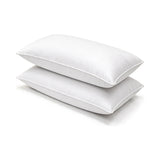
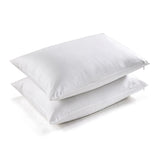
Five of the six pillows in our bed pillows range are hollowfibre, so the synthetic row is the one to plan by. Our listings don't promise a lifespan, and we'd trust the fold test over the calendar.
How do you do the pillow fold test?
Fold the pillow in half, hold it for 30 seconds to a minute and let go: if it springs back, keep it, and if it stays folded, replace it. CHOICE suggests testing about every six months.
For a hollowfibre or other synthetic pillow, follow the 4 steps below.
- Lay the pillow on a flat surface and fold it in half.
- Rest a light weight on the fold, such as a hardback book. Belledorm adds this step for synthetic pillows.
- Hold the fold down for 30 seconds to a minute, as CHOICE advises, then let go.
- Watch what it does. A pillow that opens out against the book is fine. If it stays folded or opens slowly, the filling has broken down, OTTY says.
Feather pillows get a gentler check. The Sleep Foundation uses the plain fold with no weight: if a feather pillow doesn't spring back to its normal shape, replace it. OTTY prefers a saddlebag test. Lay the pillow over your outstretched arm, and if it drapes down both sides, it needs replacing.

How do I know if my pillow needs replacing?
Your pillow needs replacing when it shows any of 7 signs, from lumps and yellow stains to a sore neck in the morning. A failed fold test is the clearest one.
- Lumps that won't shake out. The Sleep Foundation and Belledorm both list lumpy filling.
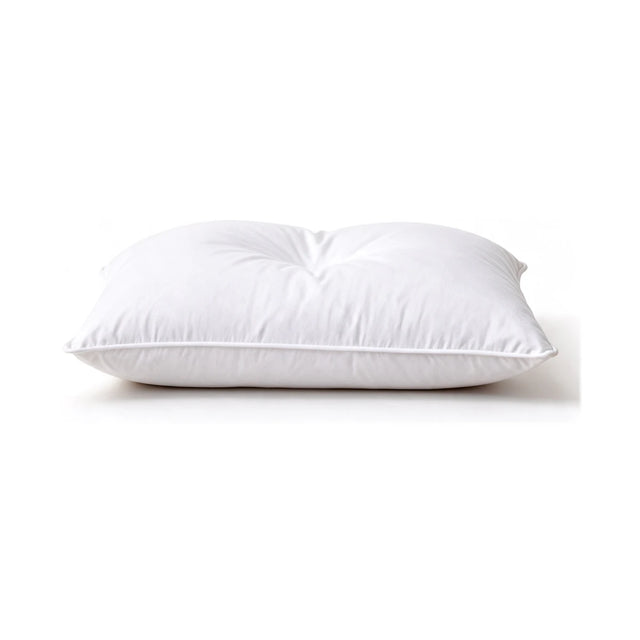
- A flat or sagging middle. The Sleep Foundation says a sagging pillow won't give the support you need.
- Yellow stains. Face and hair oils, sweat and drool soak in, and the Sleep Foundation names "excessive yellowing" as a sign.
- A smell that stays. Belledorm puts it down to a build-up of allergens, and OTTY lists a musty smell.
- Constant plumping. Belledorm counts having to re-fluff and reshape the pillow all the time.
- A sore or stiff neck when you wake. The Sleep Foundation and Belledorm list it, and The Sleep Charity says neck pain and stiff necks could be the result of poor pillow support.
- Allergies that flare at night. The Sleep Foundation lists this one, and Which? says pillows hoard dead skin, mould and dust mites.
Give stains and smells one wash before you decide, using the method in our guide on how to wash pillows without clumping.
How often should you replace pillows if you have allergies?
An East Kent Hospitals NHS leaflet advises people with a house dust mite allergy to buy new pillows every six months, or to use special barrier covers instead.
The same leaflet suggests swapping feather pillows for ones with a synthetic filling. Allergy UK recommends allergen-proof barrier covers on all pillows, and says they should be breathable and enclose the pillow completely. Allergy UK also says washing at 60°C or above kills mites. Check the label before you try that on a pillow. Our hotel quality, Bounce Back and satin stripe pillows say machine wash cool, and our duck feather pillows say cold water.
Do pillow protectors make pillows last longer?
Yes, Belledorm, Which? and OTTY all say a pillow protector helps a pillow last longer, though it won't stop the filling wearing out. Belledorm says a protector you wash can take a pillow past the usual 1 to 2 years.
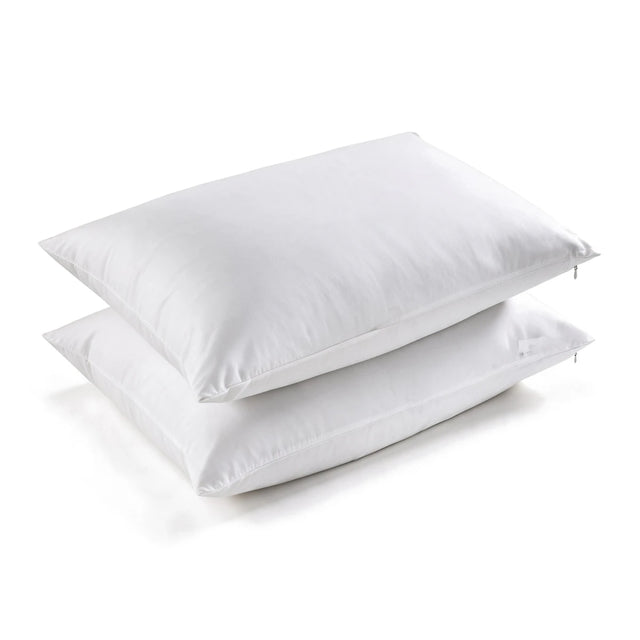
A pillow protector is a washable cover that zips over the pillow, under the pillowcase, and catches sweat, oils and allergens before they reach the filling. OTTY calls it the most effective way to extend a pillow's life. Which? recommends washing pillows every 4 to 6 months, and still twice a year with a protector on.
Our microfibre pillow protectors are 50x75 cm with a full zip, from £9.99 for 2, and the listing says "the pillows last years longer". Our guide on whether you need a pillow protector covers zips, sizes and washing.
When should you throw away your pillows?
Throw a pillow away when it fails the fold test, or when stains and smells stay after a wash. Simon Williams of the National Bed Federation, interviewed by The Sleep Charity, says it's probably time for new ones once a pillow is over three years old and no longer supports your head and neck.
He adds a hygiene reason: your nose and mouth sit right next to the pillow, so after a few years' use he'd think about new ones on that ground alone.
Old pillows are hard to recycle. Which? says councils generally point you to a local recycling centre, while Recycle Now, the national recycling campaign run by the charity WRAP, says pillows aren't usually recyclable. Which? suggests reusing one as a garden kneeling pad, or asking an animal charity if it can use them as bedding. Duvets wear out more slowly, and our guide to how often to replace a duvet gives the years for each filling.
Which pillows should replace your old ones?
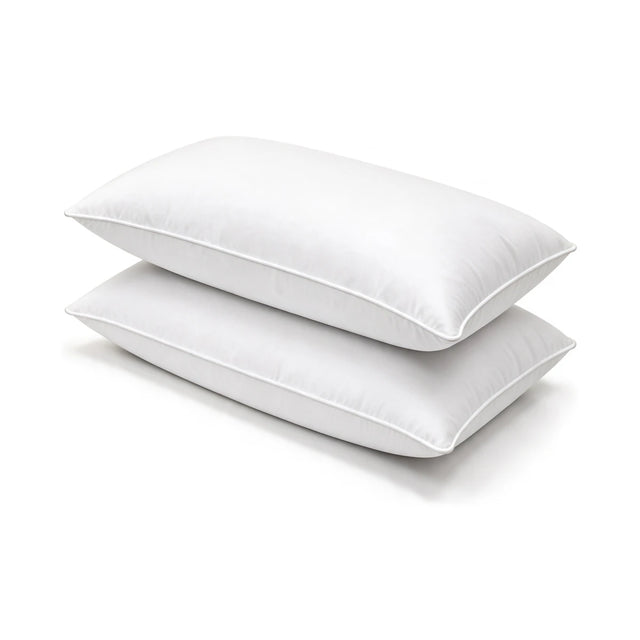
Replace an old pillow with one that suits how you sleep. Our Bounce Back listing puts it simply: soft for stomach sleepers, medium for back sleepers, and firm for side sleepers who need their neck held level.
Our bed pillows come in 6 styles, from £8.99 for a single quilted pillow, and the Bounce Back pillows start at £12.99 for 2. Five styles are hollowfibre and one is a duck feather and down blend. The hotel quality, Bounce Back and satin stripe pillows wash cool with a mild detergent and tumble dry low, and the duck feather pillows wash in cold water and need drying right through. Our guide on how to choose a pillow matches height and filling to your sleeping position.
Written by the Adam Home team in the UK.