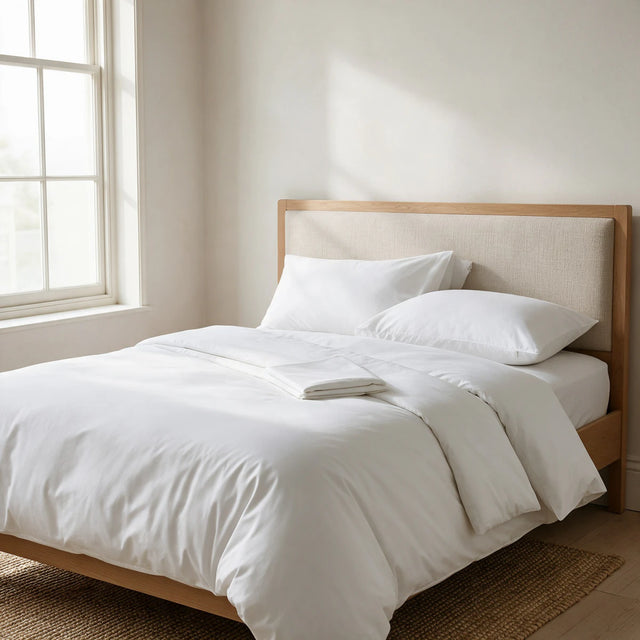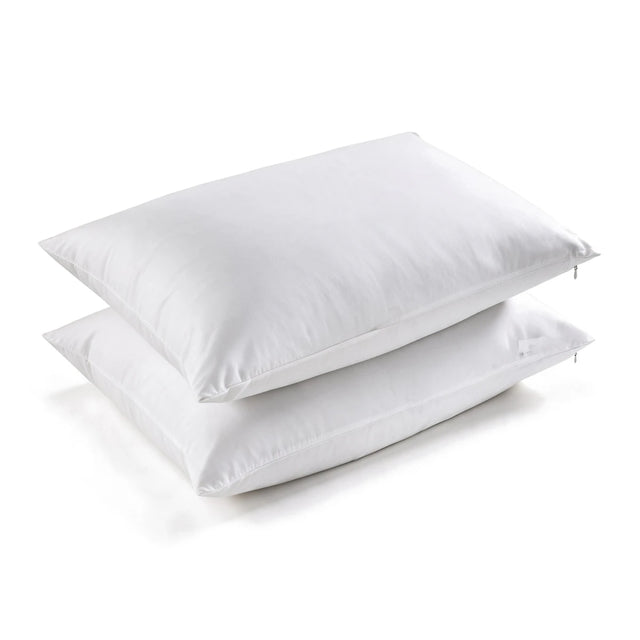
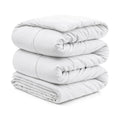
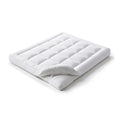

Yes, hollowfibre pillows are good if you want a pillow that's cheap, machine washable and free of feathers, and you're happy to replace it sooner than a memory foam or feather one. A hollowfibre pillow is a bed pillow filled with polyester fibre that has a hollow core in each strand. Which? calls synthetic pillows the cheapest option and says they can be washed at home, but they're less breathable and don't last as long. This guide covers 5 pros, 5 cons, a comparison with duck feather, memory foam and microfibre, how long hollowfibre pillows last, washing, and how to pick one.
Is hollowfibre good for pillows?
Yes, hollowfibre is good for pillows when price, washing and a feather-free filling matter most to you. Hollowfibre is a weaker choice if you want a pillow that lasts 3 or 4 years, because memory foam and feather both outlast it.
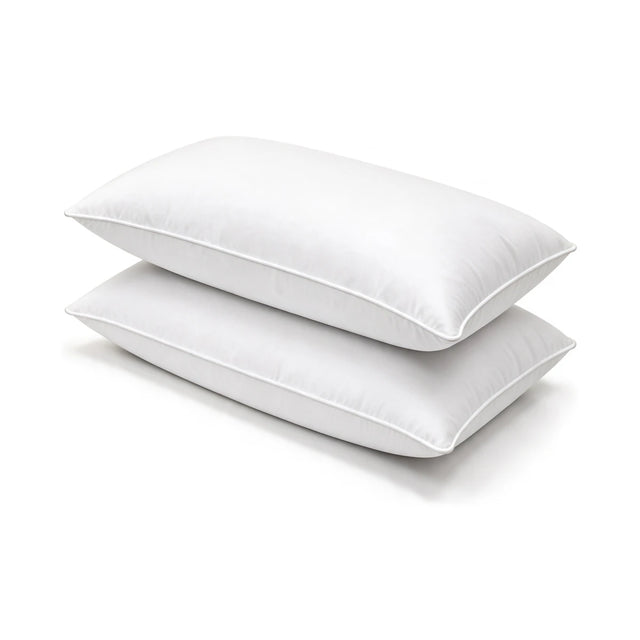
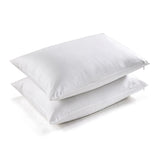
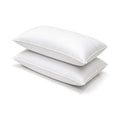
The filling itself is covered in our guide to what hollowfibre is and how it's made, so this page sticks to the buying question. Hollowfibre fills 5 of our 6 bed pillows, all in the standard UK pillow size (the hotel, quilted and textured listings give it as 48x74 cm). The odd one out is the duck feather pillow. Our best seller, the hollowfibre hotel quality pillows, costs £11.99 for 2 and comes in packs of up to 8.
What are the advantages of hollowfibre pillows?
The 5 advantages of hollowfibre pillows are listed below. Each one comes from Which?, Expert Reviews, the Sleep Foundation or the wording on our own listings.
- Price. Which? names synthetic pillows as the cheapest type, and ours start at £8.99 for one quilted pillow.
- Washing. Which? says synthetic pillows can be washed at home on a delicate cycle, and Expert Reviews adds that they're quick to dry.
- No feathers. Which? says synthetic pillows come in hypoallergenic options, and hypoallergenic pillows are made without known allergens such as feathers, wool or latex.
- Bounce. Our listings describe the virgin hollowfibre as "quick rebound, clump-resistant", and a shake after washing brings the loft back.
- Firmness choice. Our bounce back pillows come in soft, medium and firm, all with the same virgin hollowfibre inside.
We'd put price and washing first. A pillow you can put through the machine on a Saturday and have back on the bed that night is easier to keep fresh than one that needs a dry cleaner. Why the fibre springs back is explained in our guide to how bounce back pillows recover their shape.
What are the disadvantages of hollowfibre pillows?
The 5 disadvantages of hollowfibre pillows are listed below. The biggest is a short life, since synthetic fillings flatten sooner than memory foam or feather.
- Shorter lifespan. Which? says some lower-quality synthetic pillows deteriorate noticeably after a year or less.
- Flattening and lumps. Expert Reviews says synthetic fibre filling can lose its shape and go lumpy after long use.
- Less breathability. Which? and Expert Reviews both rate synthetic fillings as less breathable than natural ones.
- Dust mites. Which? notes that dust mites can still settle in hypoallergenic synthetic pillows, so the filling alone doesn't keep allergens out.
- Microplastics. Expert Reviews says microfibre pillows can shed microplastics in the wash, and hollowfibre is polyester too.
Expert Reviews also puts synthetic pillows last on support of the three fillings it compared. We'd add that support depends a lot on how much filling goes in, which is why one hollowfibre pillow can feel flat and another firm. Our listings don't give a loft height in centimetres, so press the pillow on your own bed before you judge it.
How does hollowfibre compare with other pillow fillings?
Hollowfibre is cheaper and easier to wash than duck feather, memory foam or microfibre, and memory foam lasts longest and supports most. Duck feather sits between them on lifespan and costs more than hollowfibre.
| Filling | Washing | Weight | Support | Lifespan | Price |
|---|---|---|---|---|---|
| Hollowfibre | Machine wash cool, tumble dry low (our hotel, bounce back and satin stripe listings) | 1 kg for one quilted pillow (our listing's pack weight) | Medium on our hotel pillow, soft to firm on our bounce back range | 6 months to 2 years (Sleep Foundation, polyester) | Ours from £8.99 for 1 or £11.99 for 2 |
| Duck feather | Ours: machine washable in cold water, dry thoroughly. Which? says feather often needs professional cleaning | About 2.4 kg for a pack of 2 (our listing) | Mouldable, needs regular fluffing (Sleep Foundation) | 1 to 3 years (Sleep Foundation) | Ours from £19.99 for 2 |
| Memory foam | No washer or dryer, spot clean or hand wash (Sleep Foundation) | Not stated in our sources | Contours to head and neck (Sleep Foundation) | 2 to 3 years (Sleep Foundation), up to 4 (Which?) | Which? examples: £65 for 2, £69.99 for 1 |
| Microfibre | Often machine washable, quick to dry (Expert Reviews) | Not stated in our sources | Least support of the three it compared (Expert Reviews) | 1 to 2 years (Sleep Foundation, down alternative) | Which? example: £37 a pair |
Microfibre and hollowfibre are close cousins. Both are polyester, and Which? groups them together as synthetic pillows. In practice the choice is between a synthetic pillow they replace every year or two and a foam pillow that costs £32.50 or more each in the Which? examples and can't go in the machine. Our guide to duck feather pillows and their pros and cons covers the feather side.

How long do hollowfibre pillows last?
Hollowfibre pillows last about 6 months to 2 years, according to the Sleep Foundation's figure for polyester pillows. Which? puts synthetic pillows at a couple of years, and says cheaper ones can wear out in a year or less.
The UK advice for pillows in general runs a little longer. The Sleep Charity recommends replacing pillows every two to three years, as reported by RTÉ in 2025. The Sleep Foundation gives 1 to 2 years for down alternative, 1 to 3 years for feather and down, 2 to 3 years for memory foam and 2 to 4 years for latex.

Our listings don't promise a lifespan, so we won't put a number on ours. What we can give you is the cost side. Replace a £3.50 hotel pillow from the 8 pack once a year for 4 years and you've spent £14. The cheapest memory foam pair in the Which? examples works out at £32.50 a pillow, and Which? says memory foam can last up to 4 years. The fold test tells you when a pillow is done, and our guide on when to replace pillows walks through it.
Can you wash hollowfibre pillows?
Yes, you can wash hollowfibre pillows in a washing machine. The Sleep Foundation advises a gentle cycle with mild detergent and cold water, a low dryer setting, and a wash every 3 to 6 months.
Our hotel, bounce back and satin stripe listings say machine wash cool with mild detergent, then tumble dry low. The quilted and textured listings only say machine washable, so the sewn-in label gives the temperature. Dry the pillow right through before it goes back on the bed. Our guide to washing pillows without clumping has the full method.
Which hollowfibre pillow should you choose?
Choose by the cover and the firmness, because all 5 of our hollowfibre pillows come in the standard UK size and have a machine washable fill. The 5 options and their starting prices are below.
- Hotel quality: virgin hollowfibre, medium support for side and back sleepers, from £11.99 for 2.
- Bounce back: virgin hollowfibre in soft, medium or firm, brushed cotton cover, from £12.99 for 2.
- Quilted: 3D hollowfibre in a diamond-quilted cover, listed as "hypoallergenic", from £8.99 for 1.
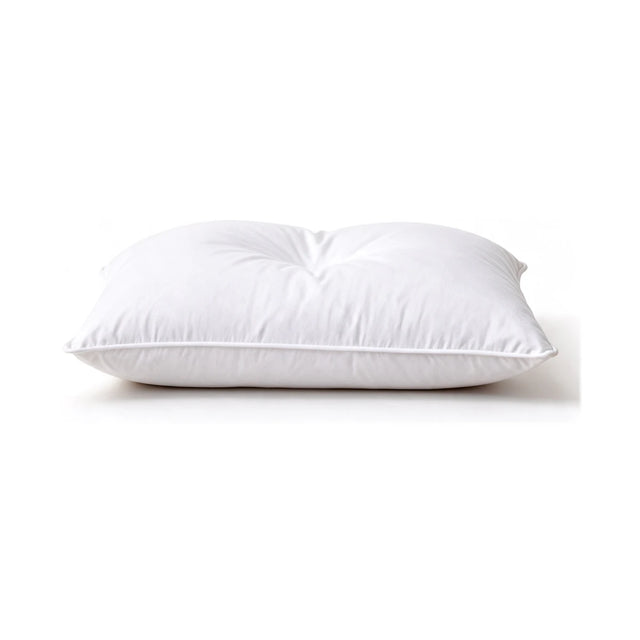
- Textured: a raised cotton cover that grips the pillowcase, listed as "hypoallergenic", from £14.99 for 2.
- Satin stripe: virgin hollowfibre in a woven satin stripe cover, from £10.99 for 2.
If you're unsure, start with the medium hotel pillow. Side sleepers with broad shoulders do better with the firm bounce back, and the quilted pillow is the softest of the group.
Written by the Adam Home team in the UK.